
Prepared by:
Harram Sameer (G 15)
Khansa Noor ( G 15)
Compiled by:
Hafiz Muhammad Umair Noor (G12)
Recommended Book:
- Snell’s Clinical Anatomy by Regions Edition 2026-27
- BD Chaurasia only for some topics
Note: The Screenshots of the LOs are added so that you can read the LOs before reading the Guidelines.
Overview:
- For Gross Anatomy, Visualization is the key. Visualize everything you study with the help of Anatomy 3D Atlas App or Netter Atlas . If you don’t visualize the structures , you will not be able to retain them. Also revision is the key to retain things for a long time.
- In proff , most of the questions asked were related to Clinicals . You have to do all the clinicals given in Snell whether they are mentioned in LOs or not. While preparing a topic try to do it’s clinicals with it .If you compile the clinicals and try to learn them in the end , then it will become a time taking task.
- Use BRS Gross Anatomy for practicing mcqs and use Chapter 1 for practicing past mcqs.
Note: Guidelines are according to Snell but if a topic seems difficult to understand from Snell , you can use BD for that topic.
Recommended lectures:
For Gross Anatomy , I would suggest that first of all take Dr Azam’s lectures for building basic concepts , then you can take topic wise lectures of any of the following YouTube channels:
- TCML
- Dr Adeel Bandok
- Essentials of Medical Sciences
- Johri MBBS
- Dr Bhanu Prakash
- Dr Sumit Gupta
Bones:
- You have to prepare bones only for your Ospe . In ospe questios are asked related to bone’s Side Determination, Bony features and Muscle Attachments, From bones mcqs are asked about their clinicals only. While preparing a bone , try to do its clinicals at the same time and don’t waste your time in making notes of bones as they’re asked only in Ospe.
- For Bones you can take the lectures of following channels :
Dr Hasna , Johri MBBS or Angelina Isaac
( I have taken Dr Hasna’s lectures and they were really helpful .She also tells mnemonics for muscle attachments in her lectures)
Muscles:
- Prepare all muscle tables of Snell . Do origin, insertion, nerve supply and action of muscles from those tables and skip root values.
- While preparing muscle tables from Snell , open 3D atlas app or netter atlas in front of you to visualize muscles . In 3D atlas app It is preferable to isolate a particular muscle you are studying so you can clearly visualize its origin and insertion.
- If you want to take Animated lectures of muscles you can take the following:
Doctor Speaks, Muscle and Motion or Kenhub
- Also thoroughly go through muscles on models because muscle models can also come in Ospe and the examiners can ask you to locate a particular muscle on muscle model and tell it’s actions In modular system, models are rarely asked and they mostly give diagrams from Snell in OSPE, so prepare them thoroughly.
Nerves:
All nerves are very important (Do their Root values ,Course, Muscles supplied by nerve, branches, lesions covered in clinicals from Snell)
- Preferable to do all nerves from Snell . In Snell flowcharts of Nerves are also given , prepare them as well
- If you want to take Animated lectures for Nerves then you can take following lectures:
Anatomy Zone or Dr Bhanu Prakash’s Animated Lectures
- Visualize Nerves from Netter Atlas or 3D atlas apps
Arteries and Veins
- In your syllabus , the LOs of Arteries are written compartment wise but it is preferable to do the complete course of arteries and veins at once
For example, if you are preparing ulnar artery then do its course in forearm and hand at once rather than first doing the course of all arteries in forearm and then doing their course in hands .Same method should be preferred for Nerves and Veins as well.
LO WISE GUIDELINES
MS-A-001:
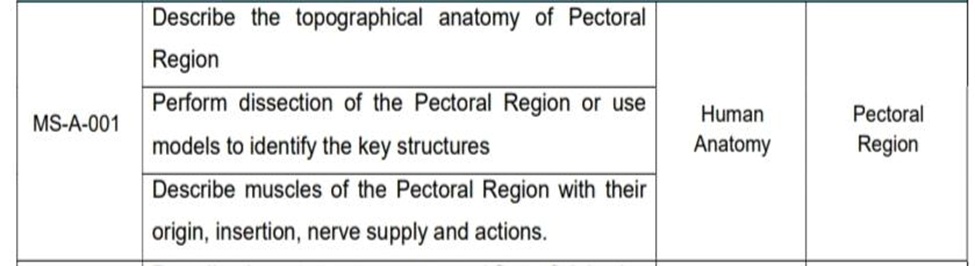
- For this LO, you only have to learn muscles of pectoral region given in Snell’s table 3.3 properly do their Nerve supply and action and their clinicals.
e.g paralysis of serratus anterior causes winging of scapula.
MS-A-002:

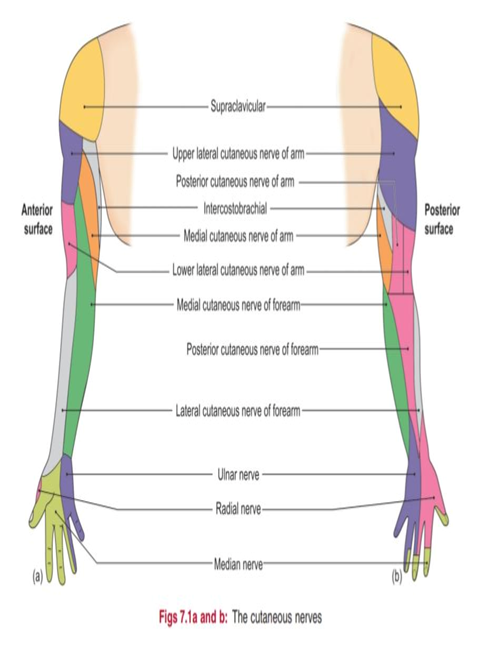
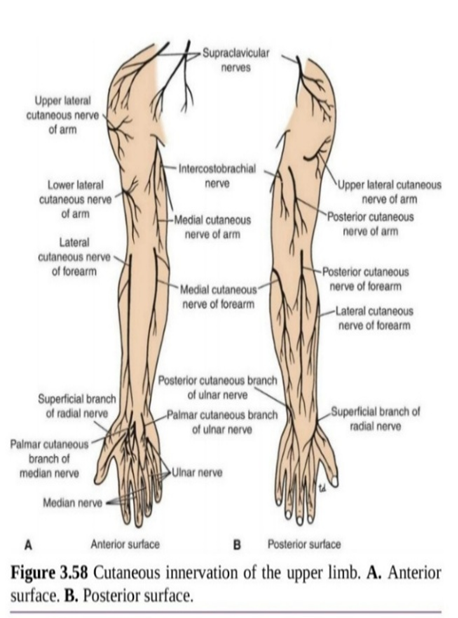
- For cutaneous nerve supply of upper limb, do the diagram 3.58 Also do clinical note about dermatomes and cutaneous nerves.
- For superficial veins, you have to do cephalic and basilic veins and their tributaries given on Pg 159 ( Snell chap 3)
- Clavipectoral fascia: ( Snell chap 3 Pg 107), Do its extent, attachment, relations and structures passing through it .
MS-A-003:
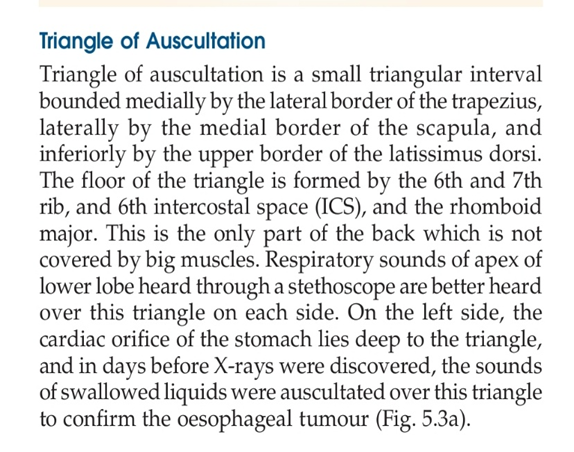
- Triangle of auscultation: You have to do it from BD. Both the boundaries and clinical importance is mentioned in it.
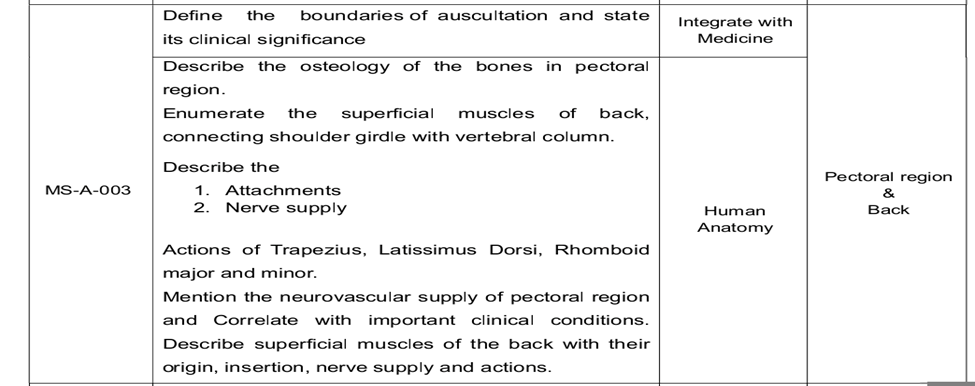
- Bones of pectoral region are clavicle and scapula. Take lecture of Dr. Hasna, And do their bony landmarks and features from here. Muscle attachment will be done from Snell’s muscle table, so don’t need to take lecture for that.
- Muscles of back are given in table 3.4. Do all of it (origin,insertion,nerve supply and action.)
- Blood Supply of Pectoral region: Axillary Artery with branches.
- Also do all the clinicals
MS-A-004:
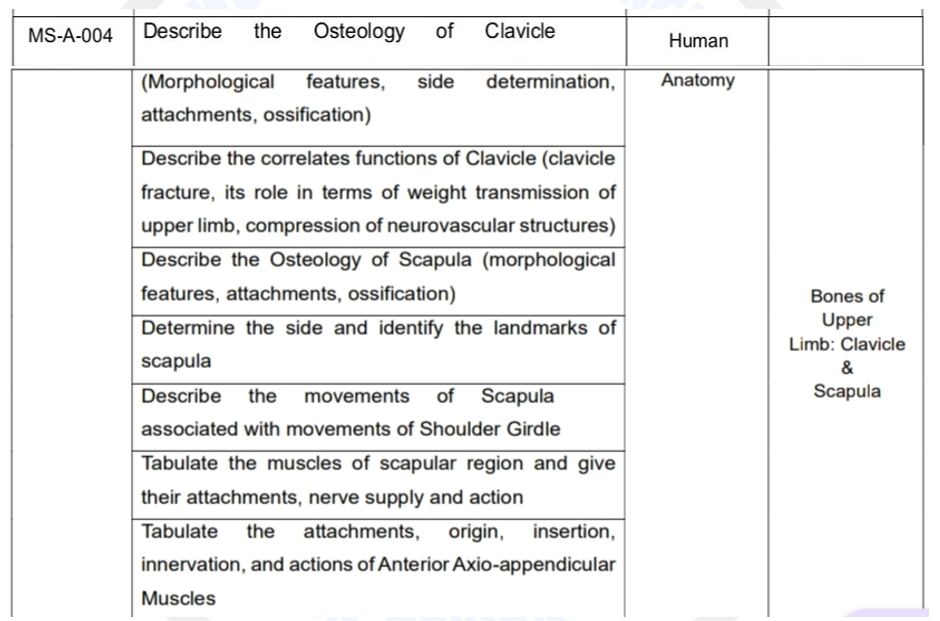
- Osteology of clavicle and scapula (already cover in previous LO), Do it for OSPE.Also do diagram of origin and insertion given in snell (they were asked in our proff ospe).
- For Scapular region Muscles, Do Table 3.5 (origin, insertion, Action and Nerve Supply). Also do movements of scapula .
- Anterior-Axio Appendicular Muscles are same of Pectoral Region Muscles (Table 3.3 of Snell)
MS-A-005:

- Sternoclavicular joint (imp). Do a topic of Sternoclavicular joint from Snell (page # 162).you have to do its type, ligaments, nerve supply , articulating surface and movement.
- Also do the acromioclavicular joint for mcqs and viva.
MS-A-006:
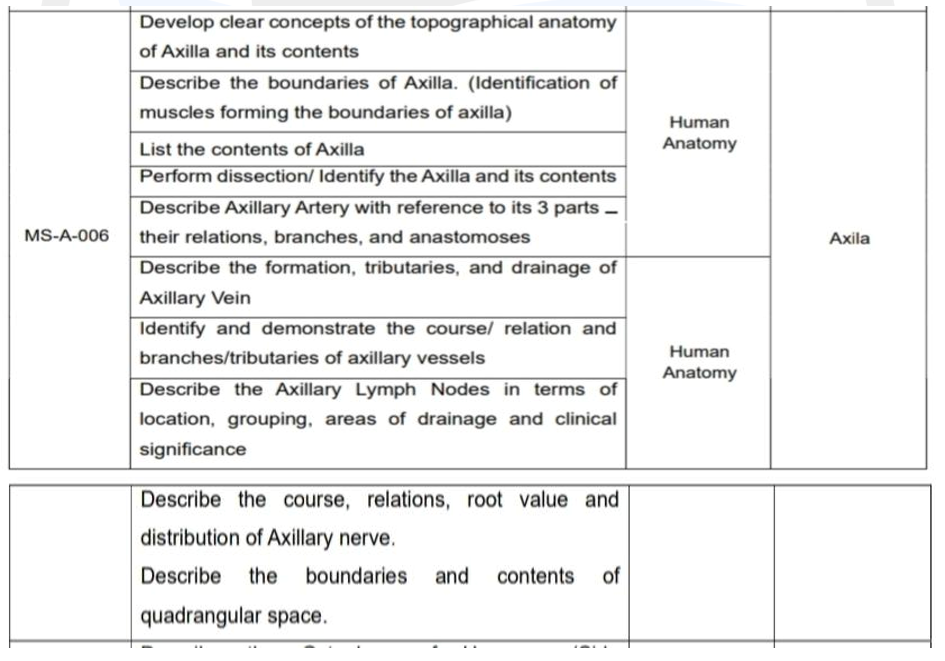
- Axilla: Do it from Snell chap 3 Pg 106 + 107 or from BD chap 4, contents and its Boundaries (vvv.imp)(pg.106)
- Axillary Artery: course , branches and relations of second part are very imp , Do it from Snell chap 3 Pg 153-155 .Do names and branches given from all parts along with their course .
For Axilla and Axillary Artery, you can take the lectures of Essential of Medical Sciences
- Also do anastomosis around shoulder joint from Snell chap 3 Pg 155
- Axillary vein: tributaries and drainage (imp for MCQ) from Snell chap 3 Pg 159
- Axillary Lymph Node: location, Group, Area of Drainage. (pg.159- 160)
You can take Dr.adel bandok lecture for it.
- Axillary Nerve: Origin, Course, Root Value.(pg.147), Also do its clinicals i.e Regimental Badge Sign
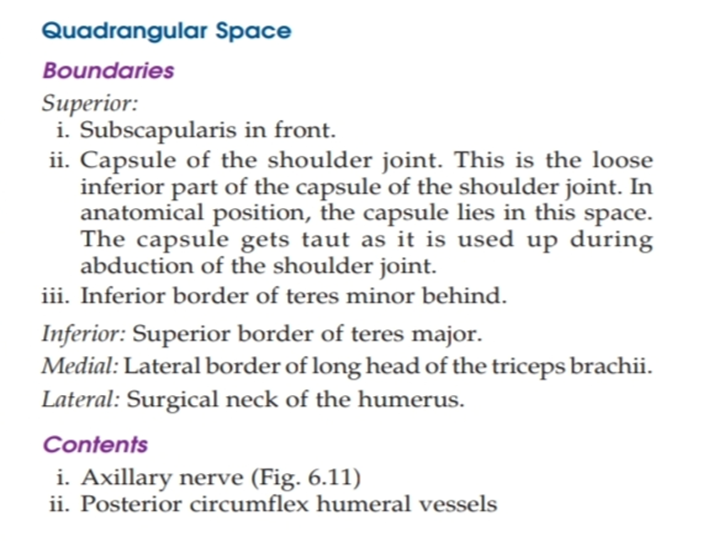
- Quadrangular Space: do its contents and Boundaries
MS-A-007:

- Take Dr. Hasna’s lecture, do its side determination and bony features and give one read from book
MS-A-008:
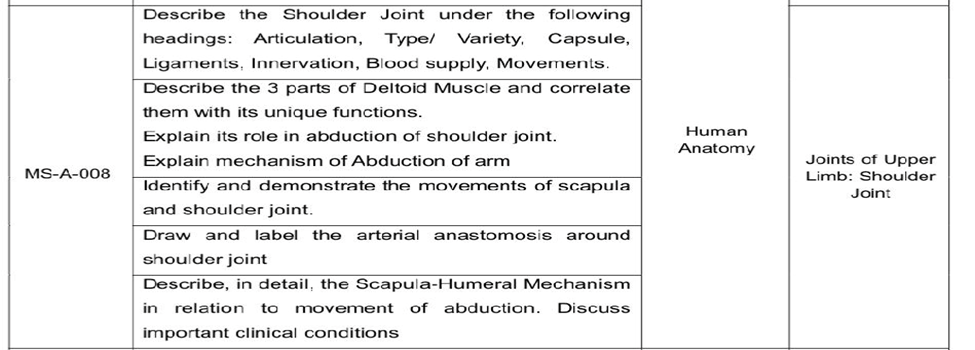
Shoulder joint (imp):
- Do it from Snell (pg.164). Do all of it( Type , Articular Surface , bursas ,Blood Supply , Capsule , Innervation , Movements , Nerve Supply , Ligaments)
- Deltoid Muscle has three parts : Clavicular , Acromial and Spinal part. Clavicular Part : Abduction Acromial and Spinal Part : Stabilizes Abduction
- Learn the mechanism of abduction and role of muscles in it
- 0-15°: supraspinatus muscle
- 15-90°: deltoid muscle
- 90-180°: trapezius and serratus anterior
- Anastomosis around scapula (imp) pg.155
- Scapulohumeral mechanism from Snell chap 3 Pg 167 .You can take Dr Hasna’s or Muscle and motion lecture for understanding it
MS-A-009:
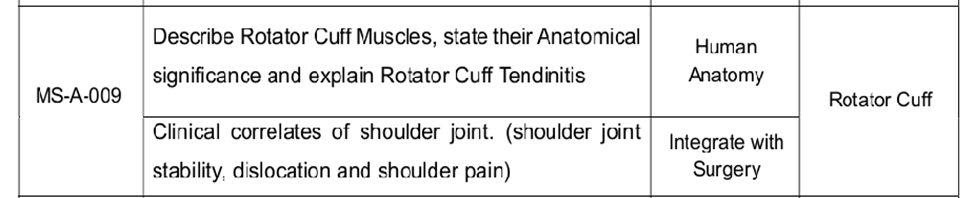
- Rotator Cuff Muscles:Attachement , Nerve Supply , Action (Snell’ table 3.5) MNEMONIC : SITS
- Supraspinatus
- Infraspinatus
- Teres Minor
- Subscapularis
- Clinical: Rotator Cuff Tendinitis ( Snell)
- Shoulder joint Clinicals :Shoulder pain , Shoulder Joint Dislocation ( given in clinical notes)
MS-A-010 & MS-A-011:
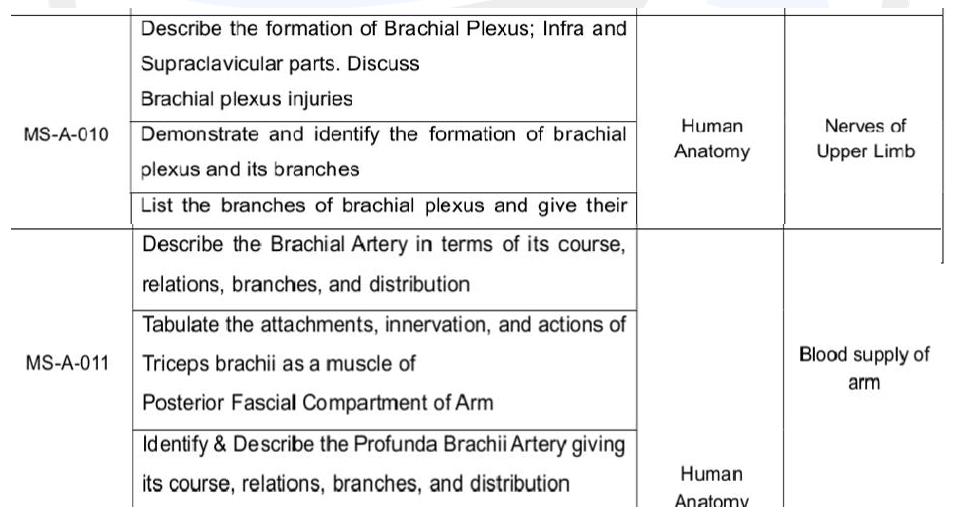
Brachial plexus: (vvv.imp)
- For Brachial plexus, you can take the lecture of Dr. Azam or ninja nerd.Make notes for it. This topic is very important for MCQs. Do it from Snell chap 3 or from BD.
- Clinicals: Erb-duchenne palsy and Klumpke’s palsy.
- Muscles of anterior and posterior compartment of arm given in snell table 3.6
- Musculocutaneous nerve(pg.145): learn its origin, course, branches and tributeries
- The cutaneous supply of arm is already covered in previous LO.
For nerves, either take the lectures of dr sumit gupta or dr azam and then do it from Snell.
Brachial Artery: Origin , Course , Distribution and Relation. From Snell chap 3
- Profunda Brachii Artery: Origin , Course , Distribution, branches (Snell chap 3 pg157)
MS-A-012:
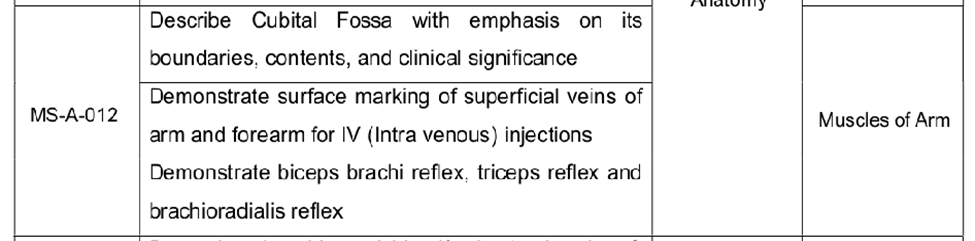
- CUBITAL FOSSA (imp): Boundaries , Contents from Snell chap 3 Pg 111 and Clinical significance. MNEMONIC for Contents: MBBR
- Median Nerve
- Brachial Artery
- Biceps Brachii Tendon
- Radial Nerve (Deep Branch)
- Clinical Significance: For Transfusion of Blood, Sampling of Blood, IV Injections.
- For reflexes , read clinical notes on Page#148 ( Snell Chap 3) and watch videos.
MS-A-013:
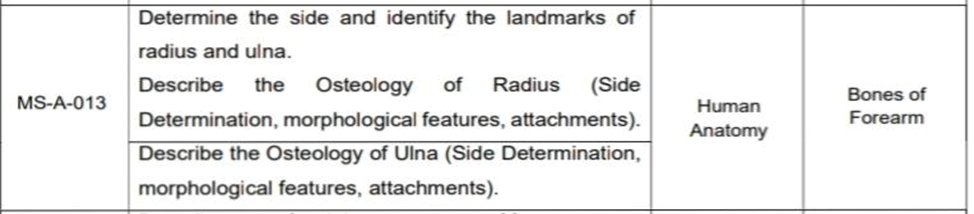
- These LOs are only for ospe .Prepare the Osteology of radius and ulna , their Side Determination , landmarks (bony features) and attachments from Dr Hasna , Johri MBBS or Angelina Isaac’s lectures
MS-A-014 and MS-A-015:
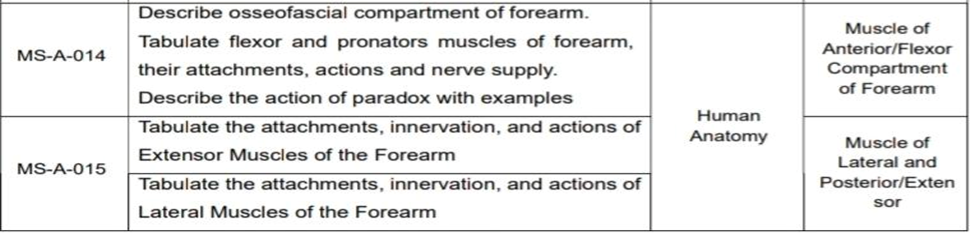
- Do the osseofascial compartment of forearm from Snell chap 3 , also read table 3.2 of Snell ( contents of osseofascial compartment of forearm)
- For Attachments ( origin , insertion) , innervation ( nerve supply) and actions of Flexors and pronators of forearm from Snell table 3.7 ( In different editions of Snell the numberings of tables are different , I am telling the numberings according to edition 2026-2027)
- Action of paradox with examples from AI or any short book
- Attachments, innervation and actions of Extensors of forearm from Snell table 3.9
- Attachments , innervation and actions of lateral muscles of forearm from table 3.8 of Snell
MS-A-016:

- Nerves of forearm ( ulnar , Median and radial nerves ) and muscles of flexor and extensor compartments of forearm from Snell chap 3
- Diagrams of Cutaneous innervation and dermatomes from Netter Atlas , also prepare the complete table of cutaneous innervation of Upper limb from BD chap 7 .Table 7.1 is important , while preparing it skip root values . Also do the definition of dermatomes.
- For understanding the Diagrams of Cutaneous innervation and dermatomes , you can take the lectures of Selfless Medicose or MBS Medilectures
- Ulnar , Median and Radial nerves from. Snell chap 3 , you should know about their root values , course , muscles which they supply and their clinicals .Also prepare the flowcharts of Nerves given in Snell as well .
MS-A-017 and MS-A-018:
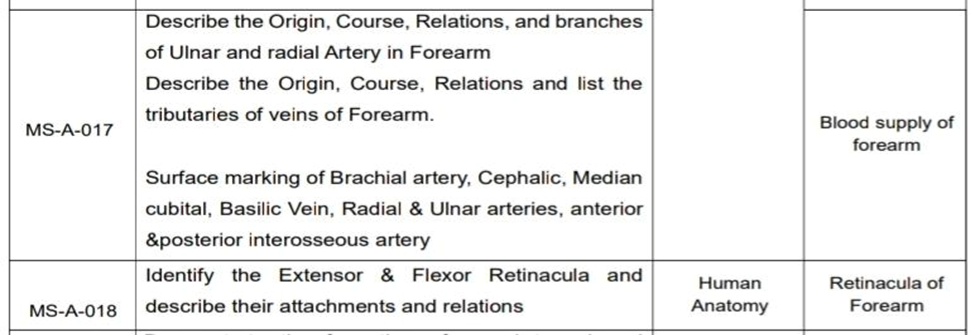
- Origin , course, relation and branches of ulnar and radial artery from Snell chap 3
- After preparing from Snell , you can also go through the Table of Arteries given in BD’s appendix, in these tables Arteries are given in summarized form and remember visualization is the key to retain everything related to Gross Anatomy
- Origin, Course, Relations and tributaries of superficial and Deep Veins from Snell chap 3
- Surface markings of the given arteries and veins are only for Ospe.
- Extensor and Flexor Retinacula from Snell chap 3 given in wrist portion (they’re v.imp)
- Do The compartments of Extensor Retinaculum from BD chap 9 table 9.8
MS-A-019:
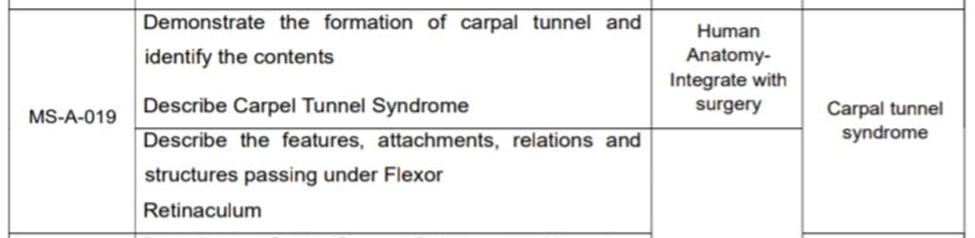
- Formation of carpal tunnel and it’s contents from Snell chap 3 given in wrist portion Pg 121
- Carpal tunnel syndrome and Anatomical Snuff box from Snell chap 3 Pg 122
- Features, attachments, relations , structures passing under flexor retinaculum from Snell chap 3 given in Wrist Portion
MS-A-020:
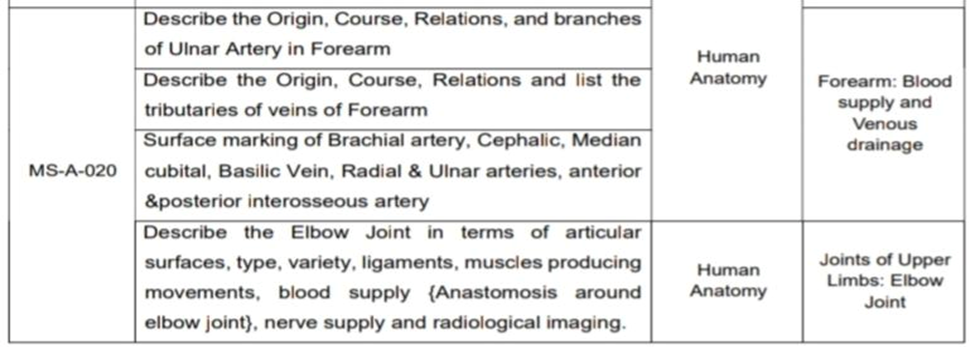
- First three LOs of this code are exactly similar to the LOs of code MS-A-017
- Before preparing Joints , First Cover all BONES and MUSCLES along with their actions. After bones and muscles, all joints will become quite easy
- You’ve to do Type, Variety, Articular Surfaces, Ligaments, Blood Supply, Innervation of joints
- Joints movements & muscles involved in each movement are v.v.imp
- Elbow joint in terms of articular surfaces , type , variety , ligaments , muscles producing movements, blood supply, nerve supply from Snell chap 3 .It’s radiological imaging is only for ospe . ( Skip the relations of elbow joint)
- Anastomosis around Elbow joint is vvimp . Dr Azam’s lecture is enough for it.
Note: For Quick Revision of Joints after preparing the joints topic from Snell, you can use Anatomy Decoded Notes.
MS-A-021 and MS-A-022:
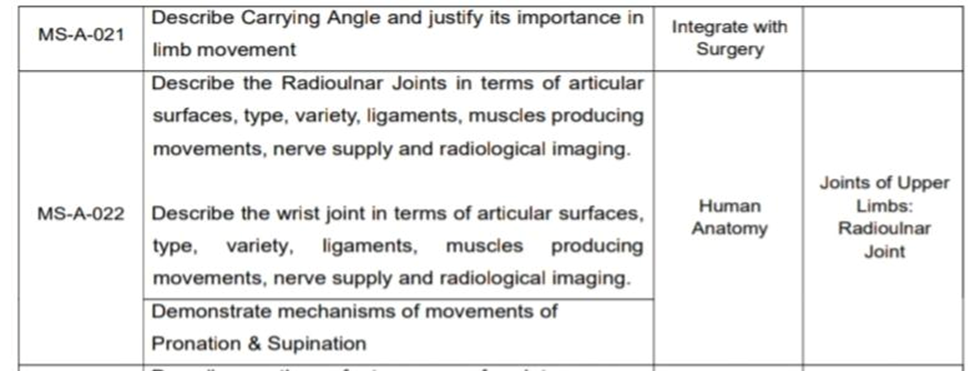
- Carrying Angle from Snell chap 3 given under the topic of elbow joint in the Movements paragraph.
Lecture : https://youtu.be/pZLz6I4W10o?si=ZHaN34zt9MV3D7o7
- Radioulnar joints ( proximal and distal ) articular surface , type , variety , ligaments, muscles producing movements, nerve supply from Snell chap 3 , Radiological imaging is only for Ospe ( skip relations of the joint), You can also prepare radioulnar joints from BD table 10.2
- Wrist joint ( Radiocarpal joint ) articular surfaces, type , variety, ligaments, muscles producing movements, nerve supply from Snell chap 3, radiological imaging for ospe ( skip it’s relations)
- Mechanism of movements of pronation and supination given under the distal radioulnar joint in the Movements paragraph .
MS-A-023 and MS-A-024:

- Features of Interosseous membrane with structures piercing it from Snell chap 3 Pg 170 and structures piercing interosseous membrane from any short book or AI
- Features and importance of Fibrous Flexor Sheaths , Synovial Flexor Sheaths ( digital Synovial Sheaths+ radial and ulnar bursa ) and Extensor Expansion ( given in Long Extensor Tendon Insertion topic )from Snell chap 3
MS-A-025:
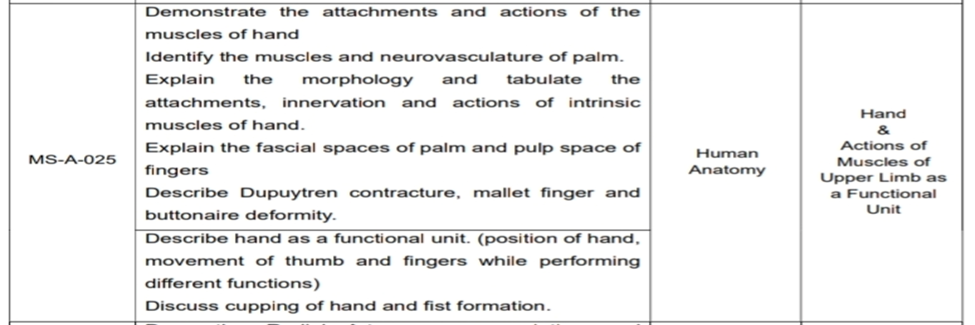
- Attachments and actions of muscles of hand ( from muscle tables you have to do nerve supply and actions of muscles of hand but you can skip attachments of only muscles of hand) . Dr Azam’s lecture is best for it.
- Muscles and neurovasculature of palm from muscle table
- Morphology and attachments, innervation and action of Intrinsic muscles of hand ( Must do innervation and actions of muscles of hand but you can skip attachments of only muscles of hand)
- Fascial spaces of palm , pulp spaces of finger and palmar aponeurosis from Snell chap 3 given in Hand portion.
- Dupuytren’s contracture , mallet finger and buttonaire deformity from Snell chap 3 clinicals
- Hand as a unit from Snell chap 3 Joints pg 174
- Cupping of hand and fist formation from Snell Chap 3 pg 176
MS-A-026 and MS-A-027:
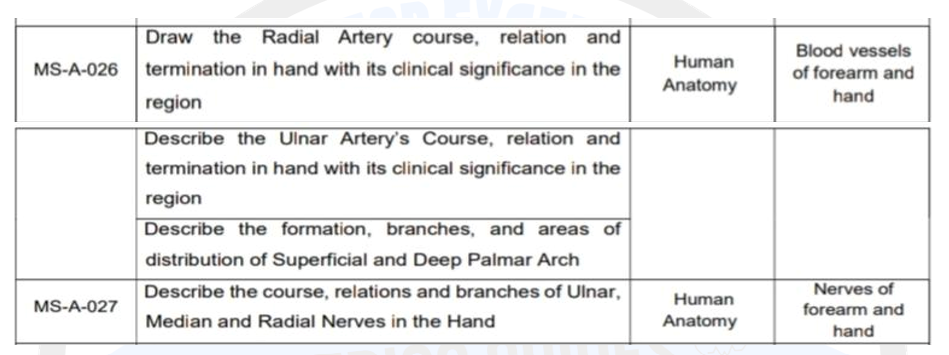
- Radial artery course , relation and termination in hand with clinical significance from Snell chap 3 Arteries portion
- Ulnar Artery’s course , relation and termination with clinical significance from Snell chap 3 Arteries portion
- Formation, branches and areas of distribution of superficial and Deep Palmer arch from Snell chap 3. For this topic, TCML’s lectures are best.
- Course , relation and branches of ulnar , median and radial nerves in hand from Snell chap 3 Nerves portion. Dr Azam’s lectures are best for all nerves.
MS-A-028:
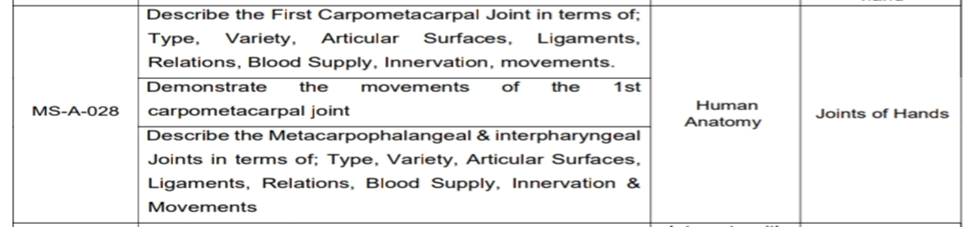
- First Carpometacarpal joint’s type, variety, articular surfaces, ligaments, relations, blood supply, innervation and movements from Snell Chap 3 joints Portion
- Movements of First Carpometacarpal joint from Snell chap 3
- Metacarpophalangeal and interphalangeal joint’s type , variety, ligaments, articular surfaces, relations, blood supply, innervation and movements from Snell Chap 3
- Only do the type of rest of the joints ( which aren’t mentioned in your LOs) for mcq/viva
MS-A-029:
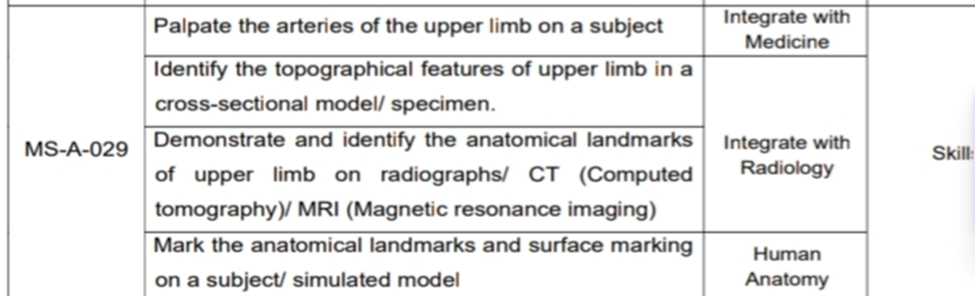
- All these LOs are to be prepared only for Ospe
- Palpate arteries of upper limb.
- Identify Topographical features of upper limb in cross section model or specimen
- Identify anatomical Landmarks of Upper limbs on radiographs/ CT /MRI
- Mark anatomical landmarks and surface marking on a subject
These topics aren’t mentioned in LOs but they’re important, So you should prepare them:
- Lymphatic drainage of Upper limb (watch any video and try to do it in a flowchart) – almost similar to lymphatic drainage of axilla
- Vincula longa +brevis from BD chap 9
- Palmar aspect of wrist and hand from BD chap 9
- Sub-acromial bursa from BD chap 6
- Intermuscular space from BD chap 6
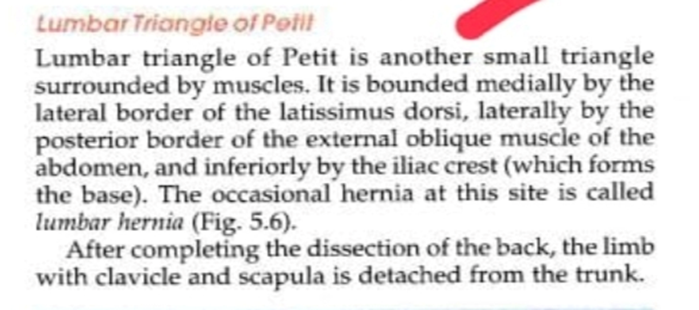
- Lumbar triangle of petit from BD chap 5
Note: Try to extract the book content and make your own notes for arteries and arches
Anatomy seems difficult but once you start doing it the right way, it will become your favorite.
All the best!
Notes for Upper Limb are also shared.
T.H Clinicals of upper limb
ALL Clinicals of Upper Limb
All Clinicals Upper Limb (Snell)
Arteries of Upper and Lower Limb
Lymphatics of Upper Limb
Nerves Upper Limb Notes
Snell All Muscle Tables
Upper Limb Arteries and Nerve Supply
Upper Limb Notes
Dr Azam’s Upper Limb Notes
UPPER LIMB ANATOMY By Johari MBBS
Upper Limb Dr. Adel Bondok Notes
Upper Limb Joints_Quick Revision Tables
UPPER LIMB NOTES