
Prepared by:
Alisha Athar (G13)
Ibtihal Iftikhar(G14)
Compiled by:
Rukhsar Uns (G14)
Recommended Book:
- Guyton and Hall Textbook of Medical Physiology 14th Edition (Chapter numbers are mentioned according to this edition)
THE BODY FLUIDS AND KIDNEYS
Chapter 25(R-P-003 to 004):
- Table 25.1
- Body fluid compartments
- Constituents of extracellular and intracellular fluids (memorize fig 25.3, no need to do table 25.2)
- Do not do measurement of body fluid compartments
- Osmolality and osmolarity and calculation
- Iso, hyper, hypo osmotic fluids
- Fig 25.6
- Hypo and hypernatremia
- Table 25.4
- Fig 25.7
- Edema (intracellular and extracellular edema)
- Summary of safety factor that prevents edema
Chapter 26 (R-P-001, 002, 005 to 007):
- Complete Chapter is very important.
- Functions of kidney
- Physiological anatomy of kidney
- Blood supply of kidney
- Difference between cortical and juxta medullary nephrons
- Micturition
- Innervation of bladder (v.imp)(fig 26.7)
- Vesicoureteral reflux
- Ureterorenal reflex
- Cystometrogram with fig 26.8
- Micturition reflex (vvvv imp)
- Facilitation and inhibition of micturition
- Abnormalities of micturition (vvvvvvv imp)
- Urinary excretion rate equation
- Why large amount of solutes are filtered and reabsorbed by kidney?
Chapter 27 (R-P-008 and 009):
- Complete chapter is important.
- Glomerular filtration rate
- Composition of glomerular filtrate (read)
- Filtration fraction (definition and equation)
- Glomerular capillary membrane
- Why albumin restricted from filtration (imp)
- Minimal change nephropathy (proff question)
- Determinants of GFR complete (proff question)
- Fig 27.4
- Fig 27.7
- Table 27.2
- Renal blood flow (read)
- Table 27.4 (v imp)
- Control Of Glomerular filteration and blood flow (complete)
- Autotegulation of GFR (complete)
- Tubuloglomerular feedback
- Fig 27.10, 27.11 and 27.12 (Imp)
- Blockade of angiotensin formation .. (blue box pg 340)
- Table 27.5
Chapter 28 (R-P-010 to 012):
- Watch Byte Size Med on youtube for quick concepts of Reabsorption.
- Urinary excretion and filtration formula (also known as tubular load)
- Passive and active mechanisms of tubular reabsorption (with examples)
- Fig 28.2 with net resorption of sodium ions paragraph (3 steps)
- SGLT (2nd last paragraph of page 345) (mcqs)
- Transport maximum, tubular load and threshold
- Transport max of glucose value
- Diff btw transport maximum and renal threshold of glucose ( google)
- Fig. 28.4 (seq)
- Fig 28.5, 28.6, 28.8, 28.9, 28.10, 28.11, 28.12, 28.13
- Glomerulotubular balance
- Table 28.2 (read)
- Table 28.3 (2023 proff question, imp for mcqs)
- Fig 28.18, 28.19
- Use of clearance method whole topic (vvvvimp)
Chapter 29 (R-P-010, 013 to 018):
- Byte Size Med for concepts
- Osmolarity low and high
- Renal mechanism for dilute urine
- Fig 29.1
- Fig 29.2
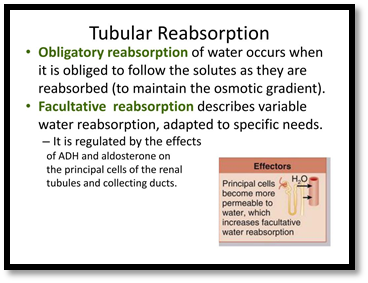
- Obligatory urine volume (Why does sea water cause dehydration?)
- Facultative resorption (the resorption of water that take place in late distal tubule and cortical tubule under the influence of ADH)
- Excreting conc.urine requirements
- Countercurrent mechanism complete + steps involved (vvvv imp with fig 29.4)
- Fig 29.5
- Urea contributes to hyperosmosis (imp)
- Fig 29.6
- Countercurrent exchanger by vasa recta
- Fig 29.7
- Free water and osmolar clearance
- Disorders of urinary conc abilities all (vvvvvvv imp) diabetes insipidus
- Fig 29.9
- Do not do ADH synthesis
- Table 29.2
- Table 29.3
- Disorders of thirst and water intake (blue box)
- Role of angiotensin and aldosterone in controlling ECF osmolarity (blue box)
Chapter 30 (R-P-019 to 024):
- Byte Size Med for concepts.
- Fig 30.1
- Table 30.1
- Fig 30.2
- Fig 30.7
- Fig 30.10
- Read Potassium excretion
- Control of calcium excretion (fig 30.11)
- Table 30.2
- Table 30.3
- Table 30.4
- Read Calcium and Phosphate excretion and regulation
- Pg 393-399 (read flowcharts from medical gateway)
- Read blue boxes
- Conditions causing increase in ECF ( pg 400)
Chapter 31 (R-P-025 to 027):
- Byte Size Med for concepts.
- Acid base regulation ( don’t need to do it again… revise it from Biochemistry)
- Isohydric principal in blue box (pg 408)
- How Kidneys regulate ECF H+ concentration? (3 points on pg 410)
- Secretion of H+ and absorption of HCO3
- Fig 31.5 to 31.9
- Table 31.2
- Clinical causes of acid base disorders (last blue box) read it thoroughly and shortlist it
- Treatment of acidosis and alkalosis
- Anion gap (vvvvimp) complete
Chapter 32:
- Diuretics will be done in Pharmacology
- Acute kidney injury with table 32.2 read
- Glomerulonephritis
- Glomerulonephritis by chronic kidney disease
(These will be covered in patho and medicine as well)