Medico Guides 5th Block (Module No 08) Biochemistry Guidelines

Prepared by: 

                  Hanzala Masood (G14)

Compiled by: 

                  Muhammad Ahmad Bhatti (G14)

Reference Books:

  • Lippincott Illustrated Reviews: Biochemistry 8th Edition (Chapter numbers are mentioned according to this edition)
  • Satyanarayana Biochemistry 6th Edition
  • Harper’s Illustrated Biochemistry 30th Edition
  • Mark’s Biochemistry 6th Edition
  • Lehninger Principles of Biochemistry 7th Edition
  • Lippincott Illustrated Reviews: Cell and Molecular Biology 2nd Edition 

ENDOCRINE BIOCHEMISTRY

(EnR-B-001)

  • Do this from pics/pdf shared

(EnR-B-002)

  • Do this from Satya Chapter 19
  • You can also do this from Harper chapter 42 (pics are shared)

(EnR-B-003a)

Signalling pathways:

  • Do this from pdf/pics shared 

(EnR-B-003b)

Chapter 23:  (Insulin & Glucagon)

  • Do this from Lippincott chapter 23
  • Insulin synthesis v.v.v.imp
  • Can also do from Guyton chapter 79 

(EnR-B-003c)

Chapter 21:   (Epinephrine)

  • Do this from Lippincott chapter 21(III-A) page no 317 to 319

(EnR-B-003d & 006)

(Growth, Thyroid & Steroid Hormones)

  • Do these from Guyton chapter 76, 77 & 78
  • You can also do cortisol and other steroid hormones from Lippincott chapter 18 (VII) pg no 262 to 266 

(EnR-B-004)

  • This is a general LO. It will be covered by doing other LOs.

(EnR-B-005)

Chapter 78: (Guyton)

  • Do this from Guyton chapter 78 
  • Pro-opiomelanocortin gene topic complete 

(EnR-B-007)

  • Do these from pics/pdf shared 

GENETICS

(EnR-B-008 to 014)

  • Do these from the pics/pdfs shared 

(EnR-B-015 to 016)

  • The topic of Karyotypes is not given in the book. Do it from pics shared. 
  • As far as mutations are concerned, some of them are given in Lippincott chapter 32 (Pg 498 & 499). Rest will be shared as pics.

(EnR-B-017 to 021)

Chapter 30:  (Lippincott)

  • No need to do the the structure of DNA as it is not the part of ur syllabus 
  • Start from (III-Steps in ….) pg no 462 to 475
  • Although whole chapter is imp but the most important topics are below:
  •  Replication strand and required proteins ( DNA A , DNA helicase and Single strand binding protein) v.imp
  • Topoisomerases type 1 and 2 (their difference also and their inhibitor green box) and supercoilimg (v.v.imp)
  • Leading and Lagging strand
  • Primase and primosome 
  • DNA Polymerase III ( proofreading and exonuclease activity) imp 
  • DNA ligase 
  • Eukaryotic DNA replication complete 
  • Telomeres and Telomerases v.v.imp (cover entire topic given in eukaryotic DNA replication)
  • Eukaryotic DNA organization 
  • DNA Repair (v.v.imp)

Many mcqs are given from this topic 

  • Cover complete topic all 4 types and their clinical correlates i.e Xeroderma Pigmentosum & Lynch Syndrome (v.v.imp)
  • Exonuclease & Endonuclease imp
  • For Central Dogma Concept You can use medicnetic/ medico express 
  • Fig 30.21, 30.23, 30.24 (v.v.imp)

(EnR-B-022 to 024)

Chapter 31: (Lippincott)

  • No need to do structure of RNA as not a part of syllabus 
  • Start chapter from (III-Prokaryotic) pg no 484 to 493
  • Prokaryotic Gene Transcription 
  • Prokaryotic RNA polymerase 
  • RNA synthesis (Complete)
  • Associated antibiotics (Rifampin and Dactinomycin) v.imp
  • Eukaryotic Gene Transcription
  • Eukaryotic RNA polymerases 1,2,3 
  • Promoters, Transcription factors, Enhancers and Inhibitors associated with RNA polymerase II
  • Post Transcriptional Modification of RNA (v.v.imp)

(EnR-B-025 to 027)

Chapter 32: (Lippincott)

  • Skip initail headings of Genetic code 
  • Start chapter from Mutations 
  • Cover All mutations and their examples given in the text (v.imp)
  • Skip components required for translation and start from Codon Recognition by Transfer RNA 
  • Wobble Hypothesis (v.v.imp) for both written and viva 
  • Steps in translation including initiation (it’s sequences also), elongation and termination 
  • Shine Dalgarno sequence (imp)
  • For Steps of Translation Fig 32.13 is quite helpful 
  • Steps of fig 32.13 and Actions Of 5 Antibiotics given in fig 32.13 (v.imp)
  • Co and Posttranslational modifications ( v.imp)

(EnR-B-028)

Chapter 33: (Lippincott)

Understand Regulatory sequences and molecules first 

  • Regulation Of Prokaryotic Gene Expression (imp)
  • Operon definition
  • Operator and Inducer 
  • Lactose Operon (Lac Operon) it is v.v.v..imp topic (Cover this topic completely including it’s regulation imp) and Fig 33.4 v.v.imp
  • Tryptophan Operon (v imp) complete 
  • Regulation Of Eukaryotic Gene Expression (imp)

Although only 2-3 topics are important from this portion but in LOs it is not clearly mentioned that only that 2-3 topics are included so it is preferable to do this completely at least once with special emphasis on following topics 

  • Messenger RNA editing ( v.imp)
  • Messenger RNA stability 
  • Iron Metabolism (v.v.v.imp & our Proff Seqs) shortlist on fig 33.14 as it is enough 
  • RNA interference & therapeutics (v.v.imp) shortlist on fig 33.15 v.imp

(EnR-B-029)

Chapter 34: (Lippincott)

  • Don’t do complete chapter as not in syllabus 
  • Do DNA Cloning pg 534 to 537 (Fig 34.6)
  • Do DNA Sequencing from pg 539 (Fig 34.9 only)
  • Do Southern Blotting complete topic on pg 540 ( v.v.imp)
  • It will also cover Northern & Western Blotting. Also do Fig 34.25 imp
  • Do RFLP from pg 541 to 547 
  • Do PCR from pg 547 to 550 v.v.v.imp topic (Important for both written and viva and don’t skip even a single thing from this topic)
  • Do Human Genome Project from Satya chapter 28 

Medico Guides 5th Block (Module No 08) Physiology Guidelines

Prepared by: 

                   Alisha Athar (G13)           

                   Ibtihal Iftikhar (G14)       

Compiled by: 

                   Muhammad Ahmad Bhatti (G14)

Recommended Book:

  • Guyton and Hall Textbook of Medical Physiology 14th Edition (Chapter numbers are mentioned according to this edition)

ENDOCRINOLOGY

Chapter 75:

EnR-P-001:

  • Types of Chemical messengers 
  • Chemical structure and synthesis of hormones 
  • Table 75.1
  • Clearance of hormones 
  • Mechanism of action of hormones 
  • Hormone receptor activation
  • Down regulation of receptors
  • Fig # 75.4
  • Enzyme-linked hormone receptor 
  • Table 75.2
  • Fig 75.5
  • Intracellular hormone receptors 
  • Fig 75.6
  • Table 75.3
  • Table 75.4
  • Fig 75.7
  • Fig 75.8 
  • Ca-Calmodulin system
  • Sequence of events of steroid function
  • Read and gain concept of Radioimmunoassay and ELISA (purple boxes)

Chapter 76:

EnR-P-002:

  • Names of anterior and posterior pituitary hormones
  • Sites of synthesis of posterior pituitary hormones
  • Cell types and hormones of pituitary with table 76.1
  • Fig 76.4
  • Hypothalamic releasing and inhibitory hormones(Table 76.2)
  • Growth Hormone full(important)
    • Fig 76.6
    • Metabolic effects
    • Table 76.3(v important)
    • Somatomedins(vvvv important)
    • Regulation
    • Effects on fats, proteins, carbohydrates, bone and cartilage
  • Difference between GH and Somatomedins 
  • Abnormalities of Growth Hormone secretion (complete purple boxes) v important
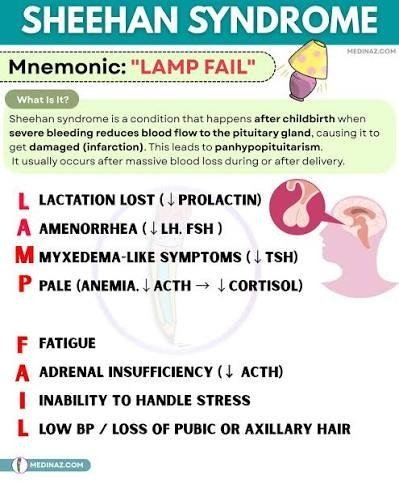
  • Panhypopituitarism with causes and treatment 
  • Sheehan syndrome from Google (imp) 
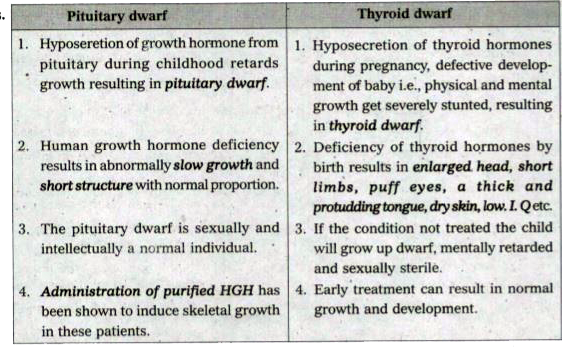
  • Panhypopituitarism in childhood and dwarfism 
  • Difference between Loran dwarfs and African pygmies 
  • Gigantism and Acromegaly
  • Posterior pituitary gland
    • Physiological function of ADH
    • Fig 76.10
    • Regulation of ADH
    • Oxytocin functions
  • Make and prepare from flowcharts for hormone regulations.

Chapter 77:

EnR-P-003:

  • Synthesis and secretion of thyroid hormones
  • All steps for synthesis of thyroxine
  • Fig 77.2 (vv important)
  • Difference between T3 and T4 from image
  • Transport of thyroxine 
  • Physiological functions of thyroid hormones with fig 77.5 complete till page 948
  • Regulation of thyroid hormones 
  • TSH
  • Fig 77.7
  • Antithyroid substances all (extremely important MCQs)
  • Hyperthyroidism (causes, symptoms, exophthalmos, diagnosis, treatment)
  • Know the definitions and difference between thyrotoxicosis and Grave’s disease
  • Hypothyroidism (causes, endemic, idiopathic, characteristics, diagnosis)
  • Special attention to exophthalmos and Myxedema
  • Cretinism (Imp)

Chapter 78:

EnR-P-004:

  • Names of adrenal hormones(figure 78.1)
  • Synthesis and Secretions of adrenocortical hormones 
  • Give a read to purple box
  • Fig 78.2 (vvv important)
  • Plasma bound hormones 
  • Adrenocortical hormones are metabolized in liver
  • Functions of Mineralocorticoids 
  • Mineralocorticoid deficiency causes renal NaCl wasting… 
  • Mechanism of prevention of mineralocorticoid effect of Cortisol (11B-HSD2)
  • Apparent Mineralocorticoid Excess Syndrome (vv important)
  • Renal and circulatory effects 
  • Aldosterone escape important
  • Excess aldosterone effects 
  • Deficiency of aldosterone 
  • Fig 78.4
  • Regulation of aldosterone secretion (v imp)
  • Function of glucocorticoids 
  • Effects of cortisol on carbs, protein, fats 
  • Adrenal diabetes 
  • Cortisol prevents inflammation (Important)
  • Anti inflammatory effects
  • Fig 78.7
  • Read purple box especially Modulation of Glucocorticoid Effects
  • Regulation of cortisol secretion 
  • Fig 78.8
  • Circadian rhythm of glucocorticoids 
  • Synthesis and secretion of ACTH
    • Products of POMC1 and POMC2
    • Rest read for concepts
  • Adrenal androgens complete (v important)
  • All abnormalities of Adrenocortical secretion
  • Difference btw Cushing disease and Cushing syndrome (google)

Chapter 79:

EnR-P-005:

  • Physiological anatomy of the pancreas 
  • Insulin chemistry and synthesis with Fig 79.2
  • Activation by insulin and effects with Fig 79.3 (vv important)
  • Effect of insulin on carbohydrate metabolism (complete)
  • Lack of insulin effect on the brain
  • Effect of insulin on fat synthesis and storage 
  • Insulin deficiency causes lipolysis, ketosis and acidosis (important)
  • Effect of insulin on protein metabolism 
  • Secretion of insulin + Fig 79.7 (vv important)
  • Table 79.1 (v imp)
  • Factors that stimulate insulin secretion (including purple box)
  • Under ‘Role of Hormones in Switching Between Carbohydrate and Fat Metabolism’
    • Name of hormones and whether released during hypo or hyperglycemia
    • Effects of epinephrine
  • Glucagon (complete) 
  • Somatostatin in blue box (Imp)
  • Summary of glucose regulation 
  • Importance of blood glucose regulation

EnR-P-006:

  • Diabetes mellitus (give a thorough read to whole topic as it is v important )
  • DM type 1 (Clinical effects with explanations, eg polyphagia, dehydration, acidosis etc.)
  • Treatment of DM type 1 (Imp)
  • Type 2 DM
  • Differences between both types of DM (table 79.3)
  • Metabolic syndrome 
  • Table 79.2
  • Treatment of type 2 DM
  • Names and values of tests for diagnosis of DM 
  • Insulinoma (Important)
  • Hypoglycemia 

Chapter 80:

EnR-P-007, 008:

  • Levels of calcium, calcium ions, phosphate ions and phosphorus in plasma
  • Hypocalcemia and hypercalcemia
  • In absorption and excretion just know:
    • Vitamin D promotes Calcium absorption in intestine
    • Renal excretion of Calcium is regulated at late distal tubules
    • Renal phosphate excretion is controlled by overflow mechanism
  • Important points about bone structure:
    • Cortical and trabecular bone
    • Major bone salt is Hydroxyapatite
    • Tensile strength of bone is due to collagen fibers of matrix
    • Compressional strength is due to Calcium salts
  • Pyrophosphate regulation under Mechanism of Calcification
  • Bone resorption from fig 80.6
  • Control of rate of bone deposition by Bone stress
  • Read Vitamin D and do fig 80.8
  • Parathyroid Hormone:
    • Osteolysis (rapid phase of Ca and phosphate mobilization)
    • Slow phase of bone resorption (activation of osteoclasts)
    • Fig 80.14
    • Summary of effects of parathyroid (Imp)
  • Read Calcitonin
  • Do all clinicals from purple boxes (complete)
  • Difference between rickets, tetany and osteomalacia 

EnR-P-009:

  • Adrenal medullary hormones and pheochromocytoma (from google or lecture slides)

Types of MCQs from Endocrinology:

  • Scenario based about hormonal abnormalities
  • Functions of hormones (options are given to confuse with functions of other hormones)
  • Physiological reasons for increases or decreases in hormone levels + regulation
  • Steps of hormone synthesis especially thyroid
  • Sites and mechanism of action of hormones
  • To pick true or false statements about hormones

REPRODUCTION AND LACTATION

(EnR-P-010 to 016)

Chapter 81:

  • Fig 81.1, 81.2 and 81.3 (total 74 days)
  • Hormonal factors that stimulate spermatogenesis
  • Sites of maturation and storage
  • Compositions of: seminal fluid, prostatic fluid, and semen
  • Capacitation (important)
  • Acrosome reaction (important)
  • Why does only one sperm enter the oocyte? 
  • Effect of temperature and cryptorchidism (read)
  • NOT to do Male Sexual Act
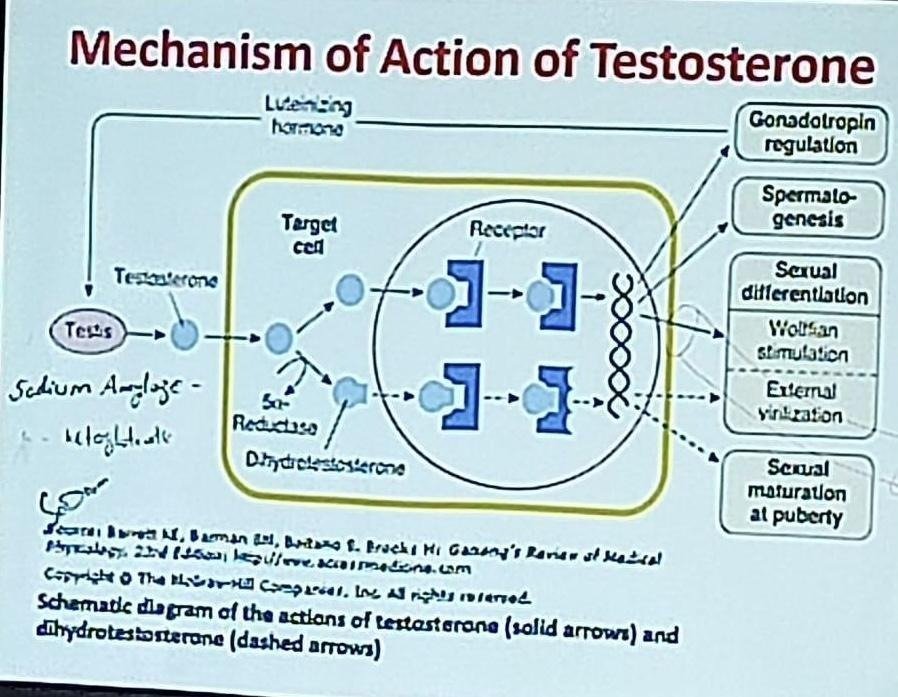
  • Testosterone and Other Male Hormones complete purple box
  • Functions of Testosterone and effect on primary and secondary sexual development
  • Basic intracellular mechanism of action of testosterone (read)
  • Fig 81.10
  • Role of Inhibin
  • HCG secreted by placenta stimulates testosterone secretion by fetal testes
  • Male Climacteric definition
  • All abnormalities from purple box

Chapter 82:

  • Fig 82.1, 82.2 and 82.3
  • Fig 82.4 (concept)
  • Ovarian Follicular Growth complete
  • Ovulation
  • Fig 82.6 (vv important)
  • Luteal Phase read
  • Fig 82.7
  • Fate of Progesterone
  • Fig 82.8
  • Functions of Estrogen complete
  • Functions of Progesterone complete (focus on headings of functions for both)
  • Fig 82.9 and 82.11
  • Anovulatory cycles
  • Puberty and Menarche
  • Menopause (v important)
  • Abnormalities of secretion by ovaries

Chapter 83:

  • Double Bohr effect (read once) written in diffusion of oxygen through placenta 
  • Human Chorionic Somatomammotropin
  • Response of mother’s body during pregnancy (in purple box)
  • Parturition 
  • Oxytocin causes contraction of the uterus 
  • Onset of labor (+ve feedback)
  • Fig 83.10
  • Suppression of female ovarian cycles in nursing mothers after delivery

Chapter 84:

Only these two topics:

  • Respiratory system from first page + onset of breathing and cause of breathing at birth (page 1063)
  • Changes in fetal circulation at birth (focus on headings)

Medico Guides 5th Block (Module No 08) Gross Anatomy Guidelines

Prepared by: 

                  Mahnoor (G14)                    

Compiled by: 

                   Muhammad Ahmad Bhatti (G14)

Reference Books:

  • Snell’s Clinical Anatomy

ENDOCRINOLOGY 

Pituitary Gland

(EnR-A-001)

  • Parts of pituitary gland
  • Relations (vvvimp mcqs)
  • Blood supply

Thyroid Gland and Parathyroid glands

(EnR-A-002)

  • Gross features (Location, extent, etc)
  • Lobes relations and isthmus relations(vvimp)
  • Blood supply (vv imp)
  • Clinicals (imp)
  • Thyroid arteries and nerves relation
  • Thyroidectomy and parathyriodectomy

Testis:

(EnR-A-003)

  • Covering and fascia (vvvimp
  • Relations 
  • Blood and nerve supply (vvvimp)

Accessory Male Glands:

(EnR-A-004)

  • Vas deference, Seminal vesicles, and Ejaculatory duct 
  • Do relations, blood and nerve supply(imp mcqs)

Prostate: (vvvimp topic)

(EnR-A-005)

  • Gross features all (Zones and lobes vv imp)
  • Capsule (True and False imp)
  • Neurovascular supply (imp)
  • BPH vvv imp (which lobe involved in this condition)
  • Clinicals:
  • Hydrocele of spermatic cord and/or testes 
  • Hematocele of testes 
  • Torsion of the spermatic cord 
  • Varicocele (vvimp)

Suprarenal Gland: (this portion is written in abdomen portion)

(EnR-A-007)

  • Gross features
  • Difference between right and left Suprarenal gland’s relations structure and Neurovascular supply (imp)
  • Clinicals:
  • Difference between Addison and Cushing disease (imp)
  • Pheochromocytoma (imp)

PELVIS 

PART 1 & 2

Chapter:7  Pelvis

EnR-A-008: Bony Pelvis (Pelvic Girdle)

  • Bony pelvis ( imp for ospe)
  • Anatomical features of hip bone
  • Anatomical features of sacrum
  • Anatomical features of coccyx

EnR-A-009: (Pelvic Joints)

  • Names of ligaments and movements (MCQs) 

EnR-A-010: (Bony Pelvis)

  • Contents of true pelvis and false pelvis
  • Biological sex differences of pelvis (important)
  • Types of pelvis (frequently asked MCQ: most common type)
  • Pelvic diameters/measurements (important)
  • Obstetrical complications related to pelvis (important)

EnR-A-011-014: (Pelvic Fractures, Pelvic Walls & Pregnancy Changes)

  • Types of pelvic fractures and their consequences
  • Components forming the pelvic walls (ant/post)
  • Formation of pelvic floor/pelvic diaphragm  (important)
  • Table 6.1: Muscles, nerve supply, and actions (important)
  • Changes occurring in the pelvic floor during pregnancy
  • Pelvic floor injury complications (mcqs)

EnR-A-015 to EnR-A-017 (Pelvic Fascia and Peritoneum)

  • Pelvic fascia and its types
  • Male/Female peritoneum reflections written in male and female parts of chapter ( rectovesical/ pouch of Douglas rectouterine) imp for mcqs 

EnR-A-018: Pelvic Inlet/Outlet

(same as covered under true and false pelvis; do from start of Chapter 6)

  • Boundaries and contents for mcqs

EnR-A-019: (differences in peritoneal reflections)

  • (Already done under LO-015)

EnR-A-020-021: Pelvic Neurovasculature

  • Pelvic Arteries (common Iliac/Internal/External Iliac)
  • Course and relations (relations are asked in mcqs)
  • Branches of internal iliac (viva/mcqs)
  • Pelvic plexus and nerves
  • Clinical importance of nerve blocks and injuries
  • Name of lymph nodes

EnR-A-023

Note: All genital organs, their relations and supply are exam favorite. Do focus on these topics

Urethra:

  • Parts of male urethra and constrictions (vimp for mcqs and viva)
  • Clinicals:
    • Ureteric Caliculi, 
    • Cystocele, 
    • Suprapubic Cystotomy, 
    • BPH

Anatomical features of Ovaries and Fallopian Tubes:

  • Ligaments attachments and relations (vvimp for mcqs)
  • Parts of uterine tubes
  • Blood supply and nerve supply and nodes(vvimp mcqs)

Clinicals:

  • Positions of ovaries 
  • Cysts of ovaries 
  • Ectopic pregnancy 
  • Tubal ligation 
  • Salpingitis

Uterus: 

  • Gross features ( read only) and relations(imp)
  • Supports of uterus (vvvimp)
  • Ligaments of uterus: attachments and contents (imp)
  • Normal position of uterus (anteversion & anteflexion)
  • Blood supply, lymphatic drainage, and nerve supply

Vagina:

  • Relations of vagina(imp)
  • Supports of vagina(vvimp)
  • Blood supply, lymphatic drainage, and nerve supply

Clinicals:

  • Prolapse of uterus 
  • Vaginal trauma 
  •  Culdocentesis 

PERINEUM 

Chapter 8: (Perineum)

(EnR-A-024-025)

Note: Make separate tables for male and female perineum, urogenital triangle, and superficial/deep pouches for easier MCQ preparation. 

  • Boundaries and divisions of perineum
  • Perineal membrane and its relations (High-Yield)
  • Superficial and deep perineal pouches
  • Contents of superficial and deep perineal pouches
  • Perineal body and its muscles forming it (Very High-Yield)
  • Blood supply, lymphatic drainage, and nerve supply of male and female perineal organs

Clinicals:

  • Hypospadias 
  • Phimosis
  • Circumcision 
  • Erectile Dysfunction 
  • Internal Hernias 
  • Suprapubic Cystotomy 
  • Rupture Of Bladder 
  • Rectal Examination 
  • Disposition Of Uterus

Medico Guides 5th Block (Module No 09) Biochemistry Guidelines

Prepared by: 

                  Hanzala Masood (G14)   

Compiled by: 

                  Muhammad Ahmad Bhatti (G14)

Reference Books:

  • Lippincott Illustrated Reviews: Biochemistry 8th Edition 
  • Satyanarayana Biochemistry 6th Edition
  • Harper’s Illustrated Biochemistry 30th Edition

CARBOHYDRATE METABOLISM

(HNSS-B-001a)

Chapter 12: (Lippincott)

(Whole chapter is important)

Fructose Metabolism:

(Complete) 

  • Phosphorylation, Fructose 1 Phosphate cleavage kinetics 
  • Fig 12.2 v.v.imp 
  • Again shortlist text along with fig 12.2 
  • Disorders: Fructosuria and Hereditary Fructose Intolerance (v.v.v.imp)
  • Enzymes deficient , product accumulated, symptoms and treatment for disorders 
  • From fig 12.3.
  • Glucose conversion to sorbitol (Sorbitol Pathway) (v.v.v.imp)
  • Synthesis+ How Sorbitol causes hyperglycemia + Fig 12.4 (v.v.v.imp)

Galactose Metabolism:

(Complete)

  • Disorders: Galactokinase deficiency + Galactosuria + Aldose reductase (v.v.imp)
  • From fig 12.5

Lactose Metabolism:

(Complete) 

      Lactose Intolerance (blue box) v.imp

VITAMINS

(HNSS-B-001b)

Chapter 28: (Lippincott)

  • Vitamin A (vv imp)
  • Structure 
  • Absorption and transport + release from liver with fig 28.19 (imp)
  • Fig 28.19 (vvvvvv imp)
  • Functions (visual cycle) (imp)
  • Deficiency (nyctoplasia + skin conditions) (imp)
  • Vitamin A toxicity
  • Should clearly describe the physiological and therapeutic function of Vit A 

(Fig 28.21 imp)

Medico Guides 5th Block (Module No 09) Physiology Guidelines

Prepared by: 

                   Usman Qaisar (G13)

                   Ibtihal Iftikhar (G14)

Compiled by: 

                   Muhammad Ahmad Bhatti (G14)

Recommended Book:

  • Guyton and Hall Textbook of Medical Physiology 14th Edition (Chapter numbers are mentioned according to this edition)

SPECIAL SENSES

Chapter 50:

HNSS-P-001:

  • Read application of refractive principles to lenses
  • Refractive power in diopters formula
  • Fig 50.9 important MCQ
  • Read Optics of Eye
  • Emmetropia (important)
  • Hyperopia complete
  • Myopia complete
  • Astigmatism (important)
  • Give a read to correction of optical abnormalities with contact lenses
  • Cataracts (important)
  • Definition and concept of Visual Acuity 

HNSS-P-002:

  • Treatment of refractive errors (with lenses)

HNSS-P-003:

  • Fluid system concept 
  • Outflow of aqueous humor, Fig 50.18 and 50.20 (very important, proff MCQ)
  • Intraocular pressure normal value (important) + it’s regulation 
  • Fig 50.21

HNSS-P-004:

  • Glaucoma (open + closed angle ) important, from Google or lectures

Chapter 51:

HNSS-P-005:

  • Retina layers (vvv important MCQ) with fig 51.1
  • Fovea of retina (important) + optic disc
  • Rods and cones structure + fig 51.3 (vvv important)
  • Pigment layers of retina (melanin + vitamin A) important
  • Retinal blood supply + retinal detachment (important)
  • Visual pathway from Cones and Rods to Ganglion cells on page 647 + fig 51.12
  • Investigations for retinal diseases from Google

HNSS-P-006:

  • Visual cycle (important) + fig 51.5 + activated rhodopsin 
  • Role of vitamin A + night blindness (scenario based MCQ)
  • Excitation of rods + fig 51.6 + fig 51.7 
  • Do make a concept of hyperpolarization + photo transduction 
  • Read to excitation cascade

HNSS-P-007:

  • Light and Dark adaptation + Fig 51.9 (Cones adapt faster but to a lesser degree)
  • Other Mechanisms
  • Diseases from Google or lectures

HNSS-P-008:

  • Read Tricolor Mechanism 
  • Do definitions of protonope + deuteranope + tritonope (important MCQ)
  • Neural functional layer of retina (important cell types)
  • Visual pathway + fig 51.12 
  • Make a concept of how signals transmitted through electronic conduction not by action potential (important viva question)
  • Lateral inhibition (important MCQ)

Chapter 52:

HNSS-P-009:

  • Visual pathway (vvvvv important for MCQs) + visual fibers going to 5 older areas of brain (page 653 only)
  • Primary + secondary visvual Cortex fig 52.2 + fig 52.3 only till before Layers
  • Effect of removing primary visual cortex in purple box (important)
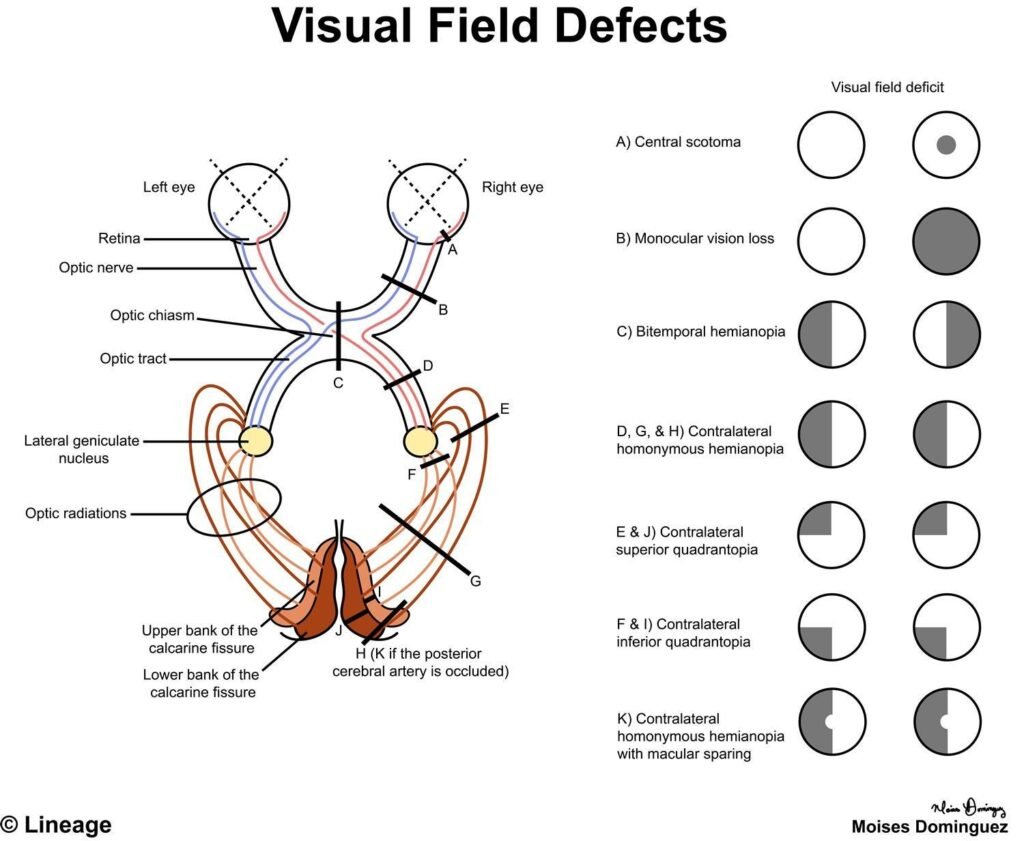
  • Abnormalities of visual pathway from chart below (vvv important scenario based MCQ)

HNSS-P-010:

  • Physiological blind spot (important MCQ) under Fields of Vision
  • Scotoma

HNSS-P-011:

  • Abnormalities of visual field (same as above + retinitis pigmentosa)

HNSS-P-012:

  • Eye Movements and Their Control complete (scenario based MCQs)

HNSS-P-013:

  • Strabismus (important) + fig 52.10

HNSS-P-014:

  • Mechanism of accomodation (Ch 50)
  • Parasympathetic control of accomodation (Ch 50) 
  • Presbyopia (important, Ch 50)
  • Control of accomodation (Ch 52)

HNSS-P-015:

  • Pupillary light reflex
  • Pupillary reflexes in CNS diseases (Edinger Westphal nucleus) + (Argyll Robertson pupil) (scenario based MCQs)
  • Horner syndrome
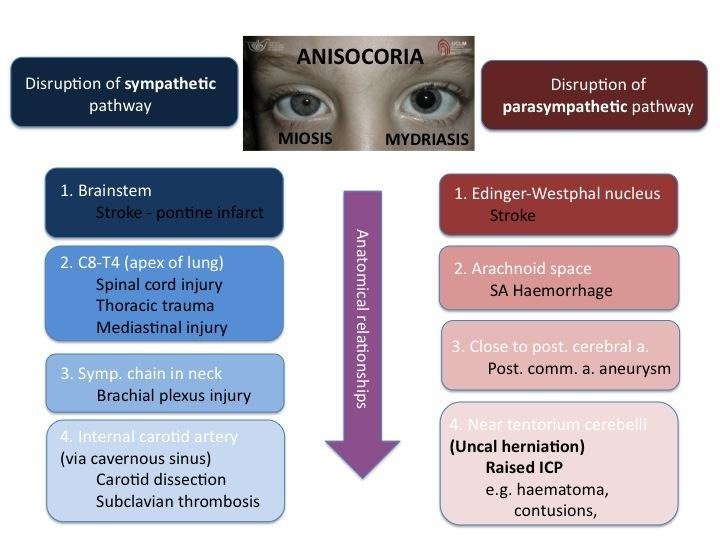
  • Differential diagnosis of anisocoria (picture shared below)

Chapter 53:

HNSS-P-016:

  • 53.1 (important) + do a detailed read for better understanding 
  • Impedence matching (vv important MCQ)
  • Attenuation reflex (vvv important MCQ scenario based)
  • Otomycosis and Impacted ear wax from Patho or Google

HNSS-P-017:

  • Read of functional anatomy of cochlea
  • Fig 53.2 and 53.3 (important for MCQs)
  • Basilar membrane concept 
  • Transmission of sound waves in cochlea + vibration patterns 

HNSS-P-018:

  • Function of organ of corti fig 53.6
  • Excitation of hair cells (important)
  • Transmission of auditory signal + fig 53.7 (important MCQ)
  • Endocochlear potential (important MCQ)

HNSS-P-019:

  • Normal rage of hearing 
  • Place principal and Volley’s principal (common MCQ especially ranges at which they apply)

HNSS-P-020:

  • Determination of loudness of sound

HNSS-P-021:

  • Auditory nervous pathway + fig 53.9 (must know the order for MCQs)
  • Types of deafness in purple box (important scenario based MCQ)

Chapter 54:

HNSS-P-022:

  • Primary taste sensations (names + how it produce)
  • Taste blindness (substance used to test for it)
  • Read taste buds and their function
  • Location of taste buds + fig 54.1

HNSS-P-023:

  • Mechanism of stimulation of taste buds 
  • Transmission of taste signals + fig 54.2 (vvvv important)

HNSS-P-024:

  • Definition of aguesia, hypoguesia, hyperguesia, dysgeusia (important MCQ)

HNSS-P-025:

  • Taste preference and aversion 

HNSS-P-026:

  • Olfactory membrane + fig 54.3 (read)
  • Stimulation of olfactory cells 
  • Action potential in olfactory cells 
  • Rapid adaptation
  • Primary sensations of smell (important viva question)
  • Transmission of smell signals , older and newer olfactory pathways (vvv important MCQ)

HNSS-P-027:

From Patho or Google.

  • Rhinitis
  • Difference between viral and allergic rhinitis 

Medico Guides 5th Block (Module No 09) Gross Anatomy Guidelines

Prepared by: 

                  Zuha Iftikhar (G14)   

Compiled by: 

                  Muhammad Ahmad Bhatti (G14)

Reference Books:

  • Snell’s Clinical Anatomy By Regions 11 Edition

HEAD AND NECK

Chapter: 12 

Note:

  • This Head & Neck module is extensive and conceptually demanding. Therefore, do go through Past Papers side by side. 

Study Strategy:

  • Do not skip foundational topics, as later concepts depend on them.
  • Focus on understanding the spatial relationships between structures rather than memorizing isolated facts.
  • Visual learning is essential. Along with reading, use the diagrams in Snell’s Anatomy and draw simple flowcharts, concept maps, and labelled sketches wherever possible.
  • For nerves, arteries, veins, lymphatics, and fascial spaces, prepare flowcharts to understand their course, branches, relations, and communications.
  • Revise each section only after developing a clear conceptual picture of the anatomy.

Remember: Head & Neck cannot be mastered by reading text alone. A strong visual and conceptual approach is the key to understanding and retention.

Skull:

(HNSS-A-005)

Study Sequence

  • Skull should be the first topic you study before starting the Head & Neck module, as it forms the foundation for understanding the Eye, Nose, Ear, Cranial Nerves, Facial Spaces, Neck, and other Head & Neck topics.

Recommended Video Lectures:

Watch either lecture in detail before starting the chapter.

  • Keep a skull bone/model with you while studying and revise it with your friends alongside Snell’s Anatomy.
  • Practice all skull diagrams from Snell’s, as they are highly important for OSPE.
  • Many conceptual MCQs are based on skull anatomy, so build a strong foundation before moving to other Head & Neck topics.

Anterior View of Skull (Figure 12.2)

  • Read the topic thoroughly. Figure 12.2 is highly important for OSPE and conceptual understanding.
  • Two nasal bones form the bridge of the nose. (Important MCQ)
  • Supraciliary arches are present on either side of the forehead, and the supraorbital notch/foramen lies at or near the orbital margin. (MCQ)
  • Memorize the boundaries of the orbital margin:
  • The bony nasal septum is mainly formed by the vomer and the perpendicular plate of the ethmoid bone. (Past Paper MCQ)
  • Superior and middle nasal conchae are parts of the ethmoid bone, whereas the inferior nasal concha is a separate bone. (Repeated MCQ)

Lateral View of Skull

  • Read the complete topic carefully.
  • Pterion is the thinnest part of the lateral wall of the skull where the frontal, parietal, sphenoid, and temporal bones meet. (Prof Question)
  • Fracture at the pterion may rupture the anterior division of the middle meningeal artery, resulting in an extradural (epidural) hematoma. (Very Important Clinical Correlation)
  • Memorize the boundaries and communications of the pterygopalatine fossa. Pay special attention to:
  • Sphenopalatine foramen
  • Foramen rotundum
  • Inferior orbital fissure (Very Important)
  • Memorize the boundaries of the infratemporal fossa. (Frequently Asked)
  • Memorize the boundaries of the inferior orbital fissure. (Important MCQ)

Norma Views

  • Memorize all skull views and their names:
  • Norma Frontalis
  • Norma Lateralis
  • Norma Verticalis
  • Norma Occipitalis
  • Norma Basalis

Norma Verticalis (Superior View)

  • Memorize the coronal, sagittal, and metopic sutures. (Repeated MCQ)

Norma Basalis (Inferior View)

  • Read this topic thoroughly, as it is comparatively difficult and frequently tested.
  • Memorize all the openings in it.
  • Memorize all openings of the skull base along with the structures transmitted through them. (Very Important for MCQs and OSPE)

Vault and Base of Skull  (Read for conceptual understanding)

Anterior, Middle & Posterior Cranial Fossae

  • The textual description of these fossae can be skipped.
  • Instead, focus on Table 12.1, which is the most important part of this section.

Table 12.1

  • This table should be on your fingertips. Multiple MCQs are repeatedly asked from it.
  • Prepare mnemonics to remember the transmitted structures of each foramen. Memorize all 12 Cranial Nerves with their numbers and names using a suitable mnemonic before attempting Table 12.1, as it makes the topic much easier to understand and retain.
  • Read the clinical notes for conceptual understanding. They are comparatively less important than the anatomical portion.

Skull Fractures

  • Read the following fractures once:
    • Pond fracture
    • Anterior cranial fossa fractures
    • Middle cranial fossa fractures
    • Posterior cranial fossa fractures
  • These are less important from the examination point of view.

Facial Bone Fractures

  • Read the following once:
    • Nasal fractures
    • Maxillofacial fractures
    • Blowout fractures
    • Zygomatic arch fractures
  • Blowout fractures and zygomatic arch fractures are comparatively more important. (Scenario-based MCQs have been asked in Professional Examinations.)
  • Understand the clinical scenarios: If a fracture occurs in a particular region of the face, know which bone, artery, nerve, or adjacent structure is most likely to be injured.
  • Zygomatic arch fractures are commonly associated with automobile accidents.

Mandible & Temporomandibular Joint:

(HNSS-A-010)

Mandible

  • Study the mandible bone before starting the temporomandibular joint, as it forms the foundation for understanding the joint.
  • Use a mandible bone model along with Snell’s Anatomy while studying.
  • A simple video lecture is sufficient to understand the anatomy.
  • Practice the OSPE diagrams simultaneously, as they are comparatively difficult and become challenging if left for later revision.
  • Mandible fractures: Read once for conceptual understanding.

Temporomandibular Joint (TMJ)

  • This is a very important topic and should be studied thoroughly.
  • Know the type of joint: Synovial joint. (Important MCQ)
  • Memorize the articulating surfaces, especially the mandibular fossa and the mandibular condyle.
  • Memorize all ligaments of the TMJ.
  • Articular disc is an important MCQ.
  • Nerve supply of TMJ: Auriculotemporal nerve and masseteric branches of the mandibular nerve. (Repeated MCQ)
  • Study Table 12.2 (Muscles of Mastication) completely. This table is very important and frequently tested in MCQs.
  • Memorize the movements of the mandible along with the muscles producing them.
  • Memorize the relations of the TMJ (Important for MCQs & Viva)
  • Clinical Notes: Read Temporomandibular Joint Clinicals and Temporomandibular Joint Dislocation once. These are less important but should be understood for conceptual knowledge.

Scalp

(HNSS-A-006)

  • Skip the Neonatal Skull portion.
  • Start with the Scalp, as it is a very important topic for both MCQs and clinical scenarios.

Layers of the Scalp

  • Study the five layers of the scalp thoroughly. Multiple MCQs are frequently asked from this topic.
  • Emissary veins are valveless. (Repeated MCQ)
  • Know which layer causes profuse bleeding when injured. (Scenario-based MCQ)
  • Anastomosis of the scalp is clinically important and frequently tested in clinical scenario-based questions.

Muscles of the Scalp

  • Study Table 12.3 completely. 
  • Nerve supply is the most important part of MCQs.

Sensory Nerve Supply

  • Prepare a proper flowchart of the sensory nerve supply and keep it with this topic for revision.
  • The sensory nerves of the scalp should be on your fingertips, as they are repeatedly asked.
  • Know the origin of each nerve and the division/plexus from which it arises. (Important MCQ)

Arterial Supply

  • Study the arterial supply completely.
  • Prepare a mnemonic and flowchart showing the origin of each artery.
  • Figure 12.15 is important for conceptual understanding.

Venous Drainage

  • Study the venous drainage thoroughly.
  • Know where each vein drains and how they contribute to the formation of the external jugular vein. (Important MCQ)

Lymphatic Drainage

  • Memorize the drainage to:
    • Submandibular lymph nodes
    • Superficial parotid lymph nodes
    • Mastoid lymph nodes
    • Occipital lymph nodes

Clinical Notes

  • Read all clinical notes.
  • Give special attention to:
    • Sebaceous cyst
    • Osteomyelitis
    • Scalp infections
    • Venous sinus thrombosis
  • Scalp infections and venous sinus thrombosis are frequently tested as clinical scenario-based MCQs.

Muscles of Facial Expression:

(HNSS-A-007)

  • Study it completely or do it from Medicnetic in table form.
  • Facial muscle paralysis is an important clinical note. Read it completely.

Neurovascular Supply of Face:

(HNSS-A-008)

Sensory Nerve Supply

  • Start with the skin of the face, followed by the sensory nerve supply.
  • Figure 12.20 is very important. It was previously asked as an SEQ and is important for conceptual understanding.
  • Study the trigeminal nerve completely, including all three divisions.
  • Prepare a proper flowchart showing the divisions and branches of the trigeminal nerve. Every type of MCQ can be asked from this topic.

Arterial Supply

  • Study the arterial supply completely.
  • Facial artery is a frequently tested topic.
  • Memorize:
    • Site where the facial pulse is palpated. (Repeated MCQ)
    • Branches of the facial artery.
    • Anastomosis of the facial artery.
  • Superficial temporal artery is a branch of the external carotid artery and begins within the parotid gland. (Important MCQ)
  • Memorize the arteries properly.

Venous Drainage

  • Study the venous drainage thoroughly.
  • Facial vein is formed at the medial angle of the eye by the union of the supraorbital and supratrochlear veins. (Repeated MCQ)
  • Facial vein communicates with the superior ophthalmic vein, which drains into the cavernous sinus. (Very Important MCQ)
  • Facial vein ultimately drains into the internal jugular vein. (Repeated MCQ)
  • Study the pterygoid venous plexus carefully.

Lymphatic Drainage

  • Memorize the lymphatic drainage for MCQs.

Clinical Notes

  • Facial infections and cavernous sinus thrombosis (Danger Triangle of the Face) are very important and commonly tested in clinical scenario-based MCQs.
  • Trigeminal neuralgia is a very important clinical condition. Study it completely.

Clinical Correlation

  • Memorize the site for taking the facial pulse and the artery from which it is palpated. (MCQs)

Danger Area of Face:

(HNSS-A-009)

  • Study the Danger Triangle of the Face along with the venous communications.
  • Understand the spread of infection from the face to the cavernous sinus through the facial and ophthalmic veins. (Very Important Clinical MCQ)

Important Nerves to Master Before Proceeding:

Trigeminal Nerve (CN V)

  • This is one of the most important nerves in this block.
  • Memorize:
    • Three divisions (V1, V2, V3)
    • All major branches
    • Areas of sensory supply
  • Prepare a complete flowchart for easy revision.

Facial Nerve (CN VII)

  • This is the second most important nerve in this block.Make proper flowchart first.
  • Memorize the complete course and five terminal branches.
  • Mnemonic:To Zoo By Motor Car
    • Temporal
    • Zygomatic
    • Buccal
    • Marginal Mandibular
    • Cervical
  • Do not confuse the buccal branch of the facial nerve with the buccal nerve (branch of the mandibular division of the trigeminal nerve). (Repeated MCQ)

Eye:

(HNSS-A-001)

  • Start the Eye from page 650 of Snell’s Clinical Anatomy.
  • Read the introductory paragraphs once for conceptual understanding. They are not highly important from the examination point of view.

Lacrimal Apparatus

  • Lacrimal apparatus is a very important topic.
  • Study the lacrimal gland thoroughly. (Repeated MCQ)
  • Memorize the lacrimal ducts and the drainage pathway of tears.
  • Study Table 12.4 completely. The eyeball and eyelid muscles are frequently tested.
  • Memorize the origin, insertion, nerve supply, action, and function of every muscle, with special emphasis on the nerve supply.

Orbit

  • Memorize the boundaries of the orbital margins, as they are repeatedly tested.
  • Study the four walls of the orbit thoroughly.
  • Memorize the bones forming each wall. (Important MCQ)

Openings of the Orbit

  • This is a very important topic. Memorize the location and transmitted structures of all openings.
  • Study the orbital fascia as well.

Important Nerves

  • Optic nerve (CN II) is a very important nerve. Prepare a proper flowchart showing its course and major relations. This will also help in Physiology.
  • Oculomotor nerve (CN III): Prepare a complete flowchart showing its branches and supply.
  • Trochlear nerve (CN IV): Read the topic once. It is short but important.
  • Abducent nerve (CN VI): Memorize its course and nerve supply.

Ciliary Ganglion

  • Study the ciliary ganglion completely, including its roots and branches. (Important MCQ)

Ophthalmic Artery

  • Study the ophthalmic artery completely.
  • Prepare a flowchart of its branches, as they are frequently tested in MCQs.

Movements of the Eyeball

  • Read the movements once for conceptual understanding.
  • This topic is comparatively less important for MCQs.

Ophthalmic Veins

  • Memorize the relation of the ophthalmic veins with the cavernous sinus. (Important Clinical MCQ)

Extraocular and Intraocular Muscles

  • Memorize all extrinsic (extraocular) and intrinsic ocular muscles.
  • The nerve supply and actions are very important.
  • Pay special attention to the two exceptions:
    • Lateral rectus → Abducent nerve (CN VI)
    • Superior oblique → Trochlear nerve (CN IV)
  • These are repeatedly asked MCQs.

Eyeball

  • Study the structure of the eyeball completely.
  • Memorize the three coats of the eyeball:
    • Fibrous coat
      • Sclera
      • Cornea
    • Vascular coat (Uvea)
    • Nervous coat (Retina)
  • Memorize the blood supply and nerve supply of the cornea and sclera.
  • Study the ciliary body completely.
  • Memorize the ciliary muscle, especially its nerve supply and action. (Repeated MCQ)
  • Study the iris and pupil, with special emphasis on their nerve supply.
  • Complete the remaining structures:
    • Aqueous humour
    • Vitreous body
    • Lens

Clinical Notes

  • Clinical notes are important and should be studied properly.
  • Give special attention to:
    • Eye trauma
    • Blowout fractures
    • Strabismus
    • Pupillary reflexes
  • Pupillary reflexes will also be covered in Physiology, so correlate both subjects while studying.

Skull (Norma Lateralis: Temporal, Infratemporal & Pterygopalatine Fossae):

(HNSS-A-005)

Temporal Fossa

  • Study the temporal fossa thoroughly.
  • Memorize the boundaries, contents, and primary communications. (Repeated MCQ)

Infratemporal Fossa

  • This is a very important topic.
  • Memorize the boundaries, contents, and primary communications. (Repeated MCQ)
  • Use mnemonics to remember the boundaries and communications.

Pterygopalatine Fossa

  • This is one of the most important fossae in Head & Neck.
  • Memorize the boundaries, contents, and primary communications. (Frequently Asked MCQ)

Maxillary Artery

  • Memorize the branches of the maxillary artery. (Repeated MCQ)
  • Prepare a flowchart for quick revision.

Maxillary Nerve (CN V₂)

  • Read the branches of the maxillary nerve once and prepare a simple flowchart.

Mandibular Nerve (CN V₃)

  • Read the branches of the mandibular nerve once and prepare a simple flowchart.

Neck

  • Study the skin, superficial fascia, and cutaneous nerves first.
  • Memorize the cutaneous nerves properly, as they are repeatedly revised in later Head & Neck topics.
  • Study the platysma muscle completely.
  • Platysma innervation and distortion of the angle of the mouth following facial nerve injury are important clinical correlations. (Important MCQ)
  • Study Table 12.5 (Neck Muscles) completely.
  • Nerve supply and action are the highest-yield portions, while origin and insertion are also frequently asked in MCQs and Viva.

Head & Neck Venous Drainage:

(HNSS-A-025)

External Jugular Vein

  • Study the external jugular vein thoroughly.
  • Prepare a proper flowchart showing its formation and tributaries.
  • Figure 12.50 is very important for understanding the venous drainage of the neck.
  • Memorize the tributaries of the external jugular vein. (Repeated MCQ)

Sternocleidomastoid & Trapezius:

(HNSS-A-019)

Sternocleidomastoid Muscle

  • Read the paragraph thoroughly, as this muscle is frequently tested in Prof examinations.
  • Memorize the origin, insertion, nerve supply, action, and relations.
  • Understand its role in dividing the neck into anterior and posterior triangles.
  • Clinical Notes:
    • Congenital torticollis (Repeated MCQ)
    • Spasmodic torticollis (Past Paper MCQ)
    • Protective action of the sternocleidomastoid muscle during trauma

Triangles of the Neck:

(HNSS-A-020)

  • This is a very important topic and should be on your fingertips.
  • Memorize the:
    • Anterior triangle
    • Posterior triangle
  • Memorize the boundaries, subdivisions, and contents of each triangle. (Important for MCQs, Viva & OSPE)

Deep Cervical Fascia:

(HNSS-A-015)

  • Memorize the three layers:
    • Investing layer
    • Pretracheal layer
    • Prevertebral layer
  • Study the:
    • Carotid sheath
    • Axillary sheath
    • Cervical ligaments

Contents of the carotid sheath are frequently tested. (Repeated MCQ)

Facial Spaces:

(HNSS-A-016)

  • This is a very important clinical topic.
  • Understand the facial spaces and the spread of infection.
  • Clinical scenarios are commonly asked from this topic.
  • Study:
    • Acute infections of facial spaces
    • Ludwig’s angina (Important Viva & MCQ)
    • Dental infections
    • Chronic infections of deep facial spaces
    • Tuberculous infection of the deep cervical lymph nodes

Carotid Arteries:

(HNSS-A-023)

Carotid System

  • Study the common carotid artery thoroughly.
  • Memorize the carotid sheath and its contents. (Repeated MCQ)
  • Carotid sinus is an important topic.
  • Memorize its relation with the glossopharyngeal nerve (CN IX). (Important MCQ)
  • Carotid sinus hypersensitivity (syncope) is a frequently tested clinical correlation.
  • Carotid body is also an important MCQ.
  • The detailed relations and branches of the common carotid artery are comparatively less important and can be read once for conceptual understanding.

Head & Neck Venous Drainage:

(HNSS-A-025)

Head & Neck Veins

  • This is a very important topic.
  • Prepare flowcharts for the venous drainage to simplify memorization.
  • Memorize the:
    • External jugular vein and its tributaries
    • Internal jugular vein and its tributaries
  • Visual flowcharts make this topic much easier for MCQs.
  • The clinical notes can be read once, as they are comparatively less important.

Lymphatic Drainage of Head & Neck:

(HNSS-A-026)

Lymphatic Drainage

  • Read the topic once for conceptual understanding.
  • Memorize the:
    • Superficial cervical lymph nodes
    • Deep cervical lymph nodes

Cervical Plexus:

(HNSS-A-027)

  • Read the cervical plexus once for understanding.
  • Memorize the important nerves included in the Block 5 syllabus.

Otic & Submandibular Ganglia:

(HNSS-A-011)

Autonomic Nervous System

  • Study the Autonomic Nervous System briefly for conceptual understanding.
  • Memorize the sympathetic and parasympathetic components related to the Head & Neck.
  • Memorize the parasympathetic ganglia of the Head & Neck and the structures they supply:
  • Ciliary ganglion
  • Pteyrgopalatine ganglion
  • Submandibular ganglion
  • Otic Ganglion (Repeated MCQ)

Clinical Notes

  • Horner syndrome is a very important topic and a Past Paper Question.
  • Memorize:
  • Cause of Horner syndrome
  • Sympathetic nerve pathway involved
  • Classical features/effects of Horner syndrome
  • Ciliary ganglion block is comparatively less important. Read it once for conceptual understanding.

Ear:

(HNSS-A-003)

External Ear

  • Study the three parts of the ear:
  • External ear is comparatively less important. Read it once for conceptual understanding.
  • Tympanic membrane is an important topic and is frequently tested in MCQs.
  • Clinical Note: Tympanic membrane perforation can be read once for conceptual understanding.

Middle Ear

  • This is the most important portion of the Ear.
  • Memorize the four components of the middle ear.
  • Study the tympanic cavity thoroughly.
  • Memorize the two parts of the tympanic cavity.
  • The boundaries of the tympanic cavity are very important. Think of it as a six-sided box and memorize all its walls (Repeated MCQ & Viva)
  • Study the auditory ossicles completely.
  • Memorize the middle ear muscles along with their nerve supply.
  • Study the auditory (pharyngotympanic/Eustachian) tube.
  • Study the mastoid antrum and mastoid air cells.
  • Relations of the mastoid antrum are important because they explain the spread of middle ear infections. (Clinical MCQ)

Clinical Notes

  • Study:
  • Otitis media
  • Complications of otitis media
  • Ossicular disruption
  • These topics are commonly asked in clinical scenario-based MCQs.

Nerve Supply

  • Memorize the important nerves related to the ear:
    • Facial nerve (CN VII)
    • Glossopharyngeal nerve (CN IX)
  • Memorize the branches supplying the middle ear, as they are frequently tested.

Internal Ear

  • Read the topic once for conceptual understanding.
  • Study the:
    • Bony labyrinth
    • Membranous labyrinth
  • This topic will be covered in greater detail in Physiology, so focus mainly on the anatomical overview.
  • Memorize the Vestibulocochlear nerve (CN VIII) and the ganglia associated with it. (Important MCQ)

Tongue:

(HNSS-A-004)

  • Revise the Tongue completely from the Block 4 guidelines.
  • Pay special attention to the muscles of the tongue, nerve supply, lymphatic drainage, and clinical correlations, as these topics remain important in this block.

Pharynx:

(HNSS-A-028)

  • This is a new and very important topic in Block 5. Study it thoroughly.
  • Memorize the three parts of the pharynx. (Repeated MCQ)
  • Study the pharyngeal mucous membrane, blood supply, and nerve supply completely.
  • Memorize the pharyngeal muscles, especially the constrictor muscles and their actions.
  • Study Table 12.11 completely.
  • Stylopharyngeus muscle is the only muscle supplied by the Glossopharyngeal nerve (CN IX). (Repeated MCQ & Past Paper)
  • Study the pharyngeal lymphoid tissue (Waldeyer’s ring) and its components.

Clinical Notes

  • Piriform fossa is a very important topic. Foreign body impaction in the piriform fossa is a frequently tested clinical scenario.
  • Study:
    • Pharyngeal pouch
    • Cricopharyngeus muscle
    • Cervical tuberculosis
    • Osteomyelitis
  • Do not skip the clinical notes, as they are commonly tested in MCQs and Viva.

Physiology Correlation

  • The process of swallowing (deglutition) will be covered in Physiology, so only read it for conceptual understanding during Anatomy or skip it.

Tonsils:

(HNSS-A-030)

  • Revise the Tonsils from the Block 4 guidelines.

Trachea & Esophagus:

(HNSS-A-021)

  • Revise the Esophagus & trachea (on Page 745)  from the Block 4 guidelines.
  • Superficial revision is sufficient, as it has already been covered in detail.

Trachea (Clinical Notes)

  • Read the clinical notes of the trachea (Page 746 onwards).
  • Cricothyroidotomy is an important topic.
  • Memorize the structures incised during a cricothyroidotomy. (Repeated MCQ & Viva)
  • Tracheostomy is also an important topic and should be studied properly. (Important Clinical MCQ)

Nose:

(HNSS-A-002)

External Nose

  • This is a very important and comparatively easy topic.
  • Study the external nose thoroughly.
  • Memorize the blood supply of the external nose, especially the branches of the facial artery and ophthalmic artery. (Repeated MCQ)
  • Study the ala of the nose and the lower part of the nasal septum.
  • Memorize the sensory innervation of the external nose. (Important MCQ)

Nasal Cavity

  • Study the nasal cavity completely.
  • The walls of the nasal cavity are very important, especially:
    • Lateral wall
    • Medial wall
  • Lateral wall is the highest-yield portion. Memorize all the important structures and paranasal sinus openings present on it. (Repeated MCQ)
  • Study the nasal mucous membrane thoroughly.
  • Memorize the nerve supply, blood supply, and lymphatic drainage of the nasal cavity. (Frequently Asked MCQ)

Clinical Notes

  • Study:
    • Nose trauma
    • Nasal cavity infections
    • Foreign bodies in the nose
  • Epistaxis (nosebleed) is the most important clinical topic and is frequently tested in MCQs and Viva.
  • Remember that the surgical approach to the pituitary gland is the transnasal (transsphenoidal) approach. (Important Clinical MCQ)

Paranasal Sinuses

  • This is one of the most important topics of the Nose.
  • Study Table 12.12 completely. This table is a high-yield table and should be on your fingertips for MCQs.
  • Memorize each paranasal sinus in detail:
  • Pay special attention to their:
    • Drainage
    • Relations
    • Openings into the nasal cavity
      (Repeated MCQ)

Clinical Notes

  • Study the clinical notes related to:
  • Frontal sinus
  • Ethmoidal sinus
  • Maxillary sinus
  • Extension of an apical dental abscess is a common cause of maxillary sinusitis. (Repeated Clinical MCQ)
  • The procedural techniques mentioned at the end of the chapter can be read once, as they are comparatively less important from the examination point of view.

Larynx:

(HNSS-A-029)

Larynx

  • This is a very important topic and should be studied thoroughly.
  • Memorize the location of the larynx and the vertebral levels from which it extends. (Repeated MCQ)
  • For better conceptual understanding, watch Dr. Sumit Gupta’s lecture on the Larynx, as it explains the topic in detail.

Laryngeal Cartilages

  • Memorize all the paired and unpaired cartilages of the larynx. (Repeated MCQ)
  • Study the laryngeal joints completely.
  • Memorize the laryngeal membranes and ligaments, as they are frequently tested in MCQs.

External Features

  • Memorize the laryngeal inlet and its boundaries. (Important MCQ)
  • Piriform fossa is a frequently tested topic. Study its anatomy and clinical importance.
  • Study the:
  • Vestibular folds (False vocal cords)
  • Vocal folds (True vocal cords)
  • Laryngeal cavity

Laryngeal Muscles

  • Study the extrinsic and intrinsic muscles of the larynx.
  • Table 12.13 is very important. Memorize the origin, insertion, nerve supply, and action of all the muscles.
  • Pay special attention to the exception in nerve supply:
  • Cricothyroid muscle is supplied by the External Laryngeal Nerve.
  • All remaining intrinsic muscles are supplied by the Recurrent Laryngeal Nerve. (Repeated MCQ)
  • Memorize the actions of the laryngeal muscles, as they are frequently tested.

Vocal Cord Movements

  • Read once for conceptual understanding.
  • This topic is comparatively less important and can be revised superficially.

Nerve Supply

  • Sensory and motor nerve supply of the larynx is a very important topic.
  • Memorize the sensory innervation:
    • Above the vocal folds
    • Below the vocal folds
  • Memorize the motor nerve supply of all laryngeal muscles. (Repeated MCQ)

Blood Supply & Lymphatic Drainage

  • Memorize the blood supply and lymphatic drainage of the larynx. (Important MCQ)

Clinical Notes

  • Read the clinical notes once for conceptual understanding.
  • Laryngeal mucosal edema is an important clinical condition and should be memorized.
  • The remaining clinical notes are comparatively less important.

Thyroid & Parathyroid Glands:

(HNSS-A-022)

Endocrine System

  • You may study this portion at the beginning as well, as it is comparatively easy and covers a significant portion of the Head & Neck syllabus.

Pituitary Gland

  • Study the pituitary gland completely.
  • Memorize the location and relations, even if they are not emphasized in the text. (Important MCQ)
  • Memorize the blood supply thoroughly, as it is frequently tested.
  • Venous drainage into the intercavernous sinus is an important MCQ.
  • This is a comparatively easy and high-yield topic.

Thyroid Gland

  • This is one of the most important topics of the Endocrine System.
  • Memorize:
    • Lobes of the thyroid gland
    • Isthmus
    • Extent of the thyroid gland
    • Extent of the isthmus
    • Location of the thyroid gland
    • Levator glandulae thyroideae
  • Relations of the thyroid lobes are very important. Use mnemonics to memorize them.
  • Relations of the isthmus are also frequently tested.

Blood Supply

  • Memorize the arterial supply and venous drainage of the thyroid gland completely. (Repeated MCQ & Viva)

Lymphatic Drainage & Nerve Supply

  • Memorize the lymphatic drainage and nerve supply thoroughly, as they are frequently tested.

Clinical Notes

  • Thyroidectomy is one of the most important clinical topics.
  • Memorize:
    • Relation of the parathyroid glands during thyroidectomy.
    • Important arteries and nerves at risk during surgery.
    • Recurrent laryngeal nerve injury and its clinical consequences.
    • External laryngeal nerve injury leading to weakness of the cricothyroid muscle.
    • Vocal cord paralysis and hoarseness of voice.
  • Study:
    • Retrosternal goitre
    • Effect of thyroid enlargement on the airway

Parathyroid Glands

  • Read the topic completely for conceptual understanding.
  • It is comparatively less important than the thyroid gland.
  • Memorize:
    • Blood supply
    • Lymphatic drainage
    • Nerve supply
  • Understand the relation of the parathyroid glands with the thyroid gland, as this is important during thyroidectomy.

Remaining Learning Objectives:

(HNSS-A-012, HNSS-A-013, HNSS-A-014 & HNSS-A-017)

  • These Learning Objectives can be studied from Medicnetic or Medico Express for a concise and conceptual understanding.

Ansa Cervicalis:

(HNSS-A-018)

  • Watch a detailed video lecture on the Ansa Cervicalis for conceptual understanding: https://youtu.be/a9xb0FsEJuw?si=jV9RY5tjt_XTOpW0
  • Prepare a flowchart/diagram showing its formation, roots, branches, and muscles supplied.
  • Memorize the complete nerve pathway thoroughly.
  • Pay special attention to the relation of the Hypoglossal nerve (CN XII) with the superior root (descendens hypoglossi), as this is a frequently tested MCQ.
  • Revise this topic multiple times, as it is commonly asked in both MCQs and Viva.

Medico Guides 5th Block Embryology Guidelines

Prepared by: 

Ahsan Ali (G14)                 

Hadia Imtiaz (G13)    

Compiled by: 

                   Muhammad Ahmad Bhatti (G14)

Reference Books:

  • Langman Medical Emryology 14th Edition

Chapter 17: 

 (EnR-A-027) 

  • Complete thyroid development (initial development and descent + types of cells)
  • Thyroglossal duct/cyst is very imp

(EnR-A-028 & EnR-A-029) 

  • Written in 3rd and 4th pharyngeal pouches (understand and try to write it in your own words as it’s scattered here)
  • Histogenesis
  • Ectopic Parathyroid: Because the 3rd pouch derivatives migrate a long distance with the thymus, inferior parathyroid frequently residing within the thymus or superior mediastinum
  • Aberrant (Ectopic) Thyroid left behind along the path of descent. The most common site is the base of the tongue (lingual thyroid) (functional)

Chapter 18:

(EnR-A-030)

❖ Pituitary development is written in the forebrain section

❖ High Yield things are sources and types of tissues (also Ta

❖ Clinical [craniopharyngiomas (imp)

Chapter 16 / Urogenital System

 (EnR-A-033) 

Indifferent Gonads & Sex Determination

  • The concept about indifferent gonads and SRY gene is imp, rest is just read
  • Development of testis (read)
  • Descent of testis(imp)

(EnR-A-034)

  • Clinical of undescended testis (cryptorchidism) (v imp)

 (EnR-A-035)

  • It covers complete genital system development.
  • Give a read to the whole topic from the book (for mcqs and concept) then do it from the 2nd year embryo notes
  • All clinicals are important so do all of them, nothing to skip here (uterus clinicals are very imp)

UHS 5th Block

(Module No 09)

Chapter 17 / Head and Neck:

(HNSS-A-031&32&33)

  • Study pharyngeal apparatus and its components table 17.1 (vvv imp)
  • Make notes of all the derivatives of pharyngeal pouches, arches, membranes & grooves (as all these often get confused and asked about)

(HNSS-A-034)

  • If you study thoroughly, all these will be covered in the upper section; these are just sub-divisions of it.
  • Do all clinicals 

(HNSS-A-035)

  • All clinicals here are important

(HNSS-A-038)

  • The thyroid part is covered in module 8.
  • Do tongue development and its clinicals.

(HNSS-A-035)

  • Face and nasolacrimal duct development (especially facial prominences and their derivatives and their clinicals)

(HNSS-A-036) 

  • Simple read to paranasal sinuses (not much imp)

(HNSS-A-037) 

Development of larynx. Prepare with pharyngeal arches 

(HNSS-A-038) 

  • Development of lip & palate and their clinicals of cleft lip & palate are very imp

Chapter 19 + 20: 

(HNSS-A-039)

  • Do eye in chap 20 
  • Can do from medico express/Sharjeel/pdf 
  • Do clinicals from Lagman 
  • Chapter 19 Inner Ear Development only (not imp) from Sharjeel or pdf shared and all clinical from Langman

Medico Guides 5th Block Histology Guidelines

Prepared by: 

                        Hadia Imtiaz (G13)

Ahsan Ali (G14) 

Compiled by: 

                        Muhammad Ahmad Bhatti (G14)

Recommended Books:

  • Medical Histology by Laiq Hussain 7th Edition (Chapter numbers are mentioned according to this edition)
  • DiFiore’s Atlas of Histology

Reference Books:

  • Manual Of Histology (your practical notebook)
  • 2nd Year Histology Review by ARC (Notes) annotated 

Chapter 18: 

(EnR-A-036)

  • Enteroendocrine cells with complete classification
  • Gastric Carcinoid Tumors 

Chapter 16: 

(EnR-A-037)

  • Hypophysis complete topic up to neurohypophysis also covered in ARC
  • Pituitary Adenomas 

(EnR-A-038)

  • Adrenal gland complete topic up to adrenal medulla ARC
  • Addison disease 

(EnR-A-039)

  • Diffuse neuroendocrine system on the first page of the chapter 
  • Endocrine part of pancreas ARC
  • Cell types in islets of Langerhans
  • Diabetes mellitus complete yellow box
  • Thyroid gland complete
  • Parathyroid gland complete
  • Pineal gland complete

Chapter 21: (Almost whole covered in ARC except BPH)

(EnR-A-041)

  • Testes imp
  • Sertoli cells
  • Blood testes barrier imp
  • Function of Sertoli cells imp

(EnR-A-042)

  • Epididymis complete 

(EnR-A-043)

  • Ductus deferens complete topic

(EnR-A-044) 

  • Seminal vesicles complete topic

(EnR-A-045)

  • Prostate gland complete
  • Yellow box complete (BPH) Important

Chapter 22:  (Covered in ARC except the bold topics)

(EnR-A-046)

  • Ovaries complete topic
  • Ovarian cycle complete upto fate of corpus luteum
  • Polycystic Ovary Syndrome 

(EnR-A-047)

  • Uterus complete topic
  • Menstrual cycle complete with all phases

(EnR-A-048)

  • Uterine tubes imp

(EnR-A-049)

  • Uterine cervix complete
  • Nabothian cyst in yellow box complete

(EnR-A-050)

  • Vagina

EnR-A-051:

  • Mammary glands complete topic until the end of chapter including yellow box of Brest CA.

UHS 5th Block 

(Module No 09)

Chapter 23: 

(HNSS-A-040)

  • Cornea layers
  • Retina layers name +disease
  • Eyelids not imp do only diagram

Chapter 24: 

(HNSS-A-041)

  • Internal Ear (Not imp)

            (BELOW topics were in previous year not in this year still give read from arc)

Chapter 18:

(HNSS-A-043) (Also covered in ARC)

  • Tongue complete topic up to foliate papillae
  • Taste buds

Chapter 19: 

(HNSS-A-044) (Also covered in ARC)

  • Parotid gland
  • Submandibular gland
  • sublingual gland
  • Compare and contrast the histology of all 3 glands from Google

(HNSS-A-045)  (Also covered in ARC)

  • serous cells 
  • mucous cells
  • Their histological diff from Google

Chapter 16: 

(HNSS-A-046)  (Already done)

  • Thyroid gland complete
  • parathyroid gland complete

Medico Guides 5th Block Minors Guidelines

Prepared by:

Ahsan Ali (G14)                        

Shahar Bano Sayal (G12)

Compiled by:

                        Muhammad Ahmad Bhatti (G14)

PATHOLOGY

Recommended Books:

  • Pathoma  
  • Medico Express (Most LOs covered) 
  • Ali Raza morphologies 

ENDOCRINE PATHOLOGY

  • Chapter 15 from Pathoma 
  • Just do mentioned topics from your syllabus…!

Pituitary Gland:

(EnR-Pa-001) 

  • Enumerate clinical manifestations of anterior pituitary Pathology
  • Classify (imp) pituitary adenoma (function/non-functional)

(EnR-Pa-002)

  • posterior pituitary syndromes
  • SIADH
  • Diabetes insipidus

Thyroid Gland:

(EnR-Pa-003)

  • Define thyroiditis
  • Describe salient morphological (imp) features of clinically
  • Significant subtypes of thyroiditis:
  1. Hashimoto Thyroiditis (v.imp)
  2. Granulomatous Thyroiditis

(EnR-Pa-004) 

  • Grave’s Disease (v.imp)
  • Describe the pathogenesis & salient morphological 
  • Features of Diffuse and Multinodular goiter
  • Describe the pathogenesis & salient morphological 

(EnR-Pa-005)

  •  Causes of hypothyroidism and hyperthyroidism 

Parathyroid gland

(EnR-Pa-006)

  • Enumerate causes of
  1. Hypercalcemia
  2. Hypoparathyroidism 
  3. Hyperparathyroidism 
  • Describe the histopathological features of 
  • Parathyroid Hyperplasia and adenoma.

Pancreas:

(EnR-Pa-007) 

  • Etiological Classification of DM (Diabetes Mellitus) 
  • Differentiating features of DM-I and DM-II (table)

Adrenal Gland:

(EnR-Pa-008) 

  • Cushing syndrome
  1. Enlist causes 
  2. lab Investigations 
  • Addison disease
  1. Enlist causes 
  2. clinical features of adrenocortical 
  3. Insufficiency 

(EnR-Pa-009) 

  • Describe the morphological features of inflammatory Disorders of Breast.

FEMALE REPRODUCTIVE PATHOLOGY

  • Chapter 13 from pathoma 
  • From gestational pathology (just give a read to mentioned topics)

(EnR-Pa-010)

  • Enumerate the infectious agents (names)that cause the 
  1. lower Genital tract infections
  2. Pelvic inflammatory disease 
  •  Lab Investigations 
  • Causes of infertility in females along with Hormonal investigations 
  • Causes of dysfunctional uterine bleeding with Histopathological features 
  • Eclampsia and Pre-eclampsia 
  • Pathophysiology and lab diagnosis (imp)
  • Sites of ectopic Pregnancy

MALE REPRODUCTIVE PATHOLOGY

  • Chapter 14 from pathoma 
  • Just give a read to testicular torsion

(EnR-Pa-011) 

  • Enumerate causes of inflammation of male genital tract 
  • Enlist causes of male infertility with semen analysis 
  • Describe pathological features of testicular torsion

(HNSS-Pa-001) 

  • Enlist the common causative agents of 
  1. Eye Infections
  2. Ear Infections 
  • Pathogenesis and clinical features of common pathogens 

      (can be done from Chapter 2)

PHARMACOLOGY

  • Read medico express and Do summary from mini katzung 

(EnR-Ph-001)

  • Classify drugs that mimic or inhibit hypothalamic and Pituitary hormones. 
  • Explain their mechanism of action. 
  • Enumerate their clinical uses and
  •  potential adverse Effects.
  • Summary table mini katzung chp 37 

(EnR-Ph-002) 

  • Classify drugs that mimic or inhibit gonadal hormones 
  • And explain their mechanism of action. 
  • Enumerate their clinical uses and 
  • potential adverse Effects. 
  • Summary tables mini katzung chp 40 

Medico Guides 4th Block (Module No 06) Biochemistry Guidelines

Prepared by:

                     Hanzala Masood (G14)

Compiled by:

                     Hafiz Muhammad Umair Noor (G12)

  • Lippincott Illustrated Reviews: Biochemistry 8th Edition (Chapter numbers are mentioned according to this edition)
  • Satyanarayana Biochemistry 6th Edition
  • Medicnetic or Medico Express block 4

NOTE:

CARBOHYDRATE METABOLISM

GIT-B-001

➡️ For this LO, there are multiple sources. You can cover these topics from Lecture slides, Medicnetic/medico express or Mushtaq Biochemistry. Same topics are also given in Hashmi’s biochemistry book

 Saliva:

  • Saliva (composition and importance) v.imp
  • Xerostomia v.v.imp

Gastric juice:

  • Gastric juice (composition and importance)
  • Mechanism of HCL secretion v.imp (For this you have to understand and memorize its diagram) this diagram also given in Guyton (Chp 65 fig 65.6 pg 812)
  • Achlorhydria (imp) and Gastric ulcer
  • Alkaline Tide (v imp IT WAS OUR PROFF Q so prepare it completely)

Pancreatic juice & Bile:

  • Pancreatic juice and bile (composition and importance)
  • Pancreatitis, cystic fibrosis and cholelithiasis.

Digestion and absorption of dietary carbohydrates:

➡️ From Lippincott chapter 7 pg no 95 till end.

  • Flowcharts 7.9,7.10 & 7.11 v.imp
  • Lactose intolerance and Sucrase isomaltase deficiency (v.v.imp)

GIT-B-002

➡️ From Lippincott Chapter 8 topics: Glucose Transport into The Cells

  • Table 8.1 (v.imp)

GIT-B-003

➡️ Not an important topic OR You can cover this topic from medicnetic/medico express.

GIT-B-004

➡️ From Lippincott Chapter 8: Glycolysis

  • Don’t skip even a single thing, entire chapter is v.imp so cover it entirely.
  • Steps , All Regulations , Arsenic poisoning (v.v.imp), Pyruvate kinase deficiency, Pyruvate reduction to lactate, Energy yield, Hormonal regulation , Alternate fates of pyruvate.

GIT-B-005

➡️ From Lippincott Chapter 9: TCA Cycle

  • Cover entire chapter as whole chapter is v.imp.
  • Everything is important:
  • Actyl CoA production
  • Pdh complex , it’s regulation including fig 9.2 (v.v.imp)
  • Deficiency of thymine and Leigh syndrome boxes
  •  Arsenic poisoning ( v.v.imp)
  • Energy produced ( v.imp)
  • Cycle regulation ( v.imp)

GIT-B-006 & 007

➡️ From Lippincott Chapter 10: Gluconeogenesis

  • Cover entire chapter as whole chapter is important.
  • Also in this chapter, everything is important:
    • Substrates (Glycerol, lactate and Amino acids)
    • Fig 6.2 (Cori Cycle) v.v.imp
    • Reactions ( all v.imp)
    • Must remember all enzymes, regulations, transports of molecules included in steps of Gluconeogenesis.
    • Fig 10.7 ( v.imp)
    • Regulation
    • By glucagon (v.imp )
    • By substrate availability, acetyl CoA and AMP ( imp)
    • Glucose Alanine cycle (v.imp) from LIPPINCOTT CHAPTER 19 FIG 19.3

GIT-B-008

➡️ From Lippincott Chapter 10: Glycogen Metabolism

  • Cover entire chapter as whole chapter is important
  • Everything also in this chapter is important:
    • Storage and function (read)
    • Synthesis (Glycogenesis)
    • For steps, add points from text to figs of Lippincott and then mainly remember those points and especially fig
    • Fig 11.5 (v.imp)
    • Degradation (Glycogenolysis)
    • For this, focus on figs and points in the same manner as synthesis.
    • Regulation (complete and focus on figs)
    • Glycogen storage diseases: (Very Important)
      • One of the most important topics in biochem block 4.
      • Examiners always focus this topic for Qs
      • Learn / Cram them completely. Their Types, Numbers, Other names, Enzyme deficient, Signs and symptoms
      • Table 11.1 for Cori , Andersen , Hers and Tarui diseases
      • Points from fig 11.8 for Von Gierke , Pompe and McArdle diseases
      • Also must remember points that are specific for a particular disease eg cardiomegaly occurs in Pompe disease
      • Qs From this topic are mostly given in the form of scenarios and anything can be asked so try to practice their mcqs form any source especially scenarios)
      • Make nemonics or use other ways but must remember them completely.

GIT-B-009

 ➡️ From Lippincott Chapter 13: Pentose Phosphate Pathway and NADPH

  • Complete chapter is important
  • All Topics are equally significant:
    • Irreversible oxidative reactions imp)
    • Fig 13.2 (v.v.imp)
    • Reversible oxidative reactions
    • Fig 13.3 imp
    • Uses of NADPH ( v.v.imp)
    • Cover all uses completely
    • Fig 13.8 v.imp
    • G6PD deficiency and associated hemolytic anemia (v.v.imp)
    • Clinical Application 13.1 (imp)
    • Fig 13.10 v.imp
    • Precipitating factors (all v.imp)
    • Gene variants

GIT-B-010

 ➡️ Sorbitol Pathway from Lippincott Chapter 12: Mono and Disaccharide Metabolism

  • Topic: Glucose conversion to fructose via sorbitol.
    • Complete text along with its osmotic effects in diabetic patients and fig 12.4 (v.imp)
  • Uronic Acid Pathway from Satya Chapter 13 fig 13.25 (synthesis of glucuronic acid) complete

GIT-B-011

➡️ Ethanol Metabolism from Lippincott Chapter 23 pg 352

  • Start from the heading ALCOHOL RELATED HYPOGLYCEMIA
  • Complete text along fig 23.15 and BLUE BOX: How chronic alcohol consumption causes Fatty liver ( v.imp) OUR COLLEGE BLOCK 4 SEQ.

GIT-B-012 & 013

➡️ From Lippincott Chapter 6: Bioenergetics and Oxidative Phosphorylation

  • Complete the chapter in the following way:
    • Skip the starting topics Free energy and free energy change
    • Read and understand the topic ATP as energy carrier ( a good read)
      • Electron transport chain (ETC) it’s
        • Components
        • Organization
        • Reactions (read and understand the text and shortlist important points along with fig 6.8. Fig 6.8 is v.imp)
    • Site specific inhibitors (v.imp) from fig 6.10
    • Skip energy released
    • PHOSPHORYLATION OF ADP TO ATP (whole topic is v.imp)
    • Chemosmotic hypothesis along with ATP synthase it’s function and it’s diagram from fig 6.14 v.imp
    • Coupling
    • Oligomycin, Uncoupling proteins & synthetic Uncouplers (v.v.imp)
    • How Aspirin at high doses causes fever? ( V.v.imp given in synthetic Uncouplers) (College Block 4 SEQ.)
    • Membrane transport systems
      • Glycerol 3 Phosphate Shuttle
      • Malate Aspartate shuttle
      • From Fig 6.17 (v.imp)
    • Inherited defects in Oxidative phosphorylation (text + table 6.1)
    • Regarding TABLE 6.1: SEQ was asked from this table in proff 2023 but nothing significant was asked at our time (But try to memorize it to some extent to be on safe side)
    • Mitochondria and apoptosis (v.imp)

GIT-B-014 to 20

  • All of these LOS can be covered by doing from medicnetic or medico express
  • All these topics are scattered in different books
  • It’s preferable to do from medicnetic or medico express because they follow LOS and book wording and their content will be enough Insha Allah.
  • Macro and Micronutrients
  • Balanced diet and its importance
  • BMR complete
  • BMI complete
  • Malnutrition including protein energy malnutrition (Kwashiorkor and Marasmus) their symptoms difference features management (v.v.imp) Block 4 SEQ
  • Upper body and lower body obesity

NOTE: