
Prepared by:
Alisha Athar (G13)
Ibtihal Iftikhar (G14)
Compiled by:
Muhammad Ahmad Bhatti (G14)
Recommended Book:
- Guyton and Hall Textbook of Medical Physiology 14th Edition (Chapter numbers are mentioned according to this edition)
ENDOCRINOLOGY
Chapter 75:
EnR-P-001:
- Types of Chemical messengers
- Chemical structure and synthesis of hormones
- Table 75.1
- Clearance of hormones
- Mechanism of action of hormones
- Hormone receptor activation
- Down regulation of receptors
- Fig # 75.4
- Enzyme-linked hormone receptor
- Table 75.2
- Fig 75.5
- Intracellular hormone receptors
- Fig 75.6
- Table 75.3
- Table 75.4
- Fig 75.7
- Fig 75.8
- Ca-Calmodulin system
- Sequence of events of steroid function
- Read and gain concept of Radioimmunoassay and ELISA (purple boxes)
Chapter 76:
EnR-P-002:
- Names of anterior and posterior pituitary hormones
- Sites of synthesis of posterior pituitary hormones
- Cell types and hormones of pituitary with table 76.1
- Fig 76.4
- Hypothalamic releasing and inhibitory hormones(Table 76.2)
- Growth Hormone full(important)
- Fig 76.6
- Metabolic effects
- Table 76.3(v important)
- Somatomedins(vvvv important)
- Regulation
- Effects on fats, proteins, carbohydrates, bone and cartilage
- Difference between GH and Somatomedins
- Abnormalities of Growth Hormone secretion (complete purple boxes) v important
- Panhypopituitarism with causes and treatment
- Sheehan syndrome from Google (imp)
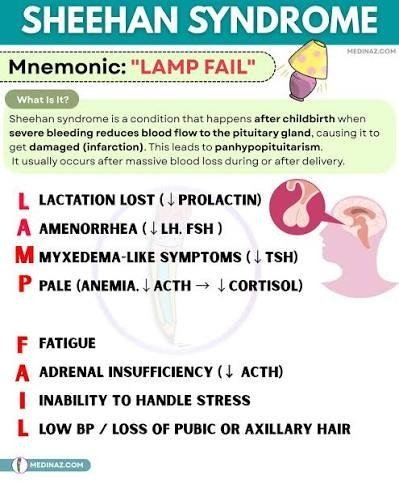
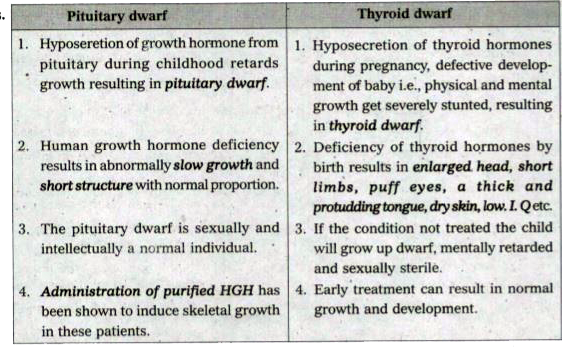
- Panhypopituitarism in childhood and dwarfism
- Difference between Loran dwarfs and African pygmies
- Gigantism and Acromegaly
- Posterior pituitary gland
- Physiological function of ADH
- Fig 76.10
- Regulation of ADH
- Oxytocin functions
- Make and prepare from flowcharts for hormone regulations.
Chapter 77:
EnR-P-003:
- Synthesis and secretion of thyroid hormones
- All steps for synthesis of thyroxine
- Fig 77.2 (vv important)
- Difference between T3 and T4 from image
- Transport of thyroxine
- Physiological functions of thyroid hormones with fig 77.5 complete till page 948
- Regulation of thyroid hormones
- TSH
- Fig 77.7
- Antithyroid substances all (extremely important MCQs)
- Hyperthyroidism (causes, symptoms, exophthalmos, diagnosis, treatment)
- Know the definitions and difference between thyrotoxicosis and Grave’s disease
- Hypothyroidism (causes, endemic, idiopathic, characteristics, diagnosis)
- Special attention to exophthalmos and Myxedema
- Cretinism (Imp)
Chapter 78:
EnR-P-004:
- Names of adrenal hormones(figure 78.1)
- Synthesis and Secretions of adrenocortical hormones
- Give a read to purple box
- Fig 78.2 (vvv important)
- Plasma bound hormones
- Adrenocortical hormones are metabolized in liver
- Functions of Mineralocorticoids
- Mineralocorticoid deficiency causes renal NaCl wasting…
- Mechanism of prevention of mineralocorticoid effect of Cortisol (11B-HSD2)
- Apparent Mineralocorticoid Excess Syndrome (vv important)
- Renal and circulatory effects
- Aldosterone escape important
- Excess aldosterone effects
- Deficiency of aldosterone
- Fig 78.4
- Regulation of aldosterone secretion (v imp)
- Function of glucocorticoids
- Effects of cortisol on carbs, protein, fats
- Adrenal diabetes
- Cortisol prevents inflammation (Important)
- Anti inflammatory effects
- Fig 78.7
- Read purple box especially Modulation of Glucocorticoid Effects
- Regulation of cortisol secretion
- Fig 78.8
- Circadian rhythm of glucocorticoids
- Synthesis and secretion of ACTH
- Products of POMC1 and POMC2
- Rest read for concepts
- Adrenal androgens complete (v important)
- All abnormalities of Adrenocortical secretion
- Difference btw Cushing disease and Cushing syndrome (google)
Chapter 79:
EnR-P-005:
- Physiological anatomy of the pancreas
- Insulin chemistry and synthesis with Fig 79.2
- Activation by insulin and effects with Fig 79.3 (vv important)
- Effect of insulin on carbohydrate metabolism (complete)
- Lack of insulin effect on the brain
- Effect of insulin on fat synthesis and storage
- Insulin deficiency causes lipolysis, ketosis and acidosis (important)
- Effect of insulin on protein metabolism
- Secretion of insulin + Fig 79.7 (vv important)
- Table 79.1 (v imp)
- Factors that stimulate insulin secretion (including purple box)
- Under ‘Role of Hormones in Switching Between Carbohydrate and Fat Metabolism’
- Name of hormones and whether released during hypo or hyperglycemia
- Effects of epinephrine
- Glucagon (complete)
- Somatostatin in blue box (Imp)
- Summary of glucose regulation
- Importance of blood glucose regulation
EnR-P-006:
- Diabetes mellitus (give a thorough read to whole topic as it is v important )
- DM type 1 (Clinical effects with explanations, eg polyphagia, dehydration, acidosis etc.)
- Treatment of DM type 1 (Imp)
- Type 2 DM
- Differences between both types of DM (table 79.3)
- Metabolic syndrome
- Table 79.2
- Treatment of type 2 DM
- Names and values of tests for diagnosis of DM
- Insulinoma (Important)
- Hypoglycemia
Chapter 80:
EnR-P-007, 008:
- Levels of calcium, calcium ions, phosphate ions and phosphorus in plasma
- Hypocalcemia and hypercalcemia
- In absorption and excretion just know:
- Vitamin D promotes Calcium absorption in intestine
- Renal excretion of Calcium is regulated at late distal tubules
- Renal phosphate excretion is controlled by overflow mechanism
- Important points about bone structure:
- Cortical and trabecular bone
- Major bone salt is Hydroxyapatite
- Tensile strength of bone is due to collagen fibers of matrix
- Compressional strength is due to Calcium salts
- Pyrophosphate regulation under Mechanism of Calcification
- Bone resorption from fig 80.6
- Control of rate of bone deposition by Bone stress
- Read Vitamin D and do fig 80.8
- Parathyroid Hormone:
- Osteolysis (rapid phase of Ca and phosphate mobilization)
- Slow phase of bone resorption (activation of osteoclasts)
- Fig 80.14
- Summary of effects of parathyroid (Imp)
- Read Calcitonin
- Do all clinicals from purple boxes (complete)
- Difference between rickets, tetany and osteomalacia
EnR-P-009:
- Adrenal medullary hormones and pheochromocytoma (from google or lecture slides)
Types of MCQs from Endocrinology:
- Scenario based about hormonal abnormalities
- Functions of hormones (options are given to confuse with functions of other hormones)
- Physiological reasons for increases or decreases in hormone levels + regulation
- Steps of hormone synthesis especially thyroid
- Sites and mechanism of action of hormones
- To pick true or false statements about hormones
REPRODUCTION AND LACTATION
(EnR-P-010 to 016)
Chapter 81:
- Fig 81.1, 81.2 and 81.3 (total 74 days)
- Hormonal factors that stimulate spermatogenesis
- Sites of maturation and storage
- Compositions of: seminal fluid, prostatic fluid, and semen
- Capacitation (important)
- Acrosome reaction (important)
- Why does only one sperm enter the oocyte?
- Effect of temperature and cryptorchidism (read)
- NOT to do Male Sexual Act
- Testosterone and Other Male Hormones complete purple box
- Functions of Testosterone and effect on primary and secondary sexual development
- Basic intracellular mechanism of action of testosterone (read)
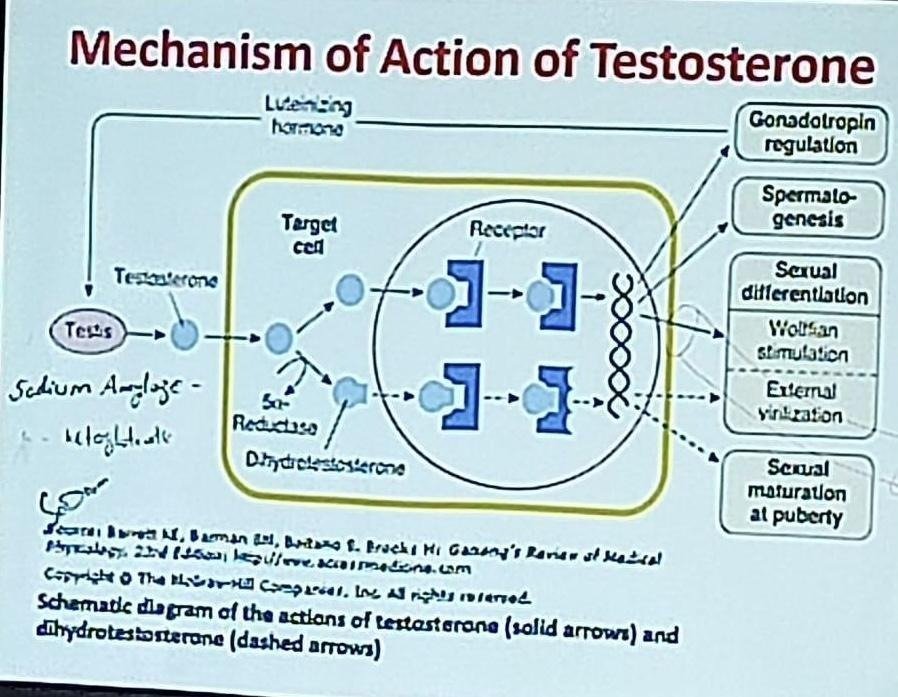
- Fig 81.10
- Role of Inhibin
- HCG secreted by placenta stimulates testosterone secretion by fetal testes
- Male Climacteric definition
- All abnormalities from purple box
Chapter 82:
- Fig 82.1, 82.2 and 82.3
- Fig 82.4 (concept)
- Ovarian Follicular Growth complete
- Ovulation
- Fig 82.6 (vv important)
- Luteal Phase read
- Fig 82.7
- Fate of Progesterone
- Fig 82.8
- Functions of Estrogen complete
- Functions of Progesterone complete (focus on headings of functions for both)
- Fig 82.9 and 82.11
- Anovulatory cycles
- Puberty and Menarche
- Menopause (v important)
- Abnormalities of secretion by ovaries
Chapter 83:
Can do from Firdaus; important topics from Guyton mentioned below:
- Double Bohr effect (read once) written in diffusion of oxygen through placenta
- Human Chorionic Somatomammotropin
- Response of mother’s body during pregnancy (in purple box)
- Parturition
- Oxytocin causes contraction of the uterus
- Onset of labor (+ve feedback)
- Fig 83.10
- Suppression of female ovarian cycles in nursing mothers after delivery
Chapter 84:
Only these two topics:
- Respiratory system from first page + onset of breathing and cause of breathing at birth (page 1063)
- Changes in fetal circulation at birth (focus on headings)