Medico Guides 2nd Block Physiology Guidelines

Prepared by:

                    Hadia Shakeel (G15)

Compiled by:

                     Hafiz Muhammad Umair Noor (G12)

  • Guyton and Hall Textbook of Medical Physiology 14th Edition (Chapter numbers are mentioned according to this edition)
  • Jaypee Essentials of Medical Physiology 9th Edition

MEMBRANE PHYSIOLOGY

MS-P-001:

  • Membrane potentials across selectively permeable membrane pg 63  (read for Basic concept + mcqs)

MS-P-002:

  • Membrane potential vs Nerst potential
  • Nernst potential and it’s basis
  • Nernst equation (calculate the Nernst potential  for Na and K by putting values in the equation) v.v.imp

MS-P-003:

  • Goldman Equation pg. 64 v.v.imp (use to calculate diffusion potential & resting potential when membrane is permeable to several different ions)
  • 4 key points of Goldman Equation
  • Normal distribution of Na K Ca and Cl across the cell membrane

MS-P-004:

  • Resting membrane potential of neurons pg. 65
  • Table 5.1 imp for mcqs
  • Fig 5.5
  • Origin of RMP & physiological basis i.e factors contributing
  • ⁠Hyperkalemia and Hypokalemia( imp)  ( pic is shared in the group)
  • ⁠Membrane Stabilizers ( lidocaine, calcium, mexiletine, valproic acid)
  • ⁠Inhibition of excitability stabilizers and local anesthetics pg. 76 ( v imp) and their mechanism of action

MS-P-008:

  • Ionic basis of action potential
  • Phases of action potential pg. 67 and 68
  • Definition of action potential
  • Properties of action potential will be covered in the table containing differences between action and Graded potential
  • Pics for monophasic action potential and refractory period are shared in the grp.
  • Role of Other ions during action potential pg 70 blue box ( v imp + tetany is seq ) role of Ca+ in it
  • Rheobase , chronaxie , utilization time ( vimp pic is shared in the group)

MS-P-011:

  • Special characteristics of signal transmission in nerve trunks (imp) pg 74
  • saltatory conduction and its importance

MS-P-10:

  • Graded potential + table 29.1 basis& properties
  • Graded vs Action Potential difference
  • Compound Action Potential .. basis& properties
  • From jaypee chap 29 pg 173 for compound action potential and pg no 174 for graded potential
  • For EPSP and IPSP Fig no 137.4 and 137.5

AUTONOMIC NERVOUS SYSTEM

MS-P-007

  • ANS is supposed to be covered from Chp 61 pg no 763 to 770…
  • Receptors of ans can be covered from receptor tables in block 1 pharma…
  • The most imp thing in this chp is the table 61.2…..apko mcqs yahe se ane hain to isko bohat ache se prepare kerna hay
  • You can also watch the yt lecture of Dr.asif qureshi for this chp.

NERVE PHYSIOLOGY

MS-P-005:

  • Physiological anatomy of neuron
  • Complete chapter till functions of neurilemma
  • Neuron anatomy
  • Myelin sheath, neurilemma
  • Process of myelination
  • For Axonal transport pic is shared in the grp

MS-P-005(b):

  • Complete chapter 
  • Neuroglial cells and their roles

MS-P-006:

  • Properties of nerve fibers
  • Don’t go into the detail of this chapter just cover it superficially
  • Focus on basic definitions of the properties of neuron
  • Complete chapter
  • Nerve fibers classification  table 132.1…..table bohat imp hay ise may say mcqs ayein ga apko

MS-P-011: Synapse

  • Fig 137.3
  • Functional classification of synapse
  • Fig 137.2

Chapter 134: (Jaypee)

MS-P-013:

  • Multiple Sclerosis Chp 1 pathology section block 2
  • GB syndrome from chp 1 pathology section block 2
  • Causes, features and pathophysiology
  • Degeneration of neuron (Wallerian Degeneration)  
  • Regeneration of neuron

MUSCLE PHYSIOLOGY

MS-P-014:

  • Physiological anatomy of skeletal muscle
  • Sarcomere
  • Fig 6.3

MS-P-015:

  • ⁠ Characteristics of muscle contraction
  • Fig 6.12
  • Also do examples Of Isotonic and isometric contraction
  • Fast vs slow muscle fibers

MS-P-016:

  • Motor unit
  • Force summation
  • Multiple summation
  • Frequency summation and tetanization (imp)
  • Treppe
  • muscle fatigue
  • Remodeling +Blue box

MS-P-017:

  • Complete Chapter
  • Anatomy, generation and conduction of impulse at NMJ
  • Generation of endplate potential
  • Excitation and contractions coupling v.v.imp.
  • Myasthenia Gravis (v.imp )
  • NMJ enhancer and inhibitors

MS-P-018:

  • Types of Smooth Muscle
  • Physiological basis Of Smooth Muscle contraction
  • Smooth muscle contraction without Action Potential
  • Hormones causing contractions without Action Potential
  • Latch mechanism and importance
  • Stress Relaxation
  • Regulation By Calcium
  • Nervous and hormonal Control (Complete till end)
  • Comparison between skeletal and smooth muscle contraction

Medico Guides 2nd Block Histology Guidelines

Prepared by:

                    Harram Sameer (G15)

Compiled by:

                     Hafiz Muhammad Umair Noor (G12)

  • If you do histology in a right way, you can easily get marks in this subject.
  • Give a good read  to book ,highlight important lines and shortlist all the important points.

Note: The Screenshots of LOs are added so that you can read the LOs before reading the Guidelines

  • Diagrams are very important .
  • Histology’s trick is same as that of Gross anatomy (Visual memory), Visualize the Pictures and its features!
  • Mostly students don’t take the lectures for histology, but if your concept about anything isn’t clear , then you should take lectures. I’ll suggest lectures with every chapter.
  • Medical Histology by Laiq Hussain Revised 7th Edition (Chapter numbers are mentioned according to this edition)
  • Difiore’s Atlas of Histology
  • Mannual Of Histology (your practical notebook!)
  • Shortlisted notes of histology are also shared in the group (By Zayn ul Hassan from G12)


(MS-A-075, MS-A-076)

Lecture : Byte Sized Med or MBS Medilectures

  • Histo diagram of every type (vv imp)
  • LO 1 : Microscopic and Ultramicroscopic structure of all types of cartilages from laiq hussain chapter 7
  • LO 2: Compare structure of cartilage and bone matrix from any short book
  • LO 3:Diff b/w 3 types from your practical copy or any short book with examples (asked in viva)
  • LO 4: Histological basis of bone and cartilage from any short book
  • Also do Microscopic features and function of perichondrium and Extracellular matrix of cartilage


(MS-A-072, MS-A-073, MS-A-074)

Lecture : Byte Sized Med or MBS Medilectures

  • LO 1 &2: Light and Electron Microscopic structure of bone cells , compact and spongy bone from laiq Hussain chap 8
  • LO 3 : osteoporosis and osteopetrosis from chap 8
  • LO 4 : Histological basis of bone repair from chap 8 or recall it from General Anatomy chap 3
  • LO 5 : Compare Microscopic features of compact and spongy bone from any short book or your practical copy
  • LO 6 : Features of intramembranous and endochondral ossification from chap 8
  • LO 7 : Zones seen in epiphyseal growth plate from chap 8 ( vvimp)
  • LO 8 : Metabolic role of bone from any short book
  • LO 9: Osteoporosis from Chap 8 and osteopenia from AI or any short book
  • Also do these important topics:
  • Organic and inorganic matrix for mcqs
  • Haversian system (v imp)
  • Compact and spongy bone diagram (vvv imp)
  • Appositional growth and Interstitial growth ( imp)

(MS-A-070, MS-A-071)

  • LO 1: Microscopic and Ultramicroscopic structure of skeletal muscle from chap 10
  • LO 2 : Basis of Myasthenia Grevis from chap 10
  • LO 3&4: Microscopic and Ultramicroscopic structure of cardiac and smooth muscle from chap 10
  • LO 5: Compare histological features of three types of muscles from your  practical copy
  • LO 6 : Myosatellite cells and their role in regeneration of muscle  , hyperplasia and hypertrophy of muscle fibers from chap 10
  • LO 7: Leiomyoma from chap 10
  • Important topics :
  • Caveolae, dark, light, I and A band, sarcomere for mcqs
  • Triad and diad present in which type
  • Intercalated disc (imp proff qs)

Cartilage Histology Notes by Zuha Iftikhar ( G 14 )

Medico Guides 2nd Block Embryology Guidelines

Prepared by:

                     Asma Shafique (G15)

Compiled by:

                     Hafiz Muhammad Umair Noor (G12)

  • KLM Clinically Oriented Embryology 11th Edition
  • Langman Medical Emryology 14th Edition
  • Do all clinicals
  • Selfless Medicose

MS-A-065:

  • Skip genetic and molecular factors
  • Straited skeletal muscle development. (Make a flow chart for memorizing it).
  • Innervation Of Axial
  • Skeletal Muscles + fig 11.4
  • Origin of muscles from abaxial and primaxial precursor table 11.1 (vvvv imp)
  • SMCs and Cardiac development just read it
  • Clinicals (all)

MS-A-066:

  • Limb development and growth. Shortlist it & Make a flow chart for memorizing it.
  • Topographic anatomy of UL and LL
  • Fig 12.5(imp)
  • All clinicals given in Langman (vvv imp)
  • Amelia
  • Meromelia
  • Phocomelia
  • Cleft Hand and Foot
  • Polydactyly
  • Brachydactyly
  • Syndactyly
  • Congenital club foot

MS-A-069:

  • Development of bone and cartilage only

MS-A-067:

  • Blood supply of limbs
  • Cutaneous innervation of limbs

(This chapter is not included in your LOS, but questions from it were asked in previous year, so you should at least cover the following topics)

  • Introduction
  • Vertebrae and vertebral column
  • All clinicals
  • Figures for ospe

Medico Guides 2nd Block Biochemistry Guidelines

Prepared by:

                   Muhammad Bilal Tariq (G15)

Compiled by:

                   Hafiz Muhammad Umair Noor (G12)

  • Lippincott Illustrated Reviews: Biochemistry 8th Edition (Chapter numbers are mentioned according to this edition)
  • Satyanarayana Biochemistry 6th Edition
  • Harper’s illustrated Biochemistry 30th edition
  • ABC of Clinical Genetics 3rd edition
  • Chatterjea Textbook of Medical Biochemistry 8th edition
  • Instant Biochemistry by Faiq Ahmed 3rd edition


CARBOHYDRATES

MS-B-001:

                 Lectures: Awesome biochemistry or NJOY biochemistry

  • Classification of carbohydrates:
  • General Classification pg # 9 & 10
  • Monosaccharide Classification pg # 11 (Table 2.1 & 2.2)
  • Oligosaccharide(disaccharide) Classification pg # 19 & 20
  • Polysaccharide Classification pg # 20 to 25
  • Biomedical importance of each class of carbs is given along with their classification

MS-B-002:

  • Isomerism of carbohydrates pg # 10 to 15


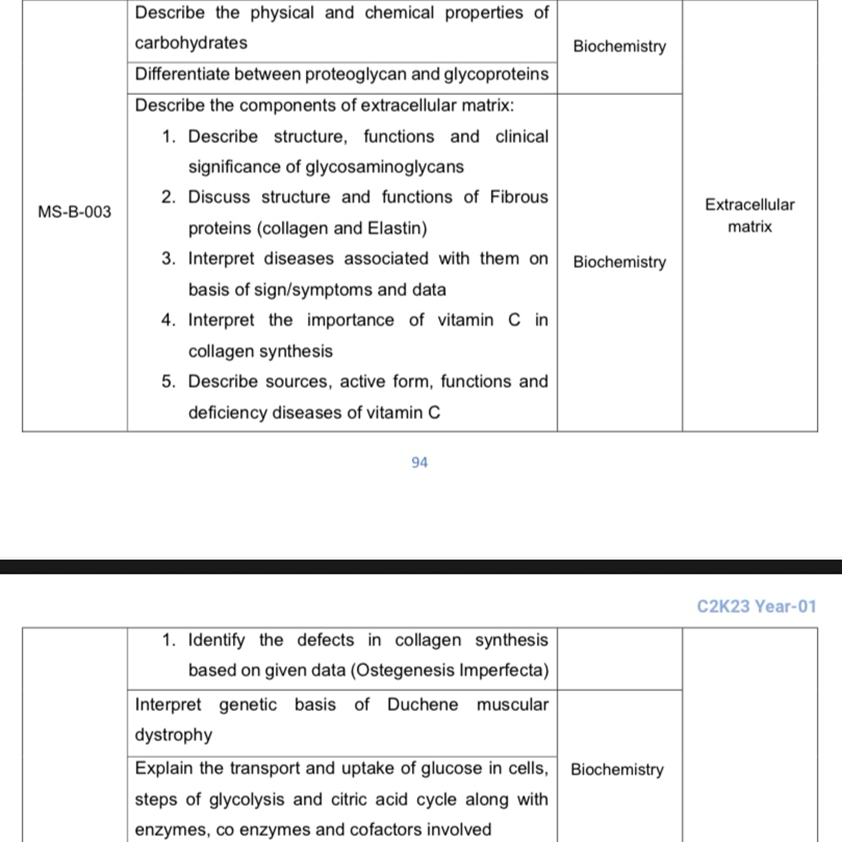
MS-B-003 (a):

  • Physical properties of carbohydrates
  • Chemical properties of carbohydrates (Reactions of monosaccharides) pg # 15 to 18
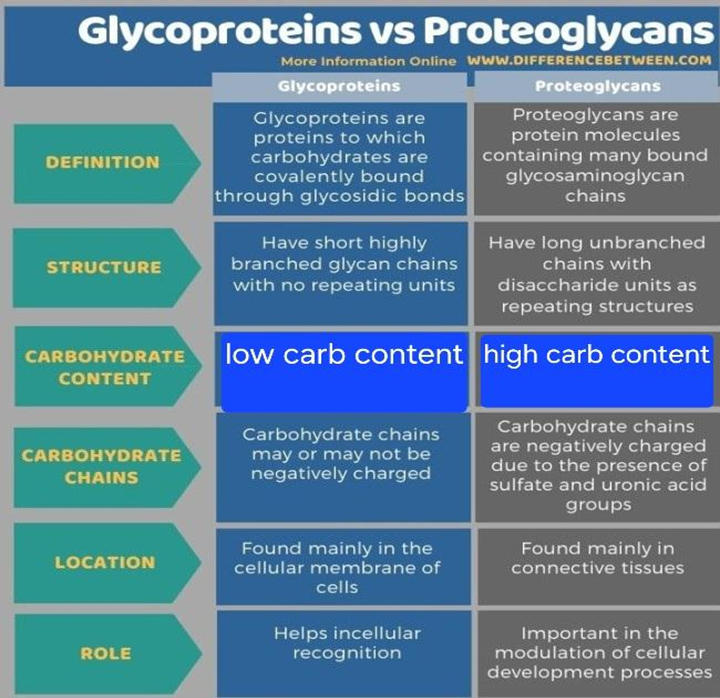
  • Difference between proteoglycans and glycoproteins is given in the pic shared below

MS-B-003 (b):

  • Structure, function & clinical significance of Glycosaminoglycans (GAGs) pg # 173 to 175 (till before synthesis only) (Fig 14.4 vvvv.imp)

MS-B-003 (c):

  • Structure & function of Fibrous proteins pg # 45 to 50 (Collagen) & pg # 52 (Elastin)
  • Fig 4.7 is imp ( Rather than doing the whole text, you can do biosynthesis from this fig )
  • Diseases associated with Fibrous proteins pg # 50 to 53 (Ehler-Danlos syndrome, Osteogenesis Imperfecta, Alport syndrome & Emphysema)
  • Role of Vitamin C in collagen synthesis (Hydroxylation) pg # 49
  • Duchene Muscular Dystrophy from the PDF with you.

Lectures for Glycolysis and TCA cylce:  Ninja Nerd (Best in my pov ) and brainless medicos

MS-B-003 (d):

  • Transport & uptake of glucose, pg # 105 to 107 (heading IV. Glucose transport into cells)
  • Glycolysis reactions & regulation (heading V. Glycolysis reactions, heading VI. Hormonal regulation)

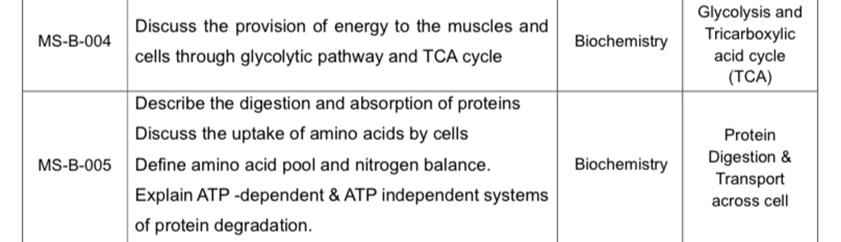
MS-B-004:

  • Full chapter in detail
  • You should know about the vitamins of TCA cycle
  • The vitamins are B1 as TPP , B2 as FAD , B3 as NAD and B5 as a component of CoA
  • Lecture :  NJOY or Brainless or Awesome biochemistry

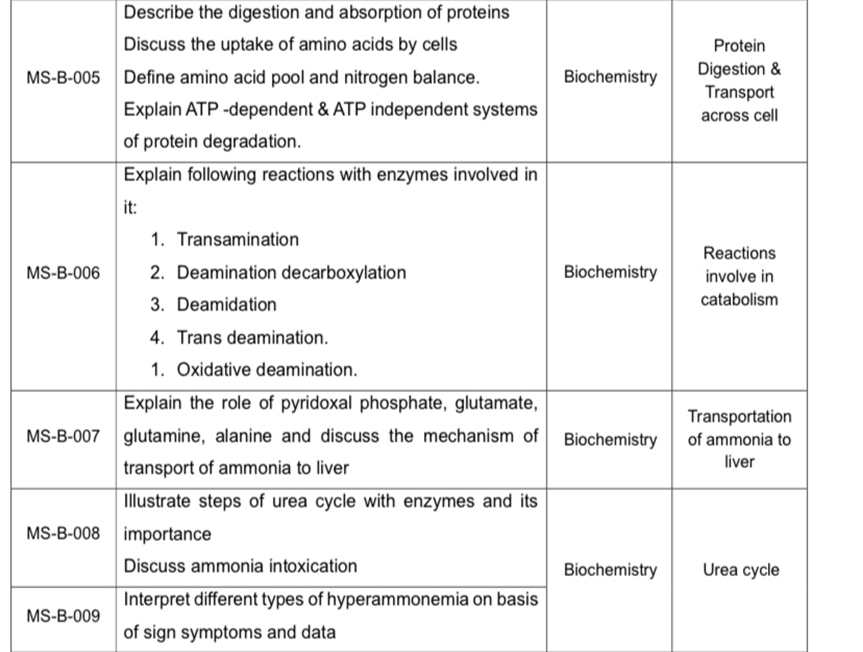
MS-B-005:

  • Digestion & absorption of proteins, pg # 271 to 276

MS-B-006:

  • Transamination from pg # 276 to 278
  • Oxidative Deamination from pg # 278 to 279
  • Do Deamidation, Decarboxylation & Transdeamination from PDF shared.

MS-B-007:

  • Role of PLP covered in Transamination reaction ( Fig 19.9 )
  • Role of Glutamate, Glutamine & Alanine (GLUCOSE-ALANINE CYCLE) pg # 279 (Topic : Ammonia transport to liver)
  • For ammonia transport to liver, 2 pathways are mentioned, do both+ Fig 19.13 (vvv imp)

MS-B-008:

  • Urea Cycle pg # 279 to 282

MS-B-009:

  • Hyperammonemia pg # 282 till end of chapter
  • Lectures: Brainless or selfless medicos

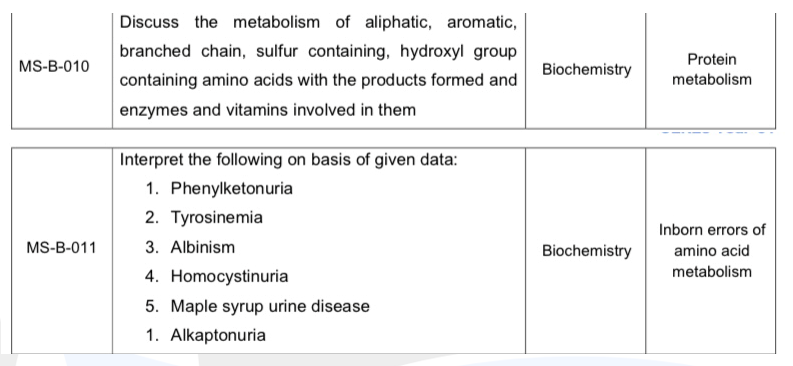
MS-B-010:

  • Metabolism of Amino Acids pg # 290 to 298

MS-B-011:

  • Amino Acid Metabolism Disorders pg # 298 till end of chapter

VITAMINS

MS-B-003 (c):

  • Sources, functions, active form & deficiency of Vit C, pg 427 & 428

MS-B-007:

Role of PLP, pg # 428

Amino Acid Metabolism Reactions by Medico Guides

Medico Guides 2nd Block (UL) Gross Anatomy Guidelines

Prepared by:

                     Harram Sameer (G 15)

                      Khansa Noor ( G 15)

Compiled by:

                    Hafiz Muhammad Umair Noor (G12)

Recommended Book:

  • Snell’s Clinical Anatomy by Regions Edition 2026-27
  • BD Chaurasia only for some topics
  • For Gross Anatomy, Visualization is the key. Visualize everything you study with the help of Anatomy 3D Atlas App or Netter Atlas . If you don’t visualize the structures , you will not be able to retain them. Also revision is the key to retain things for a long time.
  • In proff , most of the  questions asked were related to Clinicals . You have to do all the clinicals given in Snell whether they are mentioned in LOs or not. While preparing a topic try to do it’s clinicals with it .If you compile the clinicals and try to learn them in the end , then it will become a time taking task.
  • Use BRS Gross Anatomy for practicing mcqs and use Chapter 1 for practicing past mcqs.

Note: Guidelines are according to Snell but if a topic seems difficult to understand from Snell , you can use BD for that topic.

           For Gross Anatomy , I would suggest that first of all take Dr Azam’s lectures for building basic concepts , then you can take topic wise lectures of any of the following YouTube channels:

  • TCML
  • Dr Adeel Bandok
  • Essentials of Medical Sciences
  • Johri MBBS
  • Dr Bhanu Prakash
  • Dr Sumit Gupta

UPPER LIMB

  • You have to prepare bones only for your Ospe . In ospe questios are asked related to bone’s Side Determination, Bony features and Muscle Attachments, From bones mcqs are asked about their clinicals only. While preparing a bone , try to do its clinicals at the same time and don’t waste your time in making notes of bones as they’re asked only in Ospe.
  • For Bones you can take the lectures of following channels :

Dr Hasna  , Johri MBBS or Angelina Isaac

( I have taken Dr Hasna’s lectures and they were really helpful  .She also tells mnemonics for muscle attachments in her lectures)

  • Prepare all muscle tables of Snell  . Do origin, insertion, nerve supply and action of muscles from those tables and skip root values.
  • While preparing muscle tables from Snell , open 3D atlas app or netter atlas in front of you to visualize muscles . In 3D atlas app  It is preferable to isolate a particular muscle you are studying so you can clearly visualize its origin and insertion.
  • If you want to take Animated lectures of muscles you can take the following:
  • Also thoroughly go through muscles on  models because muscle models can also come in Ospe and the examiners can ask you to locate a particular muscle on muscle model and tell it’s actions In modular system, models are rarely asked and they mostly give diagrams from Snell in OSPE, so prepare them thoroughly.

        All nerves are very important (Do their Root values ,Course, Muscles supplied by nerve, branches, lesions covered in clinicals from Snell)

  • Preferable to do all nerves from Snell . In Snell flowcharts of Nerves are also given , prepare them as well
  • If you want to take Animated lectures for Nerves then you can take following lectures:
  • Visualize Nerves from Netter Atlas or 3D atlas apps
  • In your syllabus , the LOs of Arteries are written compartment wise but it is preferable to do the complete course of arteries and veins at once

For example, if you are preparing ulnar artery then do its course in forearm and hand at once rather than first doing the course of all arteries in forearm and then doing their course in hands .Same method should be preferred for Nerves and Veins as well.

LO WISE GUIDELINES

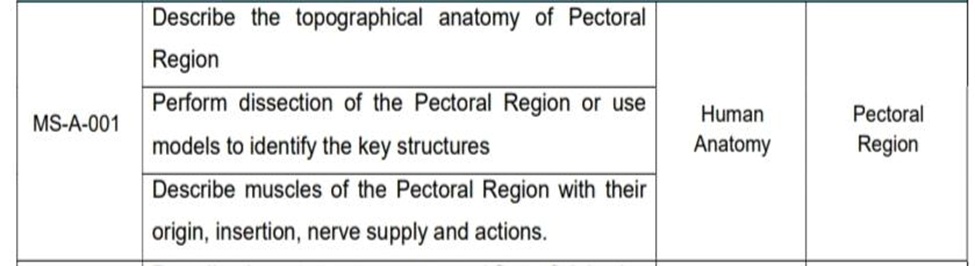
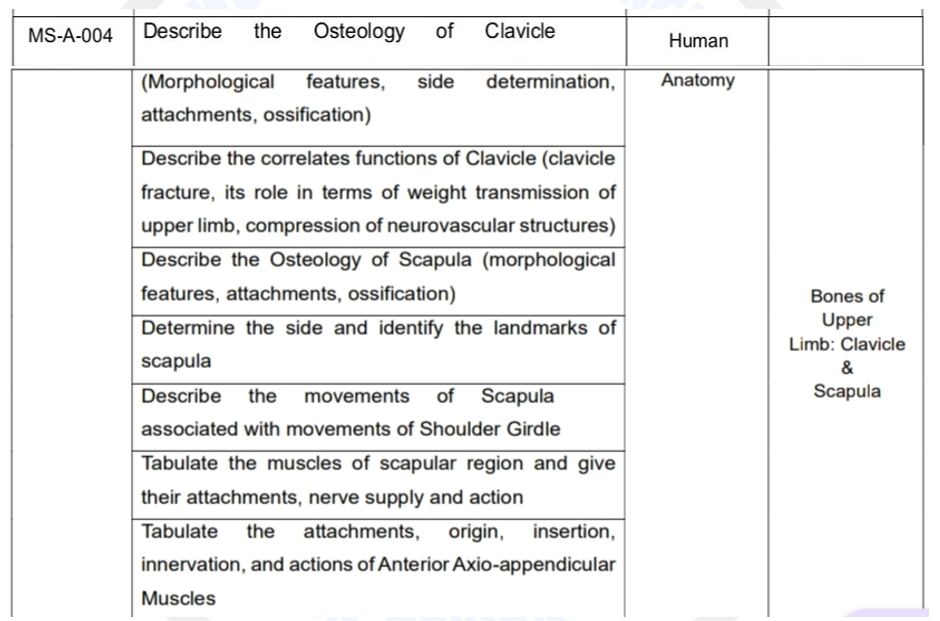
  • For this LO, you only have to learn muscles of pectoral region given in Snell’s table 3.3 properly do their Nerve supply and action and their clinicals.

            e.g paralysis of serratus anterior causes winging of scapula.

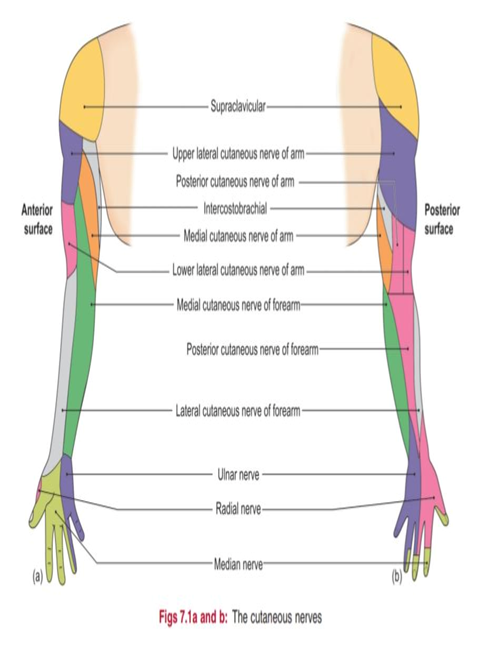
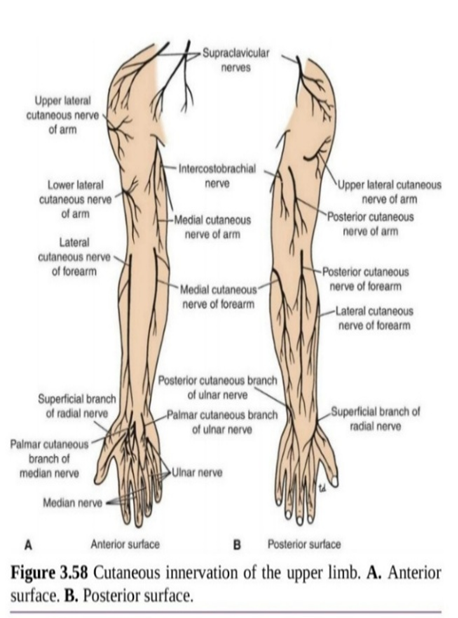
  • For cutaneous nerve supply of upper limb, do the diagram 3.58 Also do clinical note about dermatomes and cutaneous nerves.
  • For superficial veins, you have to do cephalic and basilic veins and their tributaries given on Pg 159 ( Snell chap 3)
  • Clavipectoral fascia: ( Snell  chap 3 Pg 107), Do its extent, attachment, relations and structures passing through it .
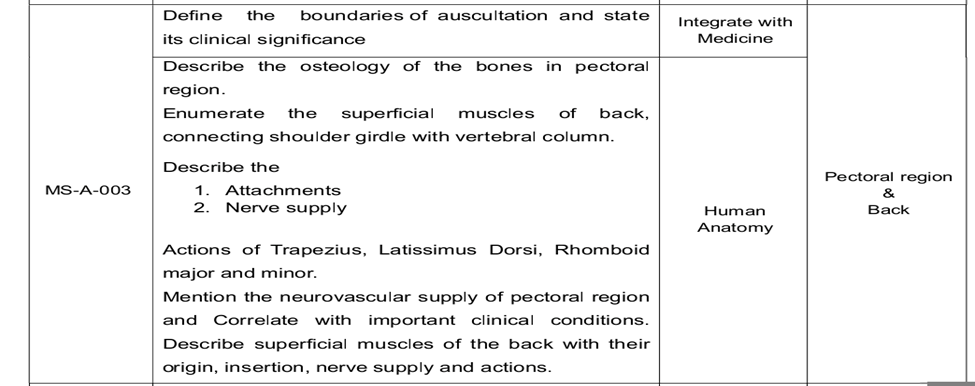
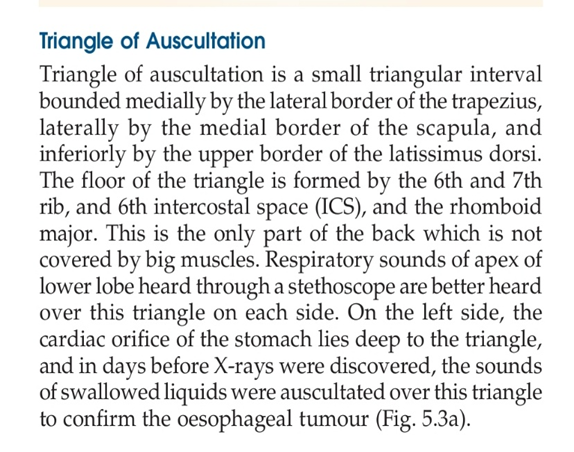
  • Triangle of auscultation: You have to do it from BD. Both the boundaries and clinical importance is   mentioned in it.
  • Bones of pectoral region are clavicle and scapula. Take lecture of Dr. Hasna, And do their bony landmarks and features from here. Muscle attachment will be done from Snell’s muscle table, so don’t need to take lecture for that.
  • Muscles of back are given in table 3.4. Do all of it (origin,insertion,nerve supply and action.)
  • Blood Supply of Pectoral region: Axillary Artery with branches.
  • Also do all the clinicals
  • Osteology of clavicle and scapula (already cover in previous LO), Do it for OSPE.Also do diagram of origin and insertion given in snell (they were asked in our proff ospe).
  • For Scapular region Muscles, Do Table 3.5 (origin, insertion, Action and Nerve Supply). Also do movements of scapula .
  • Anterior-Axio Appendicular Muscles are same of Pectoral Region Muscles (Table 3.3 of Snell)
  • Sternoclavicular joint (imp). Do a topic of Sternoclavicular joint from Snell (page # 162).you have to do its type, ligaments, nerve supply , articulating surface and movement.
  • Also do the acromioclavicular joint for mcqs and viva.
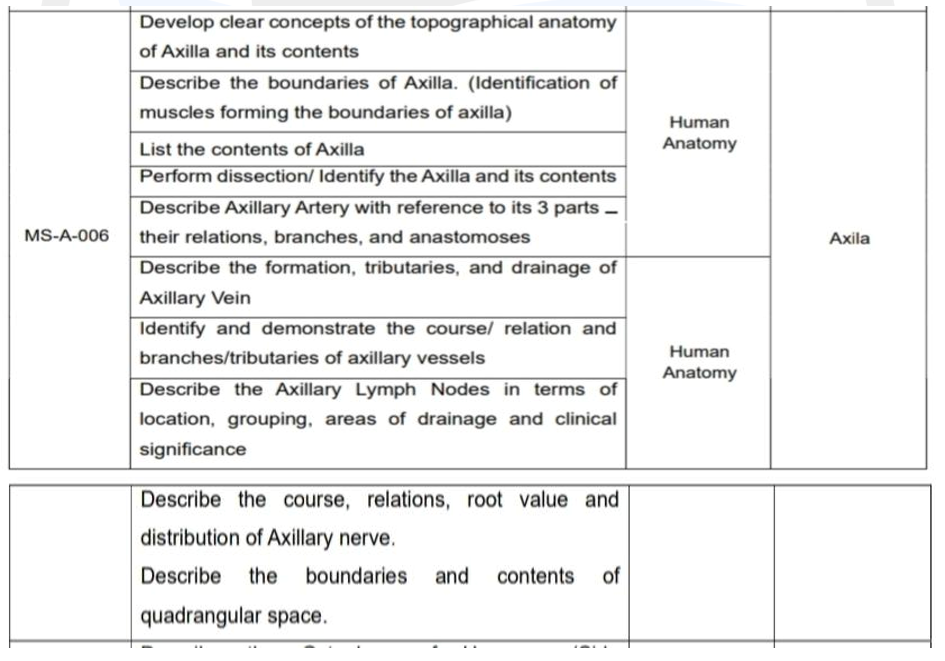
  • Axilla: Do it from Snell chap 3 Pg 106 + 107 or from BD chap 4, contents and its Boundaries (vvv.imp)(pg.106)
  • Axillary Artery: course , branches and relations of second part are very imp , Do it from Snell chap 3 Pg 153-155 .Do names and branches given from all parts along with their course .

            For Axilla and Axillary Artery, you can take the lectures of Essential of Medical Sciences

  • Also do anastomosis around shoulder joint from Snell chap 3 Pg 155
  • Axillary vein: tributaries and drainage (imp for MCQ) from Snell chap 3 Pg 159
  • Axillary Lymph Node: location, Group, Area of Drainage. (pg.159- 160)

            You can take Dr.adel bandok lecture for it.

  • Axillary Nerve: Origin, Course, Root Value.(pg.147), Also do its clinicals i.e Regimental Badge Sign
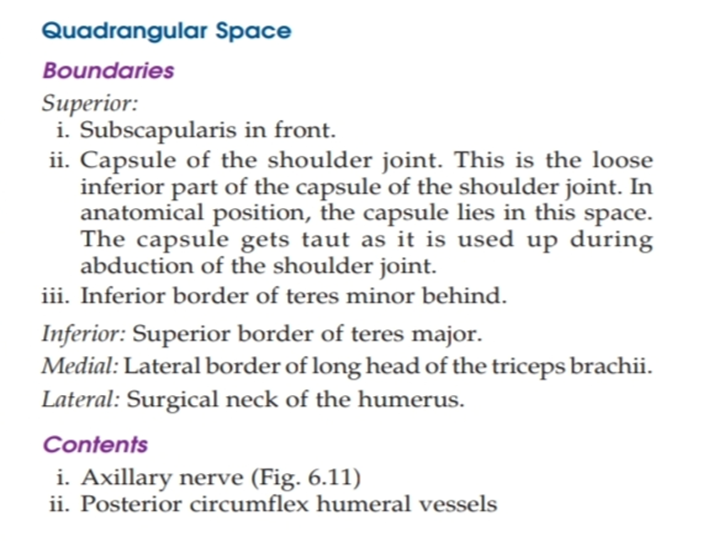
  • Quadrangular Space: do its contents and Boundaries
  • Take Dr. Hasna’s lecture, do its side determination and bony features and give one read from book

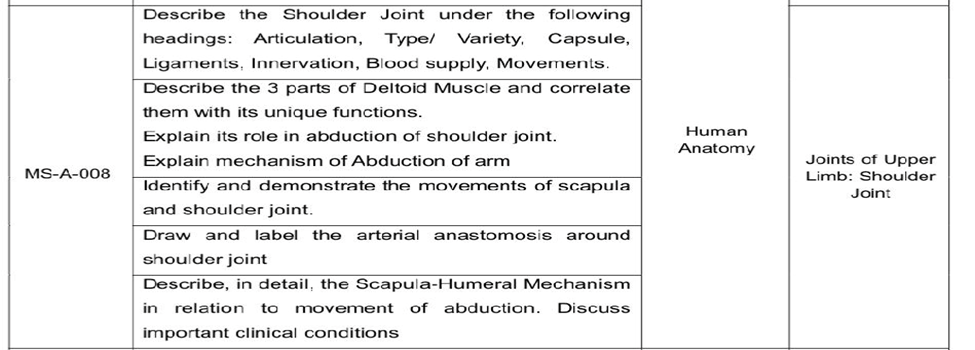
Shoulder joint (imp):

  • Do it from Snell (pg.164). Do all of it( Type , Articular Surface , bursas ,Blood Supply , Capsule , Innervation , Movements , Nerve Supply , Ligaments)
  • Deltoid Muscle has three parts : Clavicular , Acromial and  Spinal part.                           Clavicular Part : Abduction                Acromial and Spinal Part : Stabilizes Abduction      
  • Learn the mechanism of abduction and role of muscles in it
    • 0-15°: supraspinatus muscle
    • 15-90°: deltoid muscle
    • 90-180°: trapezius and serratus anterior
  • Anastomosis around scapula (imp) pg.155
  • Scapulohumeral mechanism from Snell chap 3 Pg 167 .You can take Dr Hasna’s or Muscle and motion lecture for understanding it
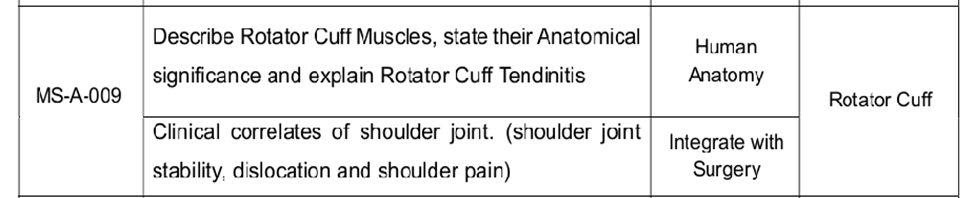
  • Rotator Cuff Muscles:Attachement , Nerve Supply , Action (Snell’ table 3.5)                   MNEMONIC : SITS                                                   
    • Supraspinatus                                                     
    • Infraspinatus                                                      
    • Teres Minor                                                       
    • Subscapularis                         
  • Clinical: Rotator Cuff Tendinitis ( Snell)                          
  • Shoulder joint Clinicals :Shoulder pain , Shoulder Joint Dislocation ( given in clinical notes)

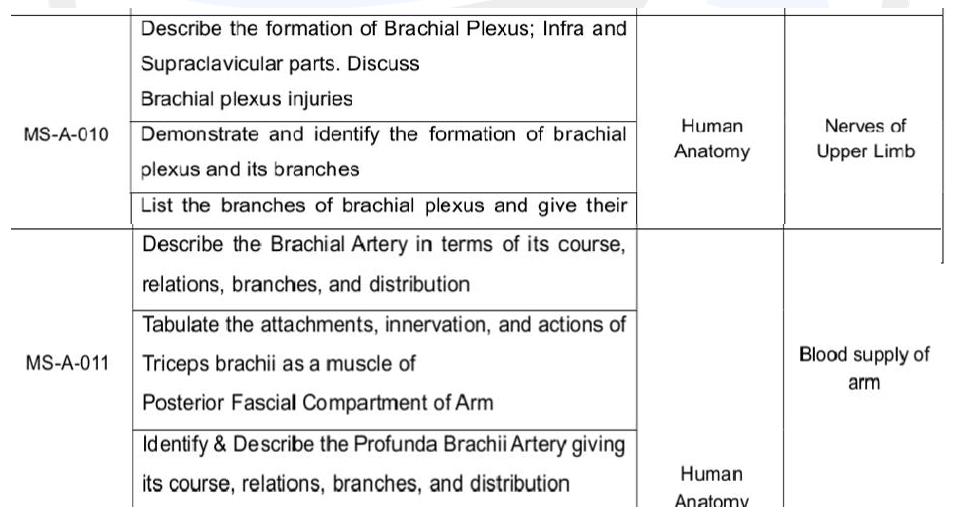
Brachial plexus: (vvv.imp)

  • For Brachial plexus, you can take the lecture of Dr. Azam or ninja nerd.Make notes for it. This topic is very important for MCQs. Do it from Snell chap 3 or from BD.
  • Clinicals: Erb-duchenne palsy and Klumpke’s palsy.
  • Muscles of anterior and posterior compartment of arm given in snell table 3.6
  • Musculocutaneous nerve(pg.145): learn its origin, course, branches and tributeries
  • The cutaneous supply of arm is already covered in previous LO.

        For nerves, either take the lectures of dr sumit gupta or dr azam and then do it from Snell.

Brachial Artery: Origin , Course , Distribution and Relation. From  Snell chap 3   

  • Profunda Brachii Artery: Origin , Course , Distribution, branches (Snell chap 3 pg157)
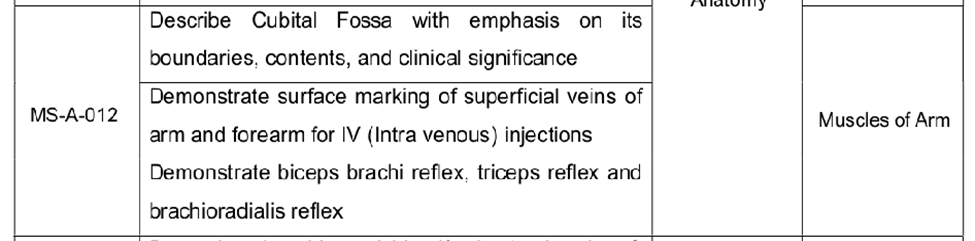
  • CUBITAL FOSSA (imp): Boundaries , Contents from Snell chap 3 Pg 111 and Clinical significance. MNEMONIC for Contents: MBBR  
    • Median Nerve                                                                             
    • Brachial Artery                                                                                 
    • Biceps Brachii Tendon                                                                                 
    • Radial Nerve (Deep Branch)
  • Clinical Significance: For Transfusion of Blood, Sampling of Blood, IV Injections.                         
  • For reflexes , read clinical notes on Page#148 ( Snell Chap 3) and watch videos.
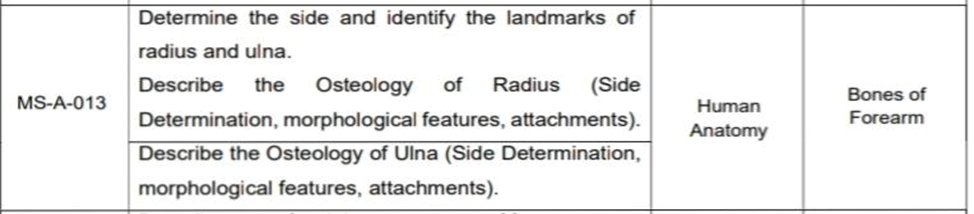
  • These LOs are only for ospe .Prepare the Osteology of radius and ulna , their Side Determination , landmarks (bony features)  and attachments from Dr Hasna , Johri MBBS or Angelina Isaac’s lectures
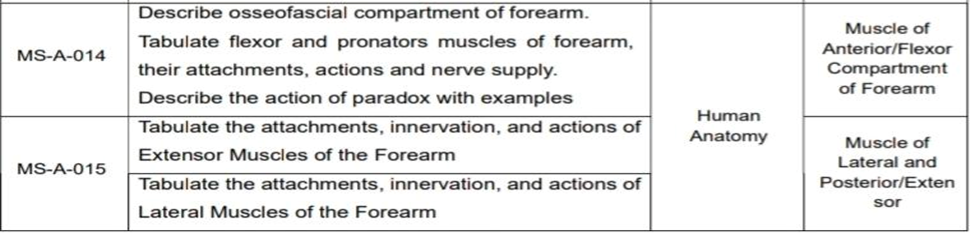
  • Do the osseofascial compartment of forearm from Snell chap 3 , also read table 3.2 of Snell ( contents of osseofascial compartment of forearm)
  • For Attachments ( origin , insertion) , innervation ( nerve supply) and actions of Flexors and pronators of forearm from Snell table 3.7 ( In  different editions of Snell the numberings of tables are different , I am telling the numberings according to edition 2026-2027)
  • Action of paradox with examples from AI or any short book
  • Attachments, innervation and actions of Extensors of forearm from Snell table 3.9
  • Attachments , innervation and actions of lateral muscles of forearm from table 3.8 of Snell
  • Nerves of forearm ( ulnar , Median and radial nerves ) and muscles of flexor and extensor compartments of forearm from Snell chap 3
  • Diagrams of Cutaneous innervation and dermatomes from  Netter Atlas  , also prepare the complete table of cutaneous innervation of Upper limb from BD chap 7 .Table 7.1 is important , while preparing it skip root values . Also do the definition of dermatomes.
  • Ulnar , Median and Radial nerves from. Snell chap 3 , you should know about their root values , course , muscles which they supply and their clinicals .Also prepare the flowcharts of Nerves given in Snell as well .
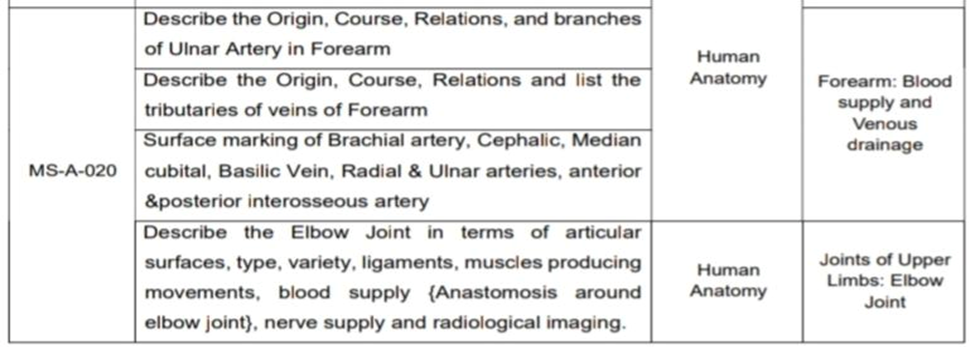
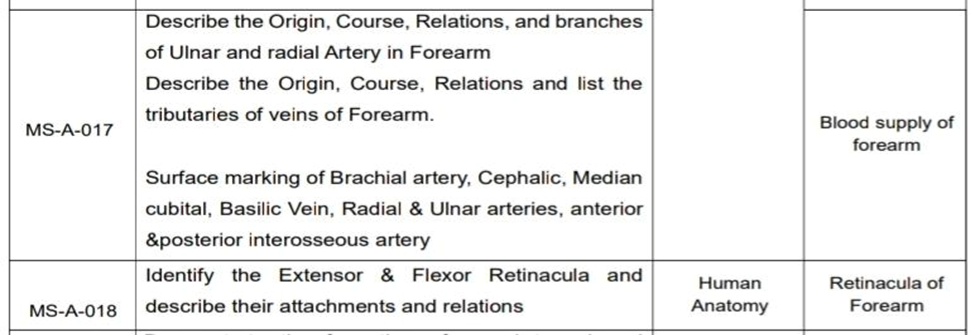
  • Origin , course, relation and branches of ulnar and radial artery from Snell chap 3
  • After preparing from Snell , you can also go through the Table of Arteries given in BD’s appendix, in these tables Arteries are given in summarized form and remember visualization is the key to retain everything related to Gross Anatomy
  • Origin, Course, Relations and tributaries of superficial and Deep Veins from Snell chap 3
  • Surface markings of the given arteries and veins are only for Ospe.
  • Extensor and Flexor Retinacula from Snell chap 3 given in wrist portion (they’re v.imp)
  • Do The compartments of Extensor Retinaculum from BD chap 9 table 9.8
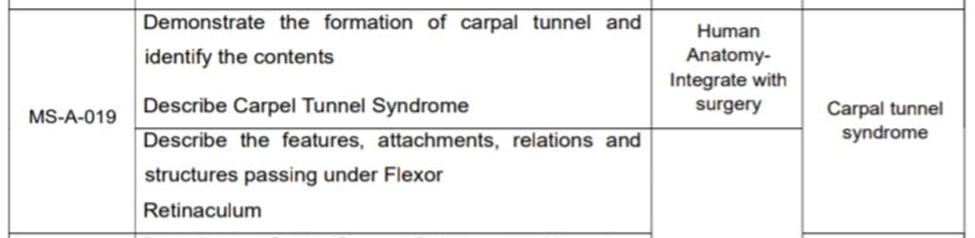
  • Formation of carpal tunnel and it’s contents from Snell chap 3 given in wrist portion Pg 121
  • Carpal tunnel syndrome and Anatomical Snuff box from Snell chap  3 Pg 122
  • Features, attachments, relations , structures passing under flexor retinaculum from Snell chap 3 given in Wrist Portion
  • First three LOs of this code are exactly similar to the LOs of code MS-A-017
  • Before preparing Joints , First Cover all BONES and MUSCLES along with their actions. After bones and muscles, all joints will become quite easy
  • You’ve to do Type, Variety, Articular Surfaces, Ligaments, Blood Supply, Innervation of joints
  • Joints movements & muscles involved in each movement are  v.v.imp
  • Elbow joint in terms of articular surfaces , type , variety , ligaments , muscles producing movements, blood supply, nerve supply from Snell chap 3 .It’s radiological imaging is only for ospe . ( Skip the relations of elbow joint)
  • Anastomosis around Elbow joint is vvimp . Dr Azam’s lecture is enough for it.

Note: For Quick Revision of Joints after preparing the joints topic from Snell, you can use Anatomy Decoded Notes.

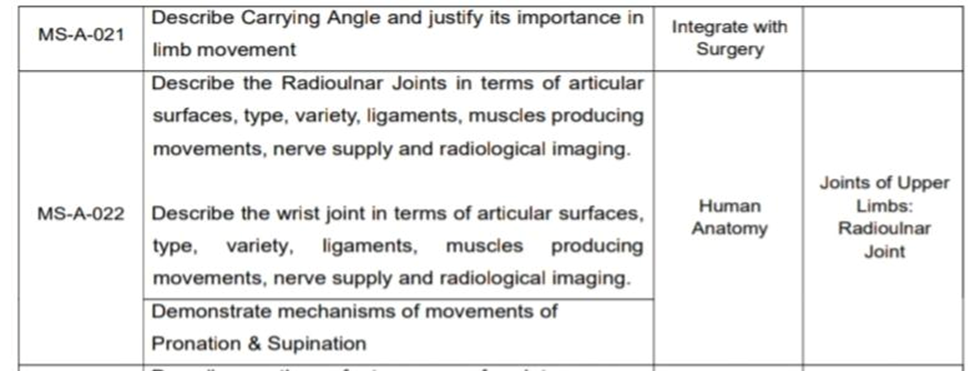
  • Carrying Angle from Snell chap 3 given under the topic of elbow joint in the Movements paragraph.

            Lecture : https://youtu.be/pZLz6I4W10o?si=ZHaN34zt9MV3D7o7

  • Radioulnar joints ( proximal and distal )  articular surface , type , variety , ligaments, muscles producing movements, nerve supply from Snell chap 3 , Radiological imaging is only for Ospe ( skip relations of the joint), You can also prepare radioulnar joints from BD table 10.2
  • Wrist joint ( Radiocarpal joint ) articular surfaces, type , variety, ligaments, muscles producing movements, nerve supply from  Snell chap 3, radiological imaging for ospe  ( skip it’s relations)
  • Mechanism of movements of pronation and supination given under the distal radioulnar joint in the Movements paragraph .
  • Features of Interosseous membrane with structures piercing it from Snell chap 3 Pg 170 and structures piercing interosseous membrane from any short book or AI
  • Features and importance of Fibrous Flexor Sheaths , Synovial Flexor Sheaths ( digital Synovial Sheaths+ radial and ulnar bursa ) and Extensor Expansion ( given in Long Extensor Tendon Insertion topic )from Snell chap 3
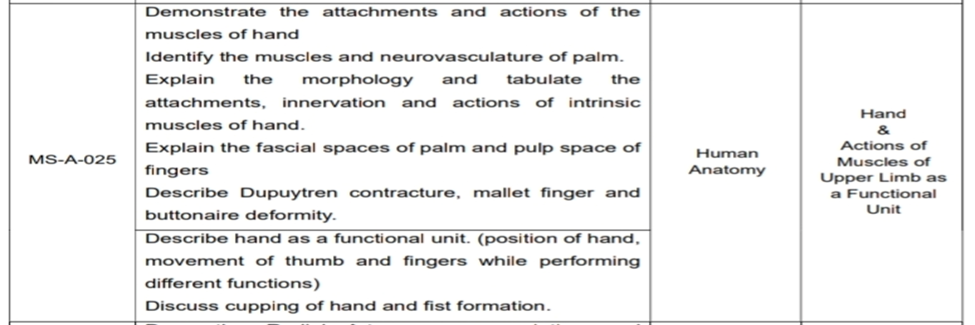
  • Attachments and actions of muscles of hand ( from muscle tables you have to do nerve supply and actions of muscles of hand but you can skip attachments of only muscles of hand) . Dr Azam’s lecture is best for it.
  • Muscles and neurovasculature of palm from muscle table
  • Morphology and attachments, innervation and action of Intrinsic muscles of hand ( Must do innervation and actions of muscles of hand but you can skip attachments of only muscles of hand)
  • Fascial spaces of palm ,  pulp spaces of finger and palmar aponeurosis from Snell chap 3 given in Hand portion.
  • Dupuytren’s contracture , mallet finger and buttonaire deformity from Snell chap 3 clinicals
  • Hand as a unit from Snell chap 3 Joints pg 174
  • Cupping of hand and fist formation from Snell Chap 3 pg 176
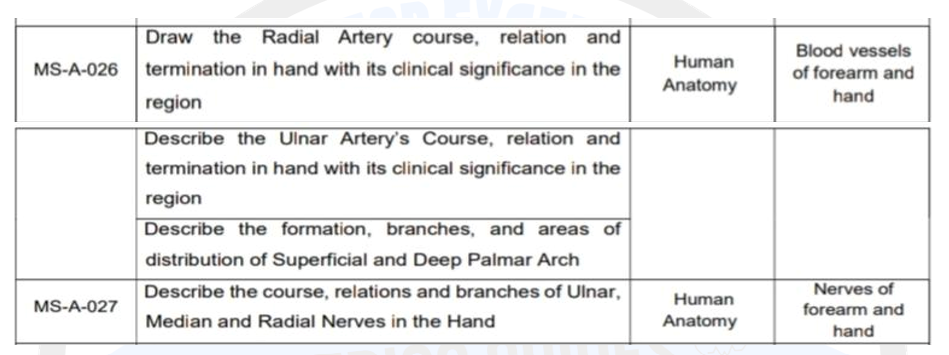
  • Radial artery course , relation and termination in hand with clinical significance from Snell chap 3 Arteries portion
  • Ulnar Artery’s course , relation and termination with clinical significance from Snell chap 3 Arteries portion
  • Formation, branches and areas of distribution of superficial and Deep Palmer arch from Snell chap 3. For this topic, TCML’s lectures are best.
  • Course , relation and branches of ulnar , median and radial nerves in hand from Snell chap 3 Nerves portion. Dr Azam’s lectures are best for all nerves.
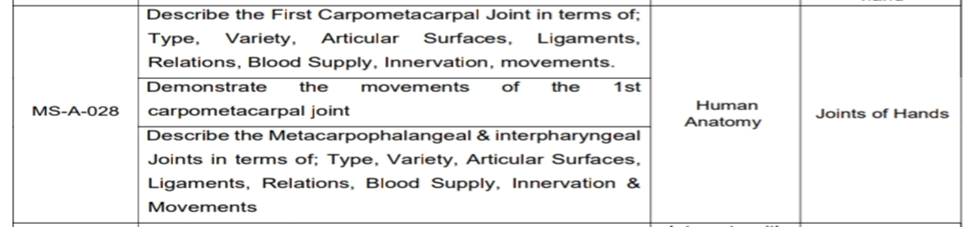
  • First Carpometacarpal joint’s type, variety, articular surfaces, ligaments, relations, blood supply, innervation and movements from Snell Chap 3 joints Portion
  • Movements of First Carpometacarpal joint from Snell chap 3
  • Metacarpophalangeal and interphalangeal joint’s type , variety, ligaments, articular surfaces, relations, blood supply, innervation and movements from Snell Chap 3
  • Only do the type of rest of the joints ( which aren’t mentioned in your LOs) for mcq/viva
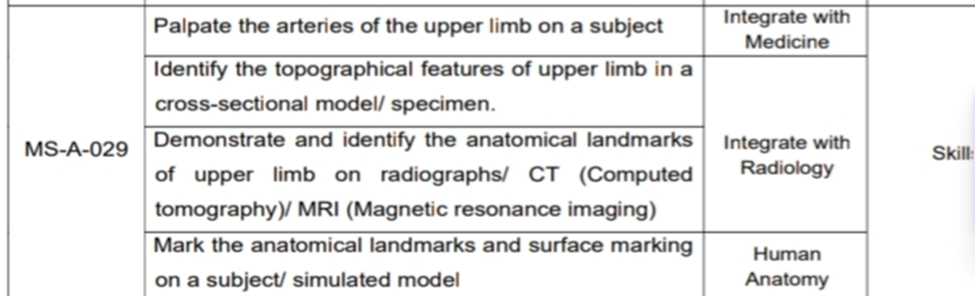
  • All these LOs are to be prepared only for Ospe
  • Palpate arteries of upper limb.
  • Identify Topographical features of upper limb in cross section model or specimen
  • Identify anatomical Landmarks of Upper limbs on radiographs/ CT /MRI
  • Mark anatomical landmarks and surface marking on a subject

These topics aren’t mentioned in LOs but they’re important, So you should prepare them:

  • Lymphatic drainage of Upper limb (watch any video and try to do it in a flowchart) – almost similar to lymphatic drainage of axilla
  • Vincula longa +brevis from BD chap 9
  • Palmar aspect of wrist and hand from BD chap 9
  • Sub-acromial bursa from BD chap 6
  • Intermuscular space from BD chap 6
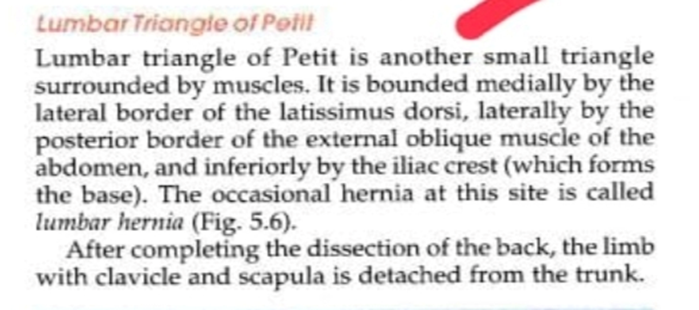
  • Lumbar triangle of petit from BD chap 5

Note: Try to extract the book content and make your own notes for arteries and arches

Anatomy seems difficult but once you start doing it the right way, it will become your favorite. 

All the best!  

Notes for Upper Limb are also shared.

T.H Clinicals of upper limb

ALL Clinicals of Upper Limb

All Clinicals Upper Limb (Snell)

Arteries of Upper and Lower Limb

Lymphatics of Upper Limb

Nerves Upper Limb Notes

Snell All Muscle Tables

Upper Limb Arteries and Nerve Supply

Upper Limb Notes

Dr Azam’s Upper Limb Notes

UPPER LIMB ANATOMY By Johari MBBS

Upper Limb Dr. Adel Bondok Notes

Upper Limb Joints_Quick Revision Tables

UPPER LIMB NOTES

Medico Guides 2nd Block (LL) Gross Anatomy Guidelines

Prepared by:

                         Zuha Iftikhar (G14)

                         Warda Mehmood (G15)

                         Asma Shafique (G15)

Compiled by:                 

                  Hafiz Muhammad Umair Noor (G12)

  • Snell’s Clinical Anatomy by Regions 10th Edition
  • BD Chaurasia Human Anatomy 8th Edition

LOWER LIMB

  • All Muscles along with their nerve innervation, actions from Tables in Snell’s. You should do the tables compartment wise for retaining them well, not all at once.
  • But the correct sequence for the first time is to do Bones first with proper muscle attachments, ligaments. landmarks and then move to Muscle Tables.
  • For nerves and blood supply, make your own flow charts or on sticky notes for quick revision.
  • Anatomy can be mastered if you visualize things more rather than simply cramming it again on loop. Prefer Visual Image Memory along with mnemonics, you will master it, Insha’Allah. Trust the process, once you do it, you’ll know that things are interconnected.
  • How to do it?
    • Take the Lecture of Bone you are going to do. The lecture should be the one in which they are teaching you through 3D animation or through real bone.
    • Memorize along with the lecture, prefer to issue Bones from your museum and learn by holding bone along with Lecture & memorize along with it.It is Important as in Proffs models and real bones can be asked as well as diagrams from Snell’s (In Last proff , pictures were given both of bony attachments + landmarks)
    • After Lecture, repeat all the landmarks, muscle and ligament attachments by yourself on the bone, or teach some other fellow of yours (choose any option as per your convenience).
    • After that Read BD (don’t start to memorize each line as it is quite extensive), you already have mastered the bone now, if some points are left, Mark those and every time you revise the bone again you will only read those different points only.
  • Which Lectures to take for Bone?
    • Johari MBBS ( as it is according to BD ), & some other Indian tutors, teaching through real bone or 3D animation.
  • Bone Sequence:
    • Hip Bone ( IMP ) Asked in Proff OSPE and in Block internal as well.
    • Femur ( IMP ) , Asked in Proff OSPE .
    • Tibia ( IMP ), asked in Proff OSPE and Block Internal as well.
    • Fibula ( It is less important than others , and is a tricky one as well) Do Landmarks properly at least and side determination.
    • Rest do the names of bones of foot  and side determination of bones i.e talus , navicular , calcaneus etc, should know how to locate them on pictures and radiographs.
    • Learn through real bone or 3D animation.
  • Clinicals of Bone:
    • And don’t skip clinicals from SNELLS. You must do all clinicals from SNELLS. (also can do from PDF shared)
  • For OSPE:
    • SNELL diagrams and real bones should be done ( Any of them might come at your stations)
      • Questions at OSPE stations i.e. Locate the origin of Hamstring Muscles on the bone , locate tibial tuberosity (Real Bone Infront) ? Name the Part. Or Hold the Bone in the correct way ( Proper side determination) and tell this Bone is of which side. etc.
      • On pictures, they may ask for labelling or you have to locate the certain thing asked on pictures .
      • SO, You must do the bone properly.
  • Do all Muscle Tables from SNELLS, Proper Nerve Supply, Origin and Insertion , Muscles of each compartment and their Action.
    • Muscle Tables are the base of your concepts, Memorize it again and again , Understand it Properly. Remember it by using College Models Because in Proff OSPE , Muscles can be asked on Models or pictures are given.
    • Nerve Supply and actions along with origin & insertion are asked in MCQs.
    • Muscles of Sole of Foot (Names very important Layer wise , Nerve Supply & Action) are Important Diagrams for OSPE (v.imp)
  • How to do it?
    • For Joints , you have to first understand the anatomy, Bones Involved, type of Joint they are making, Blood supply , Nerves passing through it (innervation) and very very important Ligaments, Holding it together.
    • For Anatomy , Take Lecture of it first, Ligaments are very Important in Joints
    • After that, Movement of Joints and the Muscles involved in those movements.
    • And then Clinicals of Joints.
  • Joints Sequence:
    • Hip Joint (IMP):
      • Type, Articular surfaces, ligaments Important ( their Number and Names and their description as well)
      •  Relations are not Important Just Read it once.
      • Blood Supply, Nerve Supply & Movements( and muscles producing ) are important.
      • Clinicals SNELLS . ( IMP )
    • Knee Joint (MOST IMP):
      • Do it from SNELLS, it is written Better there.
      • Type, Capsule, ligaments ( Important ) Extracapsular & Intracapsular.
      • Menisci (their Clinicals Are more important)
      • Synovial membrane, Bursa ( their number, Location)
      • Nerve supply & Blood supply.
      • Movements ( Most Important ) Locking & Unlocking of Knee Joint and role of muscles in it( Very  IMP Viva Qs and as well as Important for writtens ) clear its concept from youtube.
      • Clinicals from SNELLS
    • Ankle Joint
      • From Snells
      • Ligaments are  Important in it, Medial or deltoid ligament often asked in viva. And important for MCQs as well.
      • Type & Movements . Do it properly.
    • Rest Do all Remaining Joints from SNELLS, Only Types & Movements, Ligaments(Names).
  • Clinicals of Joints:
    • Do Clinicals from SNELLS &PDF shared.

Now, Start Compartment wise study from SNELLS CHAPTER:11, and some topics are also covered in BD. Switching guidelines between both books are for your best preparation and to cover your learning objectives thoroughly.

  • Facia (read)
  • Only Deep facia and it’s modification (iliotibial tract , saphenous opening and septa) from BD chap:3
  • Cutaneous Nerves  (understand them well with the help of diagram given)
  • Cutaneous veins (If you do it Here , Base will be made and you will be able to comprehend easily in upcoming topics )
    • Inguinal Lymph Nodes both superficial and deep (will have better understanding after doing lymphatics of lower limb)
    • Above 3 topics are easy to understand after studying upcoming topics so don’t get confused.( can do at last)
  • Bursas (Names Important from BD and their clinicals)
  • Femoral Triangle ( Boundaries, Content) ,Femoral Sheath and Femoral Canal VERY IMP topics
  • Adductor’s ( Subsartorial/Hunters) canal boundaries and contents IMP
  • BLOOD and NERVE SUPPLY:
    • Femoral artery complete
    • Femoral vein complete
    • Femoral nerve complete
    • Understand the course and origin and visualise it , through animations or 3D apps or Use Netter Atlas for it.
  • Make a flow chart of their course on sticky note and attach it , it will be easy to comprehend
  •  As you have already done muscles from Muscle Tables

BLOOD and NERVE SUPPLY:

  • Profunda femoris artery complete( origin, course , branches ) , vein and obturator artery and vein.
  • Obturator nerve ( course , branches) complete
  • As you have already done muscles from Muscle Tables..
  • Skin and facia ( read once not imp)
  • Ligaments ( sacrospinous and sacrotuberous) and  foramina (Structures passing through Greater & Lesser Sciatic foramen (IMP for written & Viva )
  • Structures under cover of gluteus Maximus ( Ligaments , Bursa ) Past Paper Qs  do from BD chap:5
  • NERVES:

Sciatic nerve complete course can be done only after completing lower limb so make it’s flow chart at the end when you’re done with all.(better do it from BD) clinicals imp

Give a good read to all nerves mentioned and learn to which muscles they supply.

  • Blood supply:

            Gluteal arteries read complete (supply to which muscles)

            Trochanteric and cruciate anastomosis (IMP)

            Mnemonics: trochanteric:SLIM , cruciate:LIMP

  • Structures passing through Greater & Lesser Sciatic foramen (IMP for written & Viva )
  • Popliteal Fossa Complete ( Very IMP for written & Viva )
  • Nerves and Arteries As mentioned above as well ( Sticky Note Technique)
  • Anastomosis of Knee Joint ( Very IMP for written , Past Block Qs)  Understand with the help of diagram.
  • Muscles first as you do always.
  • Nerves As mentioned above as well ( Sticky Note Technique) Or You can do it from SNELLS (compartmentwise)  and Arteries ( Anastomosis of Back of Thigh is Important Bd chap:7 pg 102 )
  • Do All Clinicals side by side.
  • ANTERIOR comp:

Muscles table, Anterior tibial artery and deep peroneal nerve complete from snells ( make notes for easy revision)

  • LATERAL comp:

Muscles table, blood supply and nerve supply complete

  • POSTERIOR comp:

Muscles tables, blood and nerve supply ( Post. Tibial artery and tibial nerve) complete , achilles tendon

  • (Very IMP)
    • Retinacula written in Deep Fascia Topic.
    • From BD chap 8 :

1) Extensor  Retinaculum Complete  ( Very IMP ) There are mnemonics to memorise it. do use those mnemonics. As these are often asked in viva stations and important for written as well. (Tall Husbands Are Never Dear Person )

2) peroneal retinaculum

  • From BD chap 9 : Flexor retinaculum Complete. Learn it through the mnemonic as well. And do learn it by visualising it will be in long term memory then. (Tina Deserves ANice Husband )
    • Planter Aponeurosis from BD Chap 10
  • All Nerves and all Arteries As mentioned above as well ( Sticky Note Technique) can do it from SNELLS (compartmentwise)
  • Tendons of Thigh from BD( Important Viva Qs )
  • Do All Clinicals side by side.
  • Venous drainage (vv imp) table 11.1, Clinicals imp
  • Lymphatic drainage try to do in flow chart ( will share it too)
  • Do definition + diagram from netters atlas ( given below ) , this topic is in your LO’s ( questions used to come to draw it in SEQ) but now understand it only
  • Fibrous flexor sheath, extensor expansion ,and synovial flexor sheath ( Read these topics from Snells.)
  • Do the ARCHES from SNELLS, It is very well written in it., It is an Important Topic. Do it completely from Snells. Its. Clinicals are important.
  • READ this table too:
  • Names of Muscles of foot ( each layer)from snells table + their nerve supply and action ( its diagrams are very important for ospe) ,
  • BLOOD Supply : Dorsalis Pedis artery ( v. imp for both written and VIVA) , for sole lateral and medial planter arteries.
  • You can revise Nerves and Arteries after doing Chapterwise & Compartmentwise from Appendix at the End of BD
  • Sacral plexus page 100 and lumber plexus page 47of snells ( although not as much imp ) but as they are in your LO’s so do them.
  • I would recommend you to make your own notes of flowcharts of Neurovascular supply for better grip.

Stay consistent. Best wishes.

That’s all from my side. Anatomy is a distinguishing subject, if you master this, you are ahead of many just because of it. Best Wishes!

Recommended YOUTUBE CHANNELS :
Dr Adel Bondok , Angelina Isaac , Dr Azam  ( you can take LECTURES from any one of them according to your choice)

AI in Personalized Medicine: Tailoring Treatment to Individual Needs

AI in Personalized Medicine: Tailoring Treatment to Individual Needs

1. Introduction

Personalized medicine represents a paradigm shift in healthcare, moving away from a one-size-fits-all approach to one that considers individual variability in genes, environment, and lifestyle. Artificial Intelligence (AI) plays a pivotal role in this transformation by analyzing vast datasets to provide tailored healthcare solutions. This article explores how AI enhances personalized medicine, its benefits, challenges, and future prospects.Freepik


2. Understanding Personalized Medicine

Personalized medicine, also known as precision medicine, involves customizing medical treatment to the individual characteristics of each patient. This approach considers genetic makeup, environmental factors, and lifestyle choices to develop targeted therapies and preventive strategies. By focusing on individual differences, personalized medicine aims to improve treatment efficacy and reduce adverse effects.


3. The Role of AI in Personalized Medicine

AI technologies, including machine learning and deep learning, are integral to personalized medicine. They process and analyze complex datasets, such as genomic sequences, electronic health records, and lifestyle information, to identify patterns and make predictions. AI enables the development of predictive models, risk assessments, and personalized treatment plans, enhancing the precision and effectiveness of healthcare interventions.


4. AI in Genomic Analysis

Genomic analysis is fundamental to personalized medicine. AI algorithms can rapidly process and interpret genomic data, identifying genetic mutations and variations associated with specific diseases. This information guides the development of targeted therapies and informs decisions about disease prevention and management. AI-driven genomic analysis accelerates the identification of biomarkers and enhances our understanding of complex genetic interactions.


5. AI in Predictive Modeling for Disease Risk

AI excels in predictive modeling, assessing an individual’s risk of developing certain diseases based on genetic, environmental, and lifestyle factors. By analyzing large datasets, AI can identify subtle patterns and correlations that may not be apparent through traditional statistical methods. These predictive models enable early intervention and personalized prevention strategies, ultimately improving patient outcomes.


6. AI in Treatment Planning and Drug Selection

AI assists clinicians in developing personalized treatment plans by analyzing patient data to predict responses to various therapies. It can identify the most effective drugs and dosages for individual patients, minimizing trial-and-error approaches. AI also supports drug repurposing by uncovering new therapeutic uses for existing medications based on patient-specific factors.


7. Benefits of AI-Driven Personalized Medicine

  • Improved Treatment Outcomes: Tailored therapies increase the likelihood of treatment success and reduce adverse effects.
  • Preventive Care: Predictive models enable early detection and prevention of diseases.
  • Cost-Effectiveness: Personalized approaches can reduce unnecessary treatments and hospitalizations.
  • Patient Engagement: Customized care plans encourage patient involvement and adherence.

8. Challenges and Ethical Considerations

Despite its promise, AI-driven personalized medicine faces several challenges:

  • Data Privacy: Ensuring the confidentiality and security of sensitive patient data is paramount.
  • Bias and Equity: AI models trained on non-representative datasets may perpetuate health disparities.
  • Regulatory Hurdles: Establishing standards and guidelines for AI applications in healthcare is ongoing.
  • Integration into Clinical Practice: Adapting existing healthcare systems to incorporate AI tools requires significant effort and resources.

9. Future Prospects of AI in Personalized Medicine

The future of AI in personalized medicine is promising:

  • Integration with Wearable Technology: AI will analyze real-time data from wearable devices to monitor health and adjust treatments dynamically.
  • Advancements in Multi-Omics Analysis: Combining genomics, proteomics, metabolomics, and other omics data will provide a comprehensive view of patient health.
  • Global Collaboration: AI will facilitate data sharing and collaborative research across institutions and countries, accelerating medical discoveries.
  • Enhanced Patient Empowerment: AI-driven tools will provide patients with personalized health insights, promoting proactive health management.

10. Conclusion

AI is revolutionizing personalized medicine by enabling tailored healthcare solutions based on individual characteristics. While challenges remain, the integration of AI into personalized medicine holds the potential to improve treatment outcomes, enhance preventive care, and empower patients. Continued advancements in AI technologies and collaborative efforts will drive the evolution of personalized medicine, transforming healthcare delivery.


11. FAQs

Q1: How does AI contribute to personalized medicine?
AI analyzes complex datasets to identify patterns and make predictions, enabling the development of tailored healthcare solutions based on individual characteristics.Drug Target Review

Q2: What are the benefits of AI-driven personalized medicine?
Benefits include improved treatment outcomes, preventive care, cost-effectiveness, and enhanced patient engagement.

Q3: What challenges does AI face in personalized medicine?
Challenges include data privacy concerns, potential biases, regulatory hurdles, and integration into clinical practice.

Q4: How does AI analyze genomic data?
AI algorithms process and interpret genomic sequences to identify genetic mutations and variations associated with specific diseases, guiding targeted therapies.

Q5: What is the future of AI in personalized medicine?
Future prospects include integration with wearable technology, advancements in multi-omics analysis, global collaboration, and enhanced patient empowerment.

AI-Powered Diagnostics: Revolutionizing Disease Detection and Diagnosis

AI-Powered Diagnostics: Revolutionizing Disease Detection and Diagnosis

1. Introduction

The integration of Artificial Intelligence (AI) into healthcare has ushered in a new era of diagnostic precision and efficiency. By leveraging vast datasets and advanced algorithms, AI enhances the accuracy of disease detection, enabling earlier interventions and improved patient outcomes. This article delves into how AI is transforming diagnostic practices across various medical domains.


2. The Evolution of Diagnostic Practices

Traditionally, diagnostics relied heavily on clinician expertise, manual analysis, and time-consuming procedures. While effective, these methods are susceptible to human error and variability. The advent of digital technologies introduced automated systems, but it is the incorporation of AI that has truly revolutionized diagnostics, offering unparalleled accuracy and speed.


3. AI’s Role in Modern Diagnostics

AI algorithms, particularly those based on machine learning and deep learning, can analyze complex medical data to identify patterns indicative of specific diseases. These systems are trained on extensive datasets, enabling them to recognize subtle anomalies that may elude human observers. AI’s applications span imaging, pathology, genomics, and more, making it an invaluable tool in modern diagnostics.


4. AI in Imaging-Based Diagnostics

In radiology, AI enhances image interpretation, aiding in the detection of conditions such as tumors, fractures, and neurological disorders. For instance, AI algorithms can analyze mammograms to identify early signs of breast cancer, often with accuracy comparable to experienced radiologists. Similarly, AI tools assist in interpreting CT scans and MRIs, facilitating prompt and accurate diagnoses.


5. AI in Laboratory and Pathology Diagnostics

AI streamlines laboratory diagnostics by automating the analysis of blood tests, urine samples, and other laboratory data. In pathology, AI-powered image analysis aids in identifying cellular abnormalities, such as cancerous cells in biopsy samples. These technologies not only expedite the diagnostic process but also reduce the likelihood of human error.


6. AI in Genomic and Molecular Diagnostics

Genomic diagnostics benefit significantly from AI’s ability to process and interpret vast genetic datasets. AI algorithms can identify genetic mutations associated with various diseases, enabling personalized treatment plans. In molecular diagnostics, AI assists in detecting biomarkers and understanding disease mechanisms at a molecular level, paving the way for targeted therapies.


7. Benefits of AI-Driven Diagnostics

  • Enhanced Accuracy: AI reduces diagnostic errors by consistently analyzing data without fatigue.
  • Speed: Automated analysis accelerates the diagnostic process, allowing for timely interventions.
  • Scalability: AI systems can handle large volumes of data, making them suitable for widespread screening programs.
  • Cost-Effectiveness: By improving efficiency, AI can reduce healthcare costs associated with prolonged diagnostics.

8. Challenges and Ethical Considerations

Despite its advantages, AI in diagnostics presents challenges:

  • Data Privacy: Ensuring patient data confidentiality is paramount.
  • Bias: AI systems trained on non-representative datasets may exhibit biases, affecting diagnostic accuracy across diverse populations.
  • Regulatory Hurdles: Obtaining approval for AI diagnostic tools requires rigorous validation to ensure safety and efficacy.
  • Integration: Incorporating AI into existing healthcare systems necessitates training and adaptation by medical professionals.

9. Future Prospects of AI in Diagnostics

The future of AI in diagnostics is promising:

  • Predictive Diagnostics: AI could predict disease onset before symptoms appear, enabling preventive measures.
  • Integration with Wearables: Combining AI with wearable technology can facilitate continuous health monitoring.
  • Global Accessibility: AI-powered diagnostics can extend healthcare services to remote and underserved regions.
  • Personalized Medicine: AI will play a crucial role in tailoring treatments based on individual genetic and molecular profiles.

10. Conclusion

AI is revolutionizing diagnostics by enhancing accuracy, efficiency, and accessibility. While challenges remain, the continued integration of AI into diagnostic practices promises to transform healthcare delivery, leading to better patient outcomes and more personalized care.


11. FAQs

Q1: How does AI improve diagnostic accuracy?
AI analyzes complex medical data to identify patterns and anomalies, reducing human error and enhancing diagnostic precision.

Q2: Can AI replace human diagnosticians?
AI serves as a tool to assist clinicians, augmenting their capabilities rather than replacing them.

Q3: What are the risks of AI in diagnostics?
Potential risks include data privacy concerns, algorithmic bias, and the need for thorough validation to ensure safety and efficacy.

Q4: How is AI integrated into current diagnostic practices?
AI tools are incorporated into diagnostic equipment and software, providing decision support and automating data analysis.

Q5: What is the future of AI in diagnostics?
Future developments include predictive diagnostics, integration with wearable technology, and the advancement of personalized medicine.

Transforming Medical Imaging with Artificial Intelligence

Transforming Medical Imaging with Artificial Intelligence

1. Introduction

Medical imaging is a cornerstone of modern diagnostics, enabling clinicians to visualize the internal structures of the body non-invasively. The integration of Artificial Intelligence (AI) into medical imaging has revolutionized the field, enhancing image quality, accelerating analysis, and improving diagnostic accuracy. This article explores how AI is transforming medical imaging, the benefits it offers, and the challenges it presents.


2. The Evolution of Medical Imaging

Medical imaging has undergone significant advancements since the discovery of X-rays in 1895. The development of modalities such as Computed Tomography (CT), Magnetic Resonance Imaging (MRI), Ultrasound, and Positron Emission Tomography (PET) has expanded diagnostic capabilities. However, interpreting these images requires considerable expertise and time. The increasing volume of imaging studies has placed a burden on radiologists, leading to a demand for more efficient analysis methods.


3. AI’s Role in Enhancing Image Acquisition

AI algorithms have been developed to optimize image acquisition protocols, ensuring high-quality images while minimizing patient exposure to radiation. For instance, AI can adjust imaging parameters in real-time based on patient anatomy and movement, resulting in clearer images and reduced need for repeat scans. In MRI, AI techniques have shortened scan times without compromising image quality, improving patient comfort and throughput.


4. Automated Image Analysis and Interpretation

AI excels in pattern recognition, making it ideal for analyzing complex medical images. Deep learning models can detect anomalies such as tumors, fractures, or lesions with high accuracy. These systems are trained on vast datasets, learning to identify subtle features that may be overlooked by the human eye. AI can also quantify changes over time, aiding in disease monitoring and treatment evaluation.


5. AI in Radiology: A Collaborative Approach

Rather than replacing radiologists, AI serves as an assistive tool, augmenting their capabilities. AI can pre-screen images, flagging areas of concern for further review. This collaboration enhances diagnostic accuracy and efficiency. Radiologists can focus on complex cases, while AI handles routine assessments, leading to improved workflow and reduced burnout.


6. Case Studies: AI Applications in Imaging

Several real-world applications demonstrate AI’s impact on medical imaging:

  • Breast Cancer Detection: AI algorithms have been implemented to analyze mammograms, identifying potential malignancies with accuracy comparable to experienced radiologists. This aids in early detection and reduces false positives.
  • Lung Nodule Identification: AI systems can detect pulmonary nodules in CT scans, assisting in the early diagnosis of lung cancer.
  • Stroke Assessment: AI tools analyze brain imaging to identify ischemic strokes rapidly, facilitating timely intervention and improving patient outcomes.

7. Benefits of AI-Driven Medical Imaging

The integration of AI into medical imaging offers numerous advantages:

  • Enhanced Diagnostic Accuracy: AI reduces human error and increases the consistency of interpretations.
  • Increased Efficiency: Automated analysis accelerates the diagnostic process, allowing for quicker decision-making.
  • Resource Optimization: AI can alleviate the workload of radiologists, enabling better allocation of healthcare resources.
  • Personalized Medicine: AI can tailor imaging protocols and interpretations based on individual patient data, supporting personalized treatment plans.

8. Challenges and Ethical Considerations

Despite its benefits, AI in medical imaging presents challenges:

  • Data Privacy: Ensuring patient confidentiality in AI training datasets is paramount.
  • Algorithm Bias: AI models trained on non-representative data may exhibit biases, affecting diagnostic accuracy across diverse populations.
  • Regulatory Approval: Gaining regulatory clearance for AI tools requires rigorous validation to ensure safety and efficacy.
  • Integration into Clinical Practice: Seamless incorporation of AI into existing workflows necessitates training and adaptation by healthcare professionals.

9. Future Prospects of AI in Medical Imaging

The future of AI in medical imaging is promising:

  • Real-Time Diagnostics: AI could provide instantaneous analysis during imaging procedures, guiding immediate clinical decisions.
  • Multimodal Integration: Combining data from various imaging modalities and patient records could offer comprehensive diagnostic insights.
  • Continuous Learning Systems: AI models that learn and adapt from new data will enhance their diagnostic capabilities over time.
  • Global Accessibility: AI-powered imaging tools could extend diagnostic services to underserved regions, addressing disparities in healthcare access.

10. Conclusion

AI is poised to redefine medical imaging, offering tools that enhance diagnostic precision, streamline workflows, and support personalized care. While challenges remain, the collaborative integration of AI into radiology holds the potential to elevate patient outcomes and transform healthcare delivery.


11. FAQs

Q1: How does AI improve medical imaging?
AI enhances image quality, accelerates analysis, and increases diagnostic accuracy by identifying patterns and anomalies in imaging data.

Q2: Will AI replace radiologists?
AI is designed to assist, not replace, radiologists. It handles routine tasks, allowing radiologists to focus on complex interpretations.

Q3: What are the risks of using AI in imaging?
Risks include data privacy concerns, potential algorithm biases, and the need for thorough validation to ensure safety and effectiveness.

Q4: How is AI integrated into current imaging practices?
AI tools are incorporated into imaging software and Picture Archiving and Communication Systems (PACS), providing decision support during image interpretation.

Q5: What is the future of AI in medical imaging?
Future developments include real-time diagnostics, integration of multimodal data, adaptive learning systems, and expanded access to imaging services globally.

Revolutionizing Drug Discovery with Artificial Intelligence

1. Introduction Artificial Intelligence (AI) is fundamentally transforming the pharmaceutical industry, particularly in the field of drug discovery. The application of AI has unlocked new efficiencies, from identifying potential drug targets to optimizing compound structures and predicting efficacy. As global health challenges grow more complex, AI’s role becomes crucial in accelerating the development of safe and effective therapies. 2. Traditional Drug Discovery: Time, Cost, and Complexity Traditionally, discovering a new drug is an arduous, expensive, and time-consuming process. It typically takes over 10 years and costs upwards of $2.6 billion to bring a single new drug to market. This journey involves identifying biological targets, screening thousands of chemical compounds, conducting extensive laboratory testing, and undergoing rigorous clinical trials. Many potential drugs fail during these stages, often due to inefficacy or unforeseen side effects. The high failure rate, particularly in late-stage trials, underscores the need for more efficient, predictive, and targeted approaches—something AI excels at. 3. The Role of AI in Modern Drug Discovery AI provides the computational power and algorithmic intelligence to analyze massive biological datasets quickly and accurately. By utilizing machine learning (ML), natural language processing (NLP), and deep learning, AI systems can: Predict drug-target interactions Identify off-target effects Forecast pharmacokinetics and toxicity Optimize molecular structures for enhanced efficacy These capabilities reduce the trial-and-error nature of drug development and improve the likelihood of clinical success. 4. Data Mining and Target Identification One of the earliest and most critical steps in drug development is identifying viable targets—typically proteins or genes associated with a disease. AI algorithms can mine medical literature, genomic databases, and clinical trial results to discover novel targets that may not be obvious to human researchers. For instance, BenevolentAI uses NLP to sift through scientific papers and uncover hidden relationships between genes, diseases, and drugs. This process dramatically shortens the initial phases of drug discovery. 5. AI in Drug Design and Molecular Simulation Once a target is identified, the next challenge is to design molecules that interact effectively with that target. Traditionally, this involved labor-intensive screening of large chemical libraries. Today, AI models can: Predict how molecules will behave based on their structure Simulate molecular docking processes Design new compounds with desired biological properties Tools like DeepMind’s AlphaFold, which predicts protein folding with unprecedented accuracy, allow scientists to visualize how drugs will bind to their targets. This precision accelerates the design of highly specific and potent drugs. 6. Accelerating Preclinical Testing with AI AI models are also applied to preclinical stages, where compounds are tested in vitro (in the lab) and in vivo (in animals). AI can predict: Absorption, distribution, metabolism, and excretion (ADME) properties Potential toxicities and side effects Drug stability and solubility These predictions help researchers prioritize which candidates should move forward to animal testing and human trials, thereby reducing the resources wasted on ineffective compounds. 7. Case Studies: AI-Driven Success Stories in Drug Discovery Several companies have demonstrated the power of AI in discovering real-world drugs: Insilico Medicine developed a preclinical drug for idiopathic pulmonary fibrosis using AI in under 18 months—a process that typically takes years. Exscientia and Sumitomo Dainippon Pharma brought DSP-1181, a compound for treating obsessive-compulsive disorder, to clinical trials in a record 12 months. These breakthroughs showcase AI’s ability to radically cut development timelines and increase R&D productivity. 8. Reducing Costs and Time-to-Market By streamlining the drug development pipeline, AI significantly reduces R&D costs. Predictive models decrease the number of failed experiments, while automation accelerates data analysis and decision-making. Pharmaceutical companies adopting AI estimate cost reductions of up to 30% in early-stage drug discovery. Furthermore, faster development means patients can access life-saving drugs sooner, addressing unmet medical needs more effectively. 9. Challenges and Ethical Considerations Despite its promise, AI in drug discovery faces several hurdles: Data Quality and Bias: AI models are only as good as the data they are trained on. Incomplete or biased datasets can lead to flawed predictions. Interpretability: Many AI models operate as “black boxes,” making it hard for scientists to understand how decisions are made. Regulatory Barriers: Regulatory frameworks are still evolving to accommodate AI-generated drug candidates, and approval processes must adapt accordingly. Intellectual Property Issues: Determining patent rights for AI-designed molecules raises complex legal questions. Addressing these challenges requires collaboration between technologists, regulators, and bioethicists. 10. Future Trends in AI-Powered Drug Development The next decade will see even deeper integration of AI into pharmaceutical R&D. Emerging trends include: Multi-omics Data Integration: Combining genomics, proteomics, and metabolomics for a holistic understanding of diseases. Digital Twins: Creating AI-based virtual replicas of patients to simulate drug responses. AI and Quantum Computing: Leveraging quantum computing to solve complex biochemical simulations faster than ever before. As these technologies mature, drug discovery will become more personalized, predictive, and precise. 11. Conclusion AI is revolutionizing drug discovery by making it faster, cheaper, and more precise. From identifying novel targets to simulating molecular interactions and predicting side effects, AI streamlines every phase of the drug development pipeline. While challenges remain, the synergy between biology and computational science holds immense potential to deliver better treatments to patients worldwide. 12. FAQs Q1: How does AI help in drug discovery? AI helps by analyzing vast biological datasets, identifying drug targets, predicting compound efficacy, and simulating drug interactions. Q2: Can AI design new drugs from scratch? Yes, AI can generate novel molecular structures tailored to specific biological targets using generative design algorithms. Q3: Are any AI-developed drugs already in the market? Several AI-designed drugs are in clinical trials, and some are expected to reach the market within a few years. Q4: What are the main benefits of AI in drug development? The key benefits are reduced costs, shorter development timelines, and increased success rates in clinical trials. Q5: What are the ethical issues with AI in pharmaceuticals? Issues include data bias, model transparency, intellectual property rights, and ensuring patient safety in AI-driven trials.

1. Introduction

Artificial Intelligence (AI) is fundamentally transforming the pharmaceutical industry, particularly in the field of drug discovery. The application of AI has unlocked new efficiencies, from identifying potential drug targets to optimizing compound structures and predicting efficacy. As global health challenges grow more complex, AI’s role becomes crucial in accelerating the development of safe and effective therapies.


2. Traditional Drug Discovery: Time, Cost, and Complexity

Traditionally, discovering a new drug is an arduous, expensive, and time-consuming process. It typically takes over 10 years and costs upwards of $2.6 billion to bring a single new drug to market. This journey involves identifying biological targets, screening thousands of chemical compounds, conducting extensive laboratory testing, and undergoing rigorous clinical trials. Many potential drugs fail during these stages, often due to inefficacy or unforeseen side effects.

The high failure rate, particularly in late-stage trials, underscores the need for more efficient, predictive, and targeted approaches—something AI excels at.


3. The Role of AI in Modern Drug Discovery

AI provides the computational power and algorithmic intelligence to analyze massive biological datasets quickly and accurately. By utilizing machine learning (ML), natural language processing (NLP), and deep learning, AI systems can:

  • Predict drug-target interactions
  • Identify off-target effects
  • Forecast pharmacokinetics and toxicity
  • Optimize molecular structures for enhanced efficacy

These capabilities reduce the trial-and-error nature of drug development and improve the likelihood of clinical success.


4. Data Mining and Target Identification

One of the earliest and most critical steps in drug development is identifying viable targets—typically proteins or genes associated with a disease. AI algorithms can mine medical literature, genomic databases, and clinical trial results to discover novel targets that may not be obvious to human researchers.

For instance, BenevolentAI uses NLP to sift through scientific papers and uncover hidden relationships between genes, diseases, and drugs. This process dramatically shortens the initial phases of drug discovery.


5. AI in Drug Design and Molecular Simulation

Once a target is identified, the next challenge is to design molecules that interact effectively with that target. Traditionally, this involved labor-intensive screening of large chemical libraries. Today, AI models can:

  • Predict how molecules will behave based on their structure
  • Simulate molecular docking processes
  • Design new compounds with desired biological properties

Tools like DeepMind’s AlphaFold, which predicts protein folding with unprecedented accuracy, allow scientists to visualize how drugs will bind to their targets. This precision accelerates the design of highly specific and potent drugs.


6. Accelerating Preclinical Testing with AI

AI models are also applied to preclinical stages, where compounds are tested in vitro (in the lab) and in vivo (in animals). AI can predict:

  • Absorption, distribution, metabolism, and excretion (ADME) properties
  • Potential toxicities and side effects
  • Drug stability and solubility

These predictions help researchers prioritize which candidates should move forward to animal testing and human trials, thereby reducing the resources wasted on ineffective compounds.


7. Case Studies: AI-Driven Success Stories in Drug Discovery

Several companies have demonstrated the power of AI in discovering real-world drugs:

  • Insilico Medicine developed a preclinical drug for idiopathic pulmonary fibrosis using AI in under 18 months—a process that typically takes years.
  • Exscientia and Sumitomo Dainippon Pharma brought DSP-1181, a compound for treating obsessive-compulsive disorder, to clinical trials in a record 12 months.

These breakthroughs showcase AI’s ability to radically cut development timelines and increase R&D productivity.


8. Reducing Costs and Time-to-Market

By streamlining the drug development pipeline, AI significantly reduces R&D costs. Predictive models decrease the number of failed experiments, while automation accelerates data analysis and decision-making.

Pharmaceutical companies adopting AI estimate cost reductions of up to 30% in early-stage drug discovery. Furthermore, faster development means patients can access life-saving drugs sooner, addressing unmet medical needs more effectively.


9. Challenges and Ethical Considerations

Despite its promise, AI in drug discovery faces several hurdles:

  • Data Quality and Bias: AI models are only as good as the data they are trained on. Incomplete or biased datasets can lead to flawed predictions.
  • Interpretability: Many AI models operate as “black boxes,” making it hard for scientists to understand how decisions are made.
  • Regulatory Barriers: Regulatory frameworks are still evolving to accommodate AI-generated drug candidates, and approval processes must adapt accordingly.
  • Intellectual Property Issues: Determining patent rights for AI-designed molecules raises complex legal questions.

Addressing these challenges requires collaboration between technologists, regulators, and bioethicists.


10. Future Trends in AI-Powered Drug Development

The next decade will see even deeper integration of AI into pharmaceutical R&D. Emerging trends include:

  • Multi-omics Data Integration: Combining genomics, proteomics, and metabolomics for a holistic understanding of diseases.
  • Digital Twins: Creating AI-based virtual replicas of patients to simulate drug responses.
  • AI and Quantum Computing: Leveraging quantum computing to solve complex biochemical simulations faster than ever before.

As these technologies mature, drug discovery will become more personalized, predictive, and precise.


11. Conclusion

AI is revolutionizing drug discovery by making it faster, cheaper, and more precise. From identifying novel targets to simulating molecular interactions and predicting side effects, AI streamlines every phase of the drug development pipeline. While challenges remain, the synergy between biology and computational science holds immense potential to deliver better treatments to patients worldwide.


12. FAQs

Q1: How does AI help in drug discovery?
AI helps by analyzing vast biological datasets, identifying drug targets, predicting compound efficacy, and simulating drug interactions.

Q2: Can AI design new drugs from scratch?
Yes, AI can generate novel molecular structures tailored to specific biological targets using generative design algorithms.

Q3: Are any AI-developed drugs already in the market?
Several AI-designed drugs are in clinical trials, and some are expected to reach the market within a few years.

Q4: What are the main benefits of AI in drug development?
The key benefits are reduced costs, shorter development timelines, and increased success rates in clinical trials.

Q5: What are the ethical issues with AI in pharmaceuticals?
Issues include data bias, model transparency, intellectual property rights, and ensuring patient safety in AI-driven trials.