Medico Guides 4th Block (Module No 07) Biochemistry Guidelines

Prepared by:

                             Hanzala Masood (G14)

Compiled by:

                             Rukhsar Uns (G14)

  • Lippincott Illustrated Reviews: Biochemistry 7th Edition (Chapter numbers are mentioned according to this edition)
  • Satyanarayana Biochemistry 4th Edition

NUCLEOTIDE METABOLISM

Chapter No. 22 from Lippincott

  • Structure (just give a read)
  • Page 292 till Lesch Nyhan Syndrome Purine synthesis (fig 22.6, 22.7, 22.8, 22.9, 22.10 v imp)
  • Page 298- 301 Purine Degradation (fig 22.14, 22.15)
  • Page 302 – end of this chapter
  • Pyrimidine synthesis and degradation (22.21, 22.22, 22.23)
  • Fig 22.8
  • Regulation of purine and pyrimidine synthesis on page 392 and 398-399 of Satya chap 17
  • Lesch Nyhan Syndrome (page 296)
  • Gout (page 299)
  • ADA/ SCID (page 299)
  • Fig 22.1 and theory on page 302
  • Diff of CPS I / CPS II fig 22.20
  • Synthetic analogs page 73, chap 5 Satya
  • PABA analogs/ Mycophenolic acid – fig22.7, 22.8
  • Role of Ribonucleoside Reductase and its role in Nucleotide metabolism (Hydroxyurea) (v.v imp)
  • Completely cover this topic and its clinical example as well as its diagram

                              ACID BASE BALANCE

  • This Chapter is one of the most important chapter in Block 4. Questions were asked in Scenario, both in our Proff and College Block
  • Completely cover this chapter as mentioned below and practice scenario MCQs
  • Chap 21 Satya from page 474 (Acid Base Balance) till the end of this chap (along with all the tables) (table 21.4, 21.5, 21.6, 21.7 v imp)
  • Metabolic acidosis and alkalosis + Respiratory acidosis and alkalosis, it’s management and causes (very important)
  • K+ Regulation imp in acidosis (acute and chronic) and alkalosis
  • Diabetic ketoacidosis (important)
  • Tetany associated with alkalosis (do it from google)

Medico Guides 4th Block (Module No 07) Physiology Guidelines

Prepared by:

                            Alisha Athar (G13)

                            Ibtihal Iftikhar(G14)

Compiled by:

                            Rukhsar Uns (G14)

  • Guyton and Hall Textbook of Medical Physiology 14th Edition (Chapter numbers are mentioned according to this edition)

THE BODY FLUIDS AND KIDNEYS

  • Table 25.1
  • Body fluid compartments
  • Constituents of extracellular and intracellular fluids (memorize fig 25.3, no need to do table 25.2)
  • Do not do measurement of body fluid compartments
  • Osmolality and osmolarity and calculation
  • Iso, hyper, hypo osmotic fluids
  • Fig 25.6
  • Hypo and hypernatremia
  • Table 25.4
  • Fig 25.7
  • Edema (intracellular and extracellular edema)
  • Summary of safety factor that prevents edema
  • Complete Chapter is very important.
  • Functions of kidney
  • Physiological anatomy of kidney
  • Blood supply of kidney
  • Difference between cortical and juxta medullary nephrons
  • Micturition
  • Innervation of bladder (v.imp)(fig 26.7)
  • Vesicoureteral reflux
  • Ureterorenal reflex
  • Cystometrogram with fig 26.8
  • Micturition reflex (vvvv imp)
  • Facilitation and inhibition of micturition
  • Abnormalities of micturition (vvvvvvv imp)
  • Urinary excretion rate equation
  • Why large amount of solutes are filtered and reabsorbed by kidney?
  • Complete chapter is important.
  • Glomerular filtration rate
  • Composition of glomerular filtrate (read)
  • Filtration fraction (definition and equation)
  • Glomerular capillary membrane
  • Why albumin restricted from filtration (imp)
  • Minimal change nephropathy (proff question)
  • Determinants of GFR complete (proff question)
  • Fig 27.4
  • Fig 27.7
  • Table 27.2
  • Renal blood flow (read)
  • Table 27.4 (v imp)
  • Control Of Glomerular filteration and blood flow (complete)
  • Autotegulation of GFR (complete)
  • Tubuloglomerular  feedback
  • Fig 27.10, 27.11 and 27.12 (Imp)
  • Blockade of angiotensin formation .. (blue box pg 340)
  • Table 27.5
  • Watch Byte Size Med on youtube for quick concepts of Reabsorption.
  • Urinary excretion and filtration formula (also known as tubular load)
  • Passive and active mechanisms of tubular reabsorption (with examples)
  • Fig 28.2 with net resorption of sodium ions paragraph (3 steps)
  • SGLT (2nd last paragraph of page 345) (mcqs)
  • Transport maximum, tubular load and threshold
  • Transport max of glucose value
  • Diff btw transport maximum and renal threshold of glucose ( google)
  • Fig. 28.4 (seq)
  • Fig 28.5, 28.6, 28.8, 28.9, 28.10, 28.11, 28.12, 28.13
  • Glomerulotubular balance
  • Table 28.2 (read)
  • Table 28.3 (2023 proff question, imp for mcqs)
  • Fig 28.18, 28.19
  • Use of clearance method whole topic (vvvvimp)
  • Byte Size Med for concepts
  • Osmolarity low and high
  • Renal mechanism for dilute urine
  • Fig 29.1
  • Fig 29.2
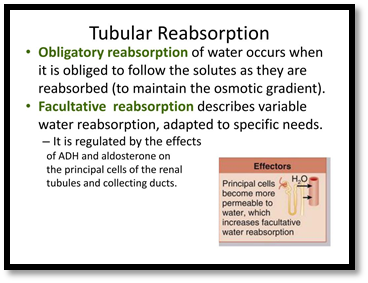
  • Obligatory urine volume (Why does sea water cause dehydration?)
  • Facultative resorption (the resorption of water that take place in late distal tubule and cortical tubule under the influence of ADH)
  • Excreting conc.urine requirements
  • Countercurrent mechanism complete + steps involved (vvvv imp with fig 29.4)
  • Fig 29.5
  • Urea contributes to hyperosmosis (imp)
  • Fig 29.6
  • Countercurrent exchanger by vasa recta
  • Fig 29.7
  • Free water and osmolar clearance
  • Disorders of urinary conc abilities all (vvvvvvv imp) diabetes insipidus
  • Fig 29.9
  • Do not do ADH synthesis
  • Table 29.2
  • Table 29.3
  • Disorders of thirst and water intake (blue box)
  • Role of angiotensin and aldosterone in controlling ECF osmolarity (blue box)
  • Byte Size Med for concepts.
  • Fig 30.1
  • Table 30.1
  • Fig 30.2
  • Fig 30.7
  • Fig 30.10
  • Read Potassium excretion
  • Control of calcium excretion (fig 30.11)
  • Table 30.2
  • Table 30.3
  • Table 30.4
  • Read Calcium and Phosphate excretion and regulation
  • Pg 393-399 (read flowcharts from medical gateway)
  • Read blue boxes
  • Conditions causing increase in ECF ( pg 400)
  • Byte Size Med for concepts.
  • Acid base regulation ( don’t need to do it again… revise it from Biochemistry)
  • Isohydric principal in blue box (pg 408)
  • How Kidneys regulate ECF H+ concentration? (3 points on pg 410)
  • Secretion of H+ and absorption of HCO3
  • Fig 31.5 to 31.9
  • Table 31.2
  • Clinical causes of acid base disorders (last blue box) read it thoroughly and shortlist it
  • Treatment of acidosis and alkalosis
  • Anion gap (vvvvimp) complete
  • Diuretics will be done in Pharmacology
  • Acute kidney injury with table 32.2 read
  • Glomerulonephritis
  • Glomerulonephritis by chronic kidney disease

(These will be covered in patho and medicine as well)

Medico Guides 4th Block (Module No 06) Physiology Guidelines

Prepared by:                     

                           Usman Qaisar (G13)

                           Ibtihal Iftikhar(G14)

Compiled by:

  Rukhsar Uns (G14)

  • Guyton and Hall Textbook of Medical Physiology 14th Edition (Chapter numbers are mentioned according to this edition)

GASTROINTESTINAL PHYSIOLOGY

  • General Principles of GI motility (complete)
  • Enteric nervous system (v.imp) should know the difference between two plexus
  • Autonomic control of GIT
  • GIT Reflexes (1, 2 and 3 also known as local, short and long reflexes respectively)
  • Table 63.1 (vvvv imp)
  • Functional types of movements
  • Circulation (counter current blood flow is important)
  • Complete chapter is important.
  • Mastication arc (make a flow chart that how nerve signal went there and there this happen etc)
  • Swallowing whole topic with all three phases
  • Motor functions of stomach (complete)
  • Hunger contraction
  • Stomach emptying  plus its regulation whole before heading of summary (vvvvv Imp)
  • Movement of small intestine
  • Movement of colon
  • Defecation reflex (make flow chart) vvv imp
  • Mostly covered in Biochem
  • Pancreatic secretion
  • Secretion of bile by liver
  • Fig 65.11
  • Gall stone formation
  • Whole Chapter to be done (vvvvvv imp)

Medico Guides 4th Block Histology Guidelines

                                 Mahnoor (G14)

Compiled by:

                                Rukhsar Uns (G14)

  • 2nd year Histology is quite extensive as compared to 1st year, so we have to do it smartly
  • Read the Manual of Histology once to understand the topic.
  • Revise from ARC notes.
  • Focus on slide identification, diagrams, and differences between structures.
  • Do MCQs after every chapter.
  • Medical Histology by Laiq Hussain 7th Edition (Chapter numbers are mentioned according to this edition)
  • 2nd Year Histology Review By ARC (Notes)

UHS 4th Block

(Module No 06)

  • Microscopic features of Lips, Tongue & Oral Cavity (Read Regardly)
  • Histological structure of Parotid, Submandibular & Sublingual Gland (vvv.imp)
  • Difference between serous and mucous acini (imp)
  • Layers of GIT (vv.imp)
  • Stomach
  • (Pyloric & Fundic part )table/ Diagrams (v.imp)
  • Small Intestine (v.v.imp)
  • Differences between Duodenum, Jejunum & Ileum.
  •  Large Intestine
  • Colon, Appendix & Rectum differences (imp).
  • Histological difference between different parts of Esophagus (vvv.imp)

UHS 4th Block

(Module No 07)

  • JG appratus and GF barrier (vv.imp),
  • Ureter and urinary bladder (v.imp)
  • Kidney (imp)