Prepared by:
Alisha Athar (G13)
Compiled by:
Hafiz Muhammad Umair Noor (G12)
Reference Books:
- Robbins Pathology 11th Edition
- Anwar General Pathology 2nd Edition
Chapter 6: (Anwar General Pathology)
F2-Pa-001
- Mutation and its types
- Autosomal recessive disorders
- Autosomal dominant disorders
- X linked disorders
- Learn their characteristics and make a list of examples of these disorders (vvimp)
- Pcr from google or from lippincot biochemistry
F2-Pa-002
Do the following syndromes from Anwar: (Learn karyotypes from Medium Robbins chap 4)
- Marfan syndrome
- Ehlers Danlos syndrome
- Down syndrome
- Klinefelter syndrome
- Turner syndrome
Chapter 2: (Anwar Microbiology)
F2-Pa-003
- Gram negative and gram positive difference very imp
- Choice of antibiotic will be shared in following
Key Points for Selecting Antibiotics for Gram-Positive or Gram-Negative Bacteria
When selecting antibiotics, consider the following points:
Gram-Positive Bacteria:
1. Cell Wall Structure: Gram-positive bacteria have a thick peptidoglycan layer, making them susceptible to antibiotics that target cell wall synthesis.
2. Antibiotic Options: Penicillin, ampicillin, methicillin, vancomycin, and linezolid are effective against many Gram-positive bacteria.
3. Resistance Patterns: Consider the prevalence of methicillin-resistant Staphylococcus aureus (MRSA) and other resistant strains when selecting antibiotics.
Gram-Negative Bacteria:
1. Outer Membrane: Gram-negative bacteria have an outer membrane containing lipopolysaccharides, which can contribute to antibiotic resistance.
2. Antibiotic Options: Aminoglycosides (e.g., gentamicin), cephalosporins (e.g., ceftriaxone), fluoroquinolones (e.g., ciprofloxacin), and carbapenems (e.g., meropenem) are effective against many Gram-negative bacteria.
3. Resistance Patterns: Consider the prevalence of extended-spectrum beta-lactamase (ESBL)-producing bacteria and other resistant strains when selecting antibiotics.
Broad-Spectrum Antibiotics:
1. Fluoroquinolones: Effective against both Gram-positive and Gram-negative bacteria.
2. Carbapenems: Effective against many Gram-positive and Gram-negative bacteria, including ESBL-producing bacteria.
Factors to Consider:
1. Spectrum of Activity: Choose antibiotics with a spectrum of activity that covers the suspected or confirmed pathogens.
2. Resistance Patterns: Consider local resistance patterns and the patient’s previous antibiotic exposure.
3. Patient Factors: Consider the patient’s age, renal function, liver function, and other underlying medical conditions when selecting antibiotics.
4. Side Effects and Toxicity: Choose antibiotics with a favorable side effect profile and minimal toxicity.
Importance of Culture and Sensitivity Testing:
Culture and sensitivity testing can help identify the specific pathogens and their antibiotic susceptibility patterns, guiding targeted therapy and optimizing treatment outcomes.
HEMATOLOGY
Reference Books
- Robbins Pathology 11th Edition
- Pathoma
HIT-H-001,002,003
Note: learn all morphologies from Ammara morphology pdf
RED CELL DISORDERS
Chapter 5:(Pathoma)
- Complete chapter except sideroblastic anemia
Things to do from Robbins:
- Table 10.1
- Table 10.2
- Fig 10.4
- Fig 10.5
- Table 10.5
- Elliptocytosis from google
- Hemoglobinopathies (from google)
BLEEDING DISORDERS
Chapter 4: (Pathoma)
- Complete chapter except thrombosis and embolism
- Fig 10.30 from robbins
WHITE CELL DISORDERS
Chapter 6: (Pathoma)
- Complete chapter
Things to do from robbins:
- Table 10.7
- Fig 10.18
- Table 10.8
- Table 10.9
- Fig 12.13
- Table 12.10
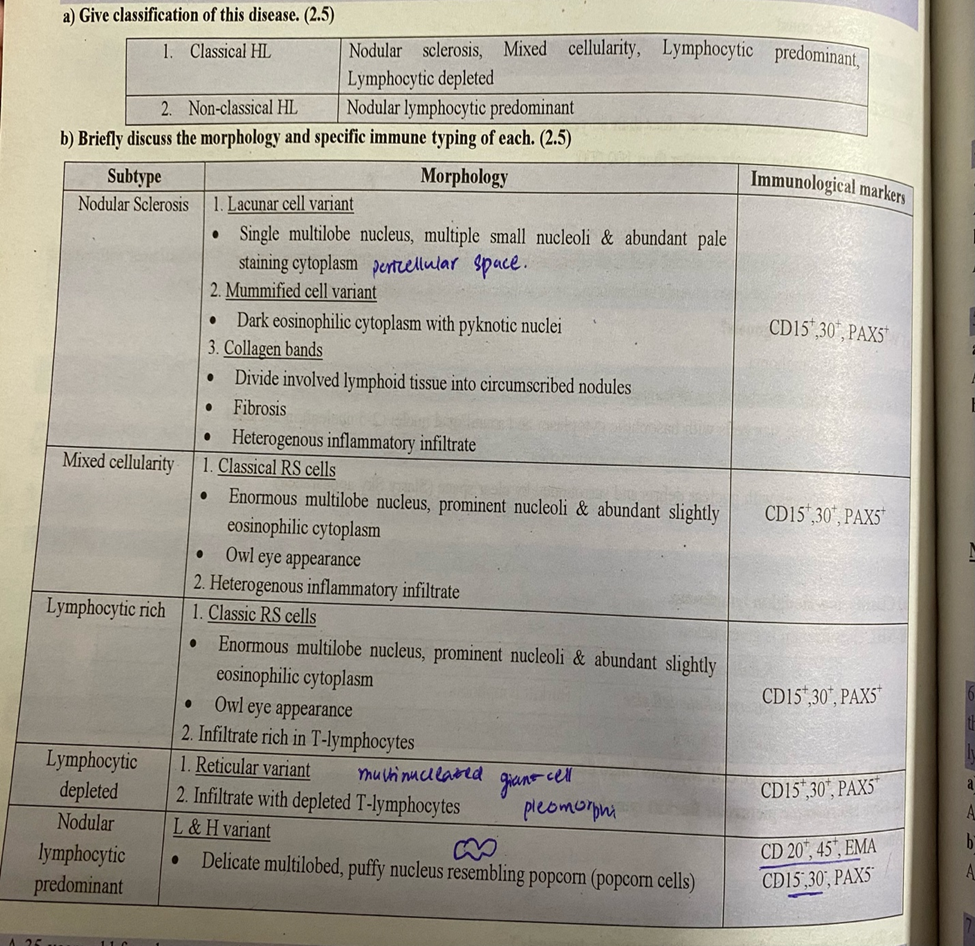
- HL morphology (vvimp) (pic shared below)
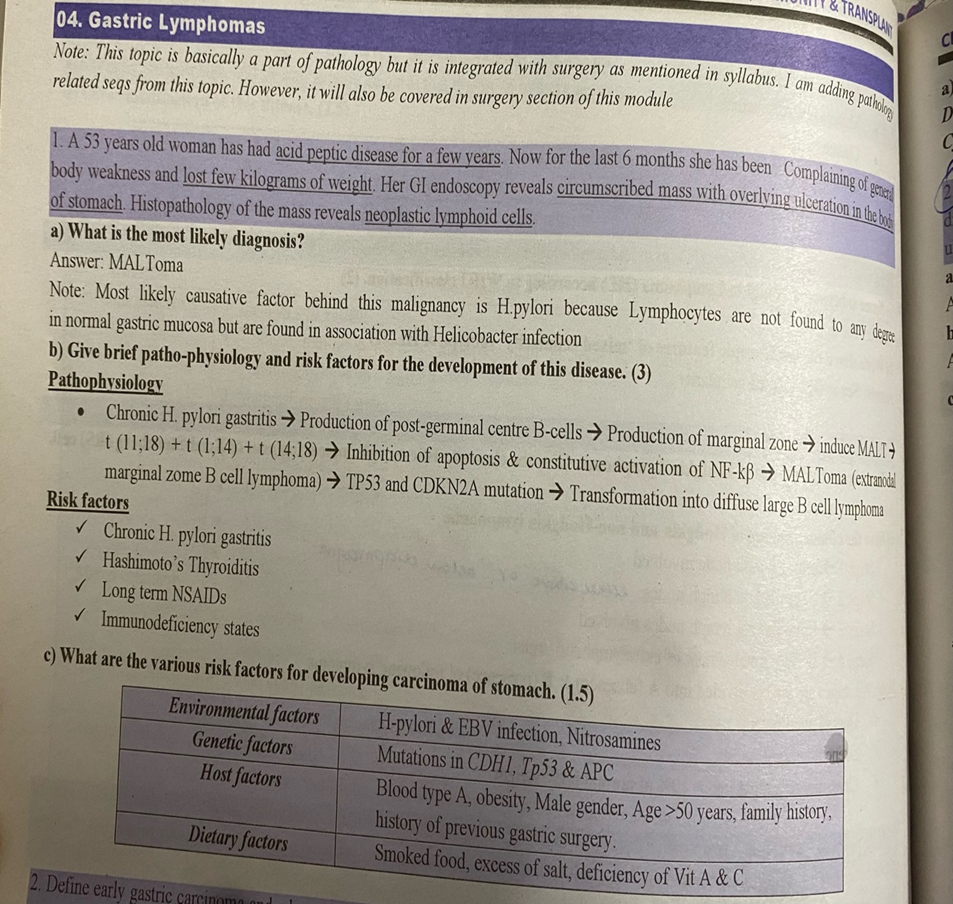
- Gastric lymphomas (pic shared below)
- Complications of transfusion (from robbins)
- Hazards of transfusion + Prevention (google)
- Changes in stored blood (google)