Medico Guides 9th Block Community Medicine Guidelines

Prepared by:

                       Chaman Zulfiqar (G12)

                  Shahr Bano Sayal (G12)

Compiled by:

                  Talha Saleem (G12)

  • Excel Community Medicine 14th edition
  • In Community Medicine, definitions are very important so memorize them word by word.
  • After that, general knowledge with logical understanding is required.
  • Read the topic carefully, build your concepts, and then you can write in your own words but only logical things.
  • Starts with basic definitions
  • Programs and types (imp)
  • Concepts of disease control (imp)
  • Level of preventions (vv imp)
  • Modes of interventions (vv imp)
  • Rehabilitation and types (vv imp)
  • WHO functions (vv imp)
  • Definitions health, disease, illness, sickness
  • Spectrum of disease (imp)
  • Ice berg of disease (v imp)
  • Determinants of health (vv imp)
  • Indicators of health (vv imp)
  • PQLI (v imp)
  • HDI (v imp)
  • Millennium development goals (vv imp) (just names with sequence)
  • Sustainable development goals (just names) (v imp)

(This is vvvvvvv imp topic whole chapter needs to be done with full ratta)

  • Def epidemiology components aims  (imp)
  • Uses just names
  • Basic measures in epidemiology
  • Tools of measurements (v imp)
  • Measures of mortality (each and every formula) (v imp)
  • Measures of morbidity (v imp)
  • Frequency determinants (imp)
  • Epidemiology bathtab (v imp)
  • Epidemiological methods (v imp) (complete)
  • blinding to end of chapter (everything of this chap is vvvv imp)
  • Primary Health Care definition as it is (vvv imp viva)
  • Components of PHC
  • Health care for all by year 2000
  • Definition (WHO), learn as it is word to word
  • Global target for HFA by 2000
  • Health planning cycle
  • 7-star Doctor
  • Levels of health care complete topic (vvv imp seq+viva)
  • BHU (read for mcqs)
  • RHC (read for mcqs)
  • Duties of LHV + catchment area (vvv imp viva)
  • Duties of LHW + catchment area
  • Diff between BHU and RHC
  • Water, uses of water (read)
  • Classification of water (imp)
  • Types of wells, types of springs, sanitary well (read)
  • Water pollution (read)
  • Hazards of water pollution (imp)
  • Criteria for quality of water (vvv imp)
  • WHO standard for safe water supply (vvv imp)
  • Hardness of water (read)
  • Purification of water (vvv imp)
  • Definitions (learn word to word as it is)
  • Tests for free chlorine(just read)
  • Purification of water on small scale (vvv imp)
  • Sampling of water (imp)
  • Water related diseases (extremely high yield topic). Do it complete
  • Causes of air pollution (imp)
  • Effects of polluted air (vvv imp)
  • Green house effect and global warming (imp seq+mcqs)
  • Purification of air (complete topic vvv imp)
  • Acceptable noise levels (table) imp viva
  • Effects of noise exposure
  • Effects of heat stress (extremely imp), must do scenarios of this topic from past papers
  • Effects of cold stress
  • Solid waste disposal (imp)
  • Methods of excreta disposal (just do headings, and read details of each once)
  • Definitions at last page (learn word to word)

This chapter contains general information so read it thoroughly and make concise key points.

  • communication def and components
  • Shannon weaver communication model (v imp)
  • Types of communications (v imp)
  • Methods (imp)
  • Barrier of communications (seq)
  • Functions of communication (names and just read)
  • Health education def, aims, stages (imp)
  • Contents of communications (imp)
  • Methods of maintaining behavior (imp)
  • Models (vvvv imp)
  • Principles of health education (names) (imp)
  • Program plan and evaluation of program (v imp)

Medico Guides 9th Block (Module No 21) Special Pathology Guidelines

Prepared by:

                       Chaman Zulfiqar (G12)

Compiled by:

                  Talha Saleem (G12)

  • Pathoma Fundamentals of Pathology
  • Medium Robbins Latest Edition
  • Hira Maryam Short Book of Bacteriology
  • Anwar Microbiology 2nd Edition
  • Ammara Morphology PDF

RESPIRATORY PATHOLOGY

Re-2-Pa-001:

  • Levinson chap 65, Type 1 hypersensitivity complete topic starting from 2nd pg, including atopy. also do examples of type-1 hypersensitivity from table 65.2 (extremely imp topic from seq, MCQ and viva point of view

Re2-Pa-002:

  • Medium Robbins chap 13—– def of asthma on pg 503, first line of topic, asthma
  • Classification of asthma from med Robbins, with details of non-atopic asthma
  • Pathoma chap 9—- pathogenesis of atopic asthma, mentioned on pg 91 in topic of asthma

Re2-Pa-003:

  • Medium Robbins—–exact word to word def of chronic bronchitis, first line of this topic on pg 502 (vvv imp seq+viva), must mention duration of cough in def
  • pathoma pg 89—–pathogenesis of chronic bronchitis
  • Medium Robbins pg 506—–pathogenesis of bronchiectasis
  • Do Morphology of both above diseases from pdf Ammara morphology. (vvv imp in pathology)

Re2-Pa-004:

  • Medium Robbins pg 498, exact def of emphysema (imp seq) + types of emphysema+ fig 13.6

Re2-Pa-005:

  • Obstructive vs restrictive diseases (extremely imp seq+viva, do it from google in tabulated form)
  • Causes of restrictive lung disease from med robbins pg 498, in topic of Obstructive vs restrictive pulmonary diseases
  • Pneumoconiosis, from med Robbins pg 508, upto pathogenesis
  • Asbestos related diseases from table 13.3
  • Morphology of asbestosis and pneumoconiosis from Ammara Morphology PDF

Re2-Pa-006:

  • Pathoma chap 9, table 9.1+ 9.2+ 9.3
  • Types of pneumonia from pathoma pg 86
  • Morphology of pneumonia from AMMARA morphology pdf
  • Complications of pneumonia, mentioned in pathoma, just before topic of TB

Re2-Pa-007:

  • Morphology of sarcoidosis, TB, hypersensitivity pneumonitis, pulmonary eosinophilia, from AMMARA morphology pdf or you can do them from ChatGPT
  • Ghon complex from pathoma, pg 89, 3rd line of topic of TB, extremely imp mcq, seq, and viva point
  • Primary vs secondary TB from google in tabulated form

Re2-Pa-008:

  • Levinson chap 65, pg 574, hypersensitivity type-4 comp topic till end

Re2-Pa-009:

  • Pleural tumors classification from google
  • Morphology of mesothelioma from AMMARA morphology pdf
  • Risk factor of mesothelioma is asbestos (imp mcq)

Re2-Pa-010:

  • Pathoma table 9.5
  • Laryngeal tumors complete from med robbins, last pg of chap 13
  • Morphology of sq cell CA, Adenocarcinoma, Neuroendocrine tumors from AMMARA morphology pdf
  • Paraneoplastic synd associated with lung CA from med robbins pg 543, last paragraph just above topic of Carcinoid tumor

Re2-Pa-011:

  • Already covered in above topics

Re2-Pa-012:

  • Acute resp distress syndrome from med robbins chap 13, pg 496, comp topic with fig 13.2 (imp seq)
  • Morphology of ARDS from AMMARA morpho pdf

Re2-Pa-013:

  • TB, complete topic from Levinson (bacteriology), no need to do it here separately.

Re2-Pa-014:

  • Not mentioned in much detail in book. Do it from ChatGPT, imp topic due to COVID-19

Re2-Pa-015:

  • Do all mentioned bacteria from HIRA MARYAM short book of bacteriology + Viruses from ANWAR
  • Bacteria are more imp than viruses so do them first.

Medico Guides 9th Block (Module No 20) Special Pathology Guidelines

Prepared by:

                       Wasi Hassan (G12)

                       Shahr Bano Sayal (G12)

Compiled by:

                  Talha Saleem (G12)

  • Pathoma Fundamentals of Pathology
  • Medium Robbins Latest Edition
  • Essentials of Special Pathology by MBBS Cafeteria

CARDIOLOGY

  • There are two approaches to study this subject.
  • If you are a strong learner and aim to compete for every single mark, then go for Robbins.
  • Otherwise, you can rely on Pathoma + Morphology PDF for preparation, which is sufficient for scoring well.
  • There is also the MBBS Cafeteria book, which is a concise blend of Pathoma and Robbins but concisely it’s a good book tbh.
  • I’ll prefer Robbins, as it aligns more closely with your objectives, while Pathoma covers only a limited portion.
  • I recommend you guys to use ChatGPT along with Robbins for anything not present in it and note it down, as your module is integrated and there are many things which are not covered in pathology alone.

CV2-M-005:

  • First of all, cardiomyopathies aren’t asked much in UHS but still they are a hot topic in cardio after MI. Your objectives are not covered from Pathoma so prefer Robbins for it
  • Use ChatGPT for management, ECG and role of MRI in diagnosis.
  • Use same approach for angina, acute coronary syndromes, read from Robbins and managements from ChatGPT.

CV2-M-006:

  • Heart failure is also not much important so do give it a thorough read from Robbins.

CV2-M-007:

  • Myocardial Infarction is one of the most imp. topic for seq. Study it really well.
  • Must do gross & microscopic morphology table with time.

CV2-M-008:

  • Valvular heart diseases are very very imp.
  • Rheumatic fever and rheumatic heart disease must be studied very thoroughly
  • Management plan from ChatGPT (or if someone of you uses medicine books he/she can use it too)

CV2-M-009:

  • Congenital heart diseases are written in Robbins only, do them all from there but they are less likely to show up on exam. Do it only for mcqs

CV2-Pa-003:

  • Cardiac tumors, not many chances of getting seqs from this topic but do give it a read
  • Do study morphologies and study which tumor is found in which age group.

BLOOD VESSELS

  • You have two options for this topic
  • If you are short on time and have a lot to cover, use the MBBS Cafeteria book
  • If you have more time, study from Medium Robbins.
  • I will tell you from both sources.
  • Vascular wall response to injury (arteriosclerosis, atherosclerosis, risk factors, pathogenesis just fig 10.10)
  • Morphology mentioned side along
  • Consequences /complications of atherosclerosis

Aneurysms and dissections:

  • Definitions
  • Pathogenesis just names and few imp lines
  • Abdominal aortic aneurysm
  • Thoracic aortic aneurysm
  • Aortic dissection
  • Must do morphologies also

 Tumors:

  • Table 10.5
  • Benign tumors (give read and highlights mcqs points just)
  • Intermediate Grade tumors (Kaposi sarcoma, it’s ur seq) (vv imp)
  • Malignant tumors (angiosarcomas, just def and morphology)
  • Atherosclerosis
  • Arteriosclerosis
  • Aneurysms
  • Vascular Tumors
  • Kaposi sarcoma (ye topic Robbins sy b read kr k yhn hi compile kr lo)
  • Malignant tumors
  • Congenital (berry aneurysm) (imp)

Medico Guides 8th Block Minors Guidelines

UHS 8th Block

  (Module No 16)

Prepared by:    

                          Zernaab Jodat (G11)

                          Shahr Bano Sayal (G12)

                          Chaman Zulfiqar (G12)

Compiled by:

                    Talha Saleem (G12)

COMMUNITY MEDICINE

Recommended Book:

  • Excel 14th edition. (No need to do K-park for this topic)

(N-CM-001)

  • Definition of screening (just add word of cancer in this to convert it into def of Cancer screening)

You can do this topic from here:

1. Early Detection:

  • Screening can catch cancer before symptoms appear, increasing the chances of successful treatment.

2. Better Treatment Outcomes:

  • Cancers found early are usually smaller and haven’t spread, so they are easier to treat and more likely to be cured.

3. Increased Survival Rates:

  • Early diagnosis through screening often leads to a higher survival rate and better quality of life.

4. Cancer Prevention:

  • Some screenings (like Pap smears and colonoscopies) can detect and remove precancerous lesions before they turn into cancer.

5. Reduces Cancer-related Deaths:

  • Screening programs have been proven to lower death rates from cancers like breast, cervical, and colorectal cancer.

6. Cost-effective:

  • Treating early-stage cancer is usually less expensive and less intense than treating advanced cancer.

7. Peace of Mind:

  • Regular screening gives reassurance if results are normal and allows timely action if anything abnormal is found.

Types of Screening:

  1. Mass screening
  2. High risk screening
  3. Multi phase screening

Methods of Cancar screening are not mentioned in book so you can do it from here:

1. Mammography (Breast Cancer):

  • X-ray of the breasts to detect lumps or tumors early.

2. Pap Smear (Cervical Cancer):

  • Collects cervical cells to check for precancerous or cancerous changes.

3. HPV DNA Test (Cervical Cancer):

  • Detects high-risk types of human papillomavirus that cause cervical cancer.

4. Colonoscopy (Colorectal Cancer):

  • A flexible camera examines the colon and rectum for polyps or tumors.

5. FOBT / FIT (Colorectal Cancer):

  • Tests stool samples for hidden blood, a sign of polyps or cancer.

6. Sigmoidoscopy (Colorectal Cancer):

  • Examines the lower part of the colon with a flexible tube for polyps or tumors.

7. PSA Test (Prostate Cancer):

  • Measures prostate-specific antigen in blood; high levels may suggest cancer.

8. Digital Rectal Exam – DRE (Prostate Cancer):

  • Finger exam of the rectum to feel for prostate abnormalities.

9. Low-dose CT (Lung Cancer):

  • CT scan of the chest with low radiation to detect early lung nodules in high-risk individuals (e.g., heavy smokers).

10. Oral Exam (Oral Cancer):

  • Visual and physical inspection of the mouth for sores, lumps, or color changes.

11. Skin Exam (Skin Cancer):

  • Full-body check for unusual moles or skin changes by self or clinician.

12. TVUS – Transvaginal Ultrasound (Ovarian Cancer):

  • A probe inserted into the vagina to image the ovaries and uterus.

13. CA-125 Test (Ovarian Cancer):

  • Blood test measuring cancer antigen-125, elevated in ovarian cancer.

14. Ultrasound (Liver Cancer):

  • Imaging of the liver to detect abnormal masses.

15. AFP Blood Test (Liver Cancer):

  • Measures alpha-fetoprotein, often elevated in liver cancer.

16. Endoscopy (Esophageal/Stomach Cancer):

  • A flexible tube with a camera is inserted through the mouth to view the esophagus and stomach lumen.

Preventive and control measures, you can write yourself if you’ve covered levels of prevention in chap 1 of excel, I’m giving below these points too:

Primordial Prevention (Avoid emergence of risk factors in the population)

  • Health promotion from early life
  • Anti-tobacco and anti-alcohol campaigns
  • Public policies to reduce environmental carcinogens
  • Promotion of healthy lifestyle in schools and media
  • Banning junk food and tobacco ads

Primary Prevention (Prevent onset of disease by controlling risk factors)

  • Health education about diet, physical activity, avoiding tobacco/alcohol
  • Vaccination:
  • HPV vaccine → Cervical cancer
  • HBV vaccine → Hepatocellular carcinoma
  • Occupational safety: Protect workers from carcinogens (asbestos, chemicals)
  • Dietary modifications: High-fiber, low-fat, antioxidant-rich foods
  • Sun protection to reduce skin cancers

Secondary Prevention (Early detection and prompt treatment to stop progression)

  • Cancer screening programs:
  • Pap smear – Cervical cancer
  • Mammography – Breast cancer
  • Colonoscopy / FOBT – Colorectal cancer
  • Low-dose CT scan – Lung cancer (in smokers)
  • PSA test / DRE – Prostate cancer
  • Oral cavity visual inspection – Oral cancer (esp. in tobacco users)
  • Community-based screening camps
  • Early referral and diagnosis

Tertiary Prevention (Reduce complications, disability, and recurrence after diagnosis)

  • Treatment: Surgery, chemotherapy, radiotherapy
  • Rehabilitation: Physical, psychological, occupationa
  • Palliative care: Pain management, end-of-life care
  • Follow-up and surveillance for recurrence
  • Support groups and counseling for cancer patients and families
  • Cancer registries for data tracking and planning

BEHAVIOURAL SCIENCES

N-BhS-001

  • Do this from Section E (Psychosocial issues in hospital settings)
  • For any disease steps are same as psychosocial assessment just give a read to this topic, not imp for seq pov)
  • Topic oncology (page #167)

UHS 8th Block

(Module No 17)

COMMUNITY MEDICINE

  • Excel 14th Edition (Chapter numbers are mentioned according to this edition)

ID-CM-001:

  • Chap 4 excel, Pg 93, read whole topic it’s extremely high yield topic as this disease is very common in PAK, focus mainly on its prevention and control measures and epidemiology

ID-CM-002:

  • Excel chap 4, Pg 105, read whole topic with special focus on epidemiology and its prevention and control

ID-CM-003:

  • Excel chap 4, Pg 81 read whole topic, with special focus on epidemiology and its prevention and control

ID-CM-004:

  • Excel chap 4, Pg 88 (rubella), Pg 76 (mumps), Pg 74 (measles), read whole topics, but epidemiology and prevention should be at your finger tips.
  • Must remember name of vaccine for each disease and time at which vaccine is given

ID-CM-005:

  • Excel chap 6, Pg 134, Objectives of EPI, implementation strategy,
  • Page 135 General hazards of immunization, adverse effects following immunization,
  • Page 137, causes of failure of OPV,
  • Table of EPI on Pg 140 (VVV imp table),
  • Common barriers to immunization in PAK are not covered properly in book, do this topic from google/ ChatGPT

ID-CM-006:

  • Excel chap 4, Pg 65, diphtheria VVV imp topic, pay special focus to epidemiology + prevention and control

ID-CM-007:

  • Excel, chap 4, Pg 90, tetanus, again a really imp topic from clinical point of view, read the whole topic particularly focusing on epidemiology and prevention and control

GYNAECOLOGY

ID-GO-001, ID-GO-002

  • All the mentioned topics from Chater 9 of Ten Teachers

PAEDIATRICS

ID-Pe-001 to ID-Pe-003

  • Book: Paediatrics Ahmed Hassan
  • CNS → pyogenic and tuberculous meningitis
  • GIT → chronic diarrhea
  • Respiratory disorders

Medico Guides 8th Block (Module No 18) Special Pathology Guidelines

Prepared by:

                           Christopher Stephen (G12)

Compiled by:

                     Hafiz Muhammad Umair Noor (G12)

Reference Books:

  • Pathoma Fundamentals of Pathology
  • Medium Robbins Latest Edition
  • Essentials of Special Pathology by MBBS Cafeteria

Rheumatoid Arthritis:

  • Mechanism(HLA association)
  • Clinical features especially morning stiffness that improves with activity(often scenario is presented this way) and age (60+)
  • Morphology from cafeteria book, in purple box
  • Lab findings like antibodies and markers etc
  • Treatment

Osteoarthritis:

  • Mechanism (wear and tear)
  • Presentation: age, stiffness that worsens during the day
  • Morphology from cafeteria book
  • Clinical features like osteophytes and nodes
  • Treatment

Gout:

  • Mechanism overproduction/underexcretion
  • Types 1⁰ or 2⁰
  • Clinical presentation
  • Causes
  • Lab findings (negative birefringence vvvvimp)
  • Differentiate it from pseudogout (crystal shape and +ve birefringence)

Tumors:

  • Scenario is asked, giant cell tumor and ewing sarcoma, osteosarcoma are more imp
  • Focus on location, age bracket, any special finding(like soap bubble in giant cell), associations
  • Tumor morphology from cafeteria book (super high yield)
  • Soft tumors like lipoma etc

Note: You can use Robbins for morphologies if cafeteria  is not suitable.

Medico Guides 8th Block Surgery Guidelines

Prepared by:    

Zernaab Jodat (G11)

Compiled by:

                     Hafiz Muhammad Umair Noor (G12)

UHS 8th Block

(Module No 16)

PRINCIPLES OF ONCOLOGIC SURGERY

(N-S-001)

Recomended Book:

  • Dogar General Surgery 4th Edition

Chapter 20:

  • Screening
  • Tumor markers
  • Principles of cancer surgery
  • Principles of chemotherapy and radiotherapy (vvimp)
  • Principles of immunotherapy
  • Tumor board (TEAM)

UHS 8th Block

(Module No 17)

GASTROINTESTINAL TRACT

N-S-001(b)

Recomended Book:

  • Irfan Masood Surgery

Chapter 2:

  • Difference between hydatid cyst and amebic liver abscess:
  • Signs
  • Symptoms
  • Management

SKIN

ID-S-001(a)

  • Management of gas gangrene, carbuncle and necrotising fascitis:
  • Introduction of these diseases from Microbiology
  • For treatment and management consult chapter 29 (plastic and reconstructive surgery) from Bailey & Love’s Short Practice of Surgery.

UHS 8th Block

(Module No 18)

ORTHOPEDICS

Recomended Book:

  • Dogar Systemic Surgery

MS2-Orth-001

  • Definition of orthopedics and its significance → From Google

Chapter 1:

MS2-Orth-002

  • Principles of fracture healing
  • Difference between complete and incomplete fractures

MS2-Orth-003(a)

  • Salter- Harris classification

Chapter 4:

MS2-Orth-003(b)

  • Management of paediatric fractures

Recomended Book:

  • Bailey & Love’s Short Practice of Surgery

Chapter 28:

MS2-Orth-004

  • What are osteoporotic fractures, sites and risk factors

MS2-Orth-005

  • Pathologic fractures, difference from traumatic and their management

Chapter 32:

MS2-Orth-006

  • Sports injuries in upper and lower limbs:
  • Management
  • Prevention
  • Rehabilitation
  • Assistive devices
  • Surgical intervention
  • Nutritional role

Chapter 39:

MS2-Orth-007

  • Achondroplasia and marfans syndrome → features, management, counselling of marfans

MS2-Orth-008(a)

  • Osteogenesis imperfecta → features, management, counselling of patients

Chapter 33:

MS2-Orth-008(b)

  • Scoliosis → types, management, rehabilitation

SURGICAL TRAUMATOLOGY

Recomended Book:

  • Dogar General Surgery 4th Edition

Chapter 9:

  • ATLS → ABCDE and trauma management
  • All the traumatic injuries and their ATLS interventions are (v imp)
  • Causes and features of traumatic injuries
  • Primary survey
  • Traumatic Brain Injury

Recomended Book:

  • Tintinallis Emergency Medicine Manual 9th Edition

MS2-Orth-012

  • Do topic of Shock from chapter 5

MS2-Orth-014

  • Do topic of Neck and Spine Trauma from chapter 161 and 163

MS2-Orth-015

  • Do topic of Maxillofacial Trauma from chapter 162

MS2-Orth-012

  • Do topic of Extremities Trauma from chapter 168

Medico Guides 8th Block Medicine Guidelines

Prepared by:    

Zernaab Jodat (G11)

Compiled by:

                     Hafiz Muhammad Umair Noor (G12)

UHS 8th Block

  (Module No 16)

RADIOLOGY

Recomended Book:

  • Kelleys Essential Of Internal Medicine

Chapter 248:

N-M-001

  • Imagine techniques types

N-Ra-001 to N-Ra-003

  • Imaging in cancer staging
  • Treatment planning of cancer patients

N-Ra-004

  • Specific modalities

Note: Also practice various radiographic images on the internet.

ONCOLOGY

Recomended Book:

  • Davidsons Principles and Practice of Medicine

Chapter 33:

N-M-002

  • Presenting problem of cancer patients

N-M-003

  • Risk factors

N-M-004

  • Investigations
  • Examination
  • Determinants

N-M-005(a)

  • Emergency complications

N-M-006

  • Therapy strategy

Recomended Book:

  • Kelleys Essential Of Internal Medicine

Chapter 247:

N-M-005(b)

  • Paraneoplastic syndromes and oncological emergencies….what are those?

UHS 8th Block

(Module No 17)

INTERNAL MEDICINE

Recomended Book:

  • Step Up Medicine 2025-26 Edition

Chapter 10:

ID-Pa-009

  • Pyrexia of unknown origin…stepup page 407

ID-Ph-011(a)

  • Pneumonia

ID-Pa-013

  • Meningitis
  • Encephalitis

Recomended Book:

  • Irfan Masood Medicine 3rd Edition

Chapter 6:

ID-Ph-011(b)

  • Do tuberculosis from page 250.

UHS 8th Block

(Module No 18)

RHEUMATOLOGY

Recomended Book:

  • Irfan Masood Medicine 3rd Edition

Chapter 12:

MS2-Rh-001 to MS2-Rh-006

  • Introduction and scope from Google
  • Rheumatoid arthritis, gout, osteoarthritis, systemic inflammatory vasculitis, other rheumatic diseases, do their definitions and management
  • Pathophysiology of all and differences

Medico Guides 8th Block (Module No 19) Forensic Medicine Guidelines

Prepared by:

                           Chaman Zulfiqar (G12)

Compiled by:

                     Hafiz Muhammad Umair Noor (G12)

Reference Books:

  • NRA Forensic Medicine 2nd Edition
  • Shahbaz Forensic Medicine 6th Edition

For2-Tr-001:

  • Chapter 5, def of injury, wound, hurt with their section number
  • Def must be learnt word to word as it is
  • Page 109 Injuries classification on basis of causative agent complete topic
  • Table 4.2 NRA complete as it is vvv imp

For2-Tr-002:

  • Chapter 5 SHAHBAZ, pg 107, mech of wound production complete

For2-Tr-003:

  • Chapter 5 SHAHBAZ , pg 113 to 114 complete topic of abrasion

For2-Tr-004:

  • Chapter 5 SHAHBAZ pg 110 to 112, bruise, complete topic along with tables + table 6.3  from NRA vvv imp table

For2-Tr-005:

  • Chapter 5 SHAHBAZ, pg 115 to 116 Laceration complete topic + table of diff b/w laceration, incised wound and stab wound on SHAHBAZ pg 123 sendup question

For2-Tr-006:

  • Not given in book, you’ll have to do it from google or chat/gpt

For2-Tr-007:

  • SHAHBAZ chap 5 pg 116 to 121,  incised and stab wounds complete

For2-Tr-008:

  • Mainly related to pathology

For2-Tr-009:

  • SHAHBAZ chap 5, pg 125 age of wound, complete topic till next page

For2-Tr-010:

  • Ewings postulate, from NRA (given at end of traumatology chap)

For2-Tr-011:

  • Chapter 15 SHAHBAZ, pg 322 battered baby syndrome, comp topic

For2-Tr-012  For2-Tr-013

  • These topics will be covered in your lab and wards

For2-Tr-014:

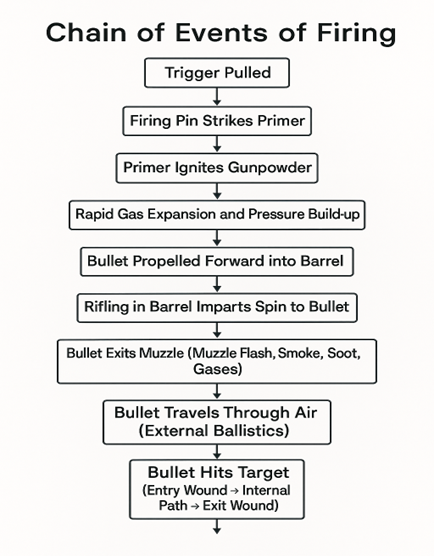
  • Chap 6 SHAHBAZ, def of firearm pg, 127
  • Firearm components + def of ballistics, pg 129

For2-Tr-015:

  • Chapter 6 SHAHBAZ, pg 133, exterior ballistics ke last pr 2 points h air resistance aur gravity wale ye topic krna ha

For2-Tr-016:

  • Chapter 6 SHAHBAZ, firearm wound complex + pg 145 determination of dist of fire + pg 142, table of diff b/w entry and exit wound

For2-Tr-017:

  • Chapter 6 SHAHBAZ, pg 132 gun powder types and composition

For2-Tr-018:

  • Complete topic of explosions from SHAHBAZ, pg 33, not much imp

For2-Tr-019 and For2-Tr-020

  • complete topic of pedestriam injuries from SHAHBAZ pg 326 to 322

For2-Tr-021:

  • Chapter 7 SHAHBAZ Thermal injury complete topic till pg 162

For2-Tr-022:

  • Chapter 7 SHAHBAZ, pg 164 till end complete topic of electrocution and lightening

For2-Tr-023:

  • SHAHBAZ pg 348, complete topic of heat (mcqs ae the hme is topic se test me, so don’t ignore it)

For2-Tr-024:

  • Covered in topic of burns

For2-Tr-025:

  • SHAHBAZ Chapter 8, pg 188, complete topic of drowning

For2-Se-001:

  • SHAHBAZ Chapter 9 pg 195, all def + causes of impotence from next pg along with medicolegal imp from pg 197

For2-Se-002:

  • SHAHBAZ Chapter 10, signs of viriginity, complete topic + medicolegal imp from pg 207

For2-Se-003:

  • Chapter 10 SHAHBAZ, signs of pregnancy, complete topic, pg 207

For2-Se-004:

  • Chapter 10, Signs of delivery, complete topic

For2-Se-005:

  • Chapter 10 SHAHBAZ, pg 217 abortion complete topic (criminal abortion is extremely imp)

For2-Se-006:

  • SHAHBAZ Chapter 11, def of sexual offences,  classificatio, legal consideration, examination of case of rape (it’s written very lengthy here, do it from NRA) extremely imp topic (ques of our prof exam)

For2-Se-007:

  • SHAHBAZ Chapter 15, Def of infanticide + summary of factors indicative of live birth from pg 318, 
  • Definition of live born, still born, dead born, and table differentiating b/w ante-natal and intra-natal deaths, from pg 312
  • Their autopsy findings are not mentioned here properly. You can do it from google

Medico Guides 8th Block (Module No 18) Pharmacology Guidelines

Prepared by:                                                                                          

                           Christopher Stephen (G12)                            

Compiled by:

                     Hafiz Muhammad Umair Noor (G12)

Recomended Books:

  • Mini Katzung Pharmacology Edition 2024-25
  • Classification from Ali Raza Notes  

(MS2-Ph-001)

DMARDS

Chapter 36:

  • Classification of DMARDS
  • MOA
  • Effects + clinical uses
  • Adverse Effects

CORTICOSTEROIDS

Chapter 39:

  • Role in autoimmune diseases(like rheumatoid arthritis
  • MOA
  • Adverse Effects

BISPHOSPHONATES

Chapter 42:

  • Names
  • MOA
  • Adverse Effects (esophagitis so maintain upright position for half an hour)

NSAIDs

Chapter 36:

  • MOA
  • Indication in different diseases
  • Adverse Effects specially those of nsaids and aspirin

OPIOIDS

Chapter 31:

  • MOA
  • Indication in different diseases
  • Adverse Effects

Medico Guides 8th Block (Module No 17) Pharmacology Guidelines

Prepared by:

                           Shahr Bano Sayal (G12)

Compiled by:

                     Hafiz Muhammad Umair Noor (G12)

Reference Books:

  • Mini Katzung Pharmacology Edition 2024-25
  • Kaplan USMLE Step 1 Pharmacology Lecture Notes
  • Ali Raza Chaudhary Notes

CHEMOTHERAPEUTICS

Note:

  • Saab Sy phly classification krni ha ap ny hr topic ki (Three times a day😅)
  • Do complete chapter from mentioned book
  • Preferred to do Ayesha batool shortlist on your book (it’ll help a lot for SEQ)
  • If you want, give a read to topic from Lippincott (it’s optional, If you find something imp note it on your main book)
  • I’ll mention chapters numbers from Katzung.

Chapter 43: (Beta Lactam Antibiotics)

  • Classification from ARC notes
  • Complete chapter from Kaplan

Chapter 44 +45: (Aminoglycosides and Tetracyclines)

  • Classification from ARC notes
  • Comp chapter from Kaplan (v imp)

Chapter 46:

  • Classification from ARC notes
  • Complete chapter from Katzung (v imp)

Chapter 47

  • Classification from ARC notes
  • Complete chapter from Katzung (v imp)

Chapter 48

  • Classification from ARC notes
  • Complete chapter from Katzung (v imp)

Chapter 49

  • Antiviral from Kaplan (one of the imp topics)
  • Table 49.2 (imp) (from Katzung)

Chapter 50 +51

  • No need to do it.

 Chapter 52:

  • Antiprotozoal [just do classification from ARC notes and give a read to summary table from Katzung(imp)]
  • Chloroquine, primaquine , sodium sitabogluconate from summary table

Chapter 53:

  • Just classification from ARC notes
  • Summary table from Katzung