Medico Guides 1st Block (Module No 01) Biochemistry Guidelines

Prepared by:

                  Harram Sameer (G15)

Compiled by:

                  Hafiz Muhammad Umair Noor (G12)

  • Lippincott Illustrated Reviews: Biochemistry 8th Edition
  • Harper’s Illustrated Biochemistry 30th Edition
  • Satyanarayana Biochemistry 6th Edition
  • Essential of Medical Biochemistry by Mushtaq Ahmed 9th edition
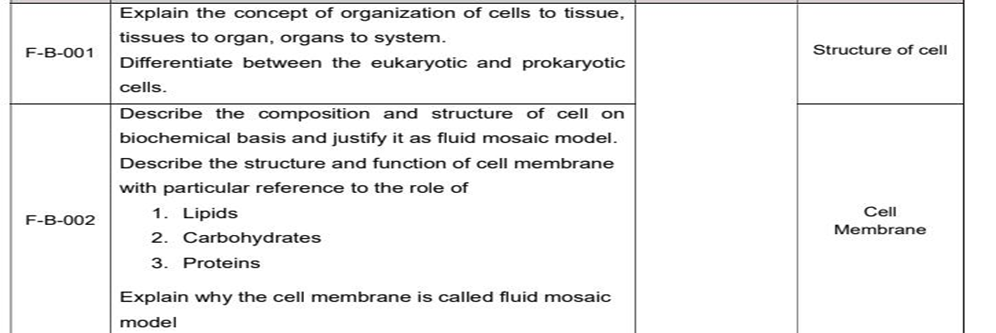
  • These LOs of cell  will be automatically covered if you have prepared chap 2 of physio and histo
  • But if you want to prepare these LOs from biochem as well , then  prepare these LOs from Satya Chap 1 or any short book ( In unravelled, extensive detail of organelles is also given which isn’t required according to the LOs)
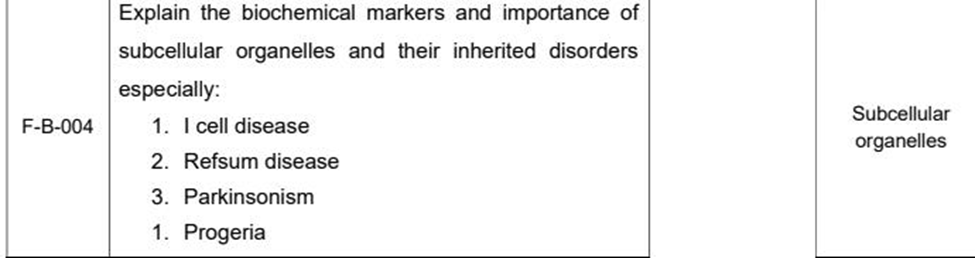
  • Do the Biochemical markers and Subcellular organelles’ diseases from medico express , unravelled  or from the pics shared below ( it is preferable to do cell diseases from medico express or unravelled as in the pics given below , the diseases are written very briefly )

Lecture: Selfless Medicose for GPCRS

For Cell junctions Dr Bhanu Prakash or Ninja Nerd

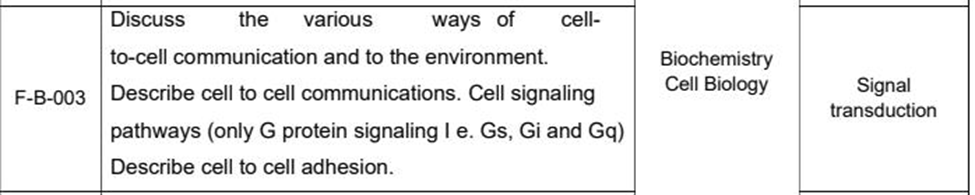
  • LO 1: Ways of cell to cell communication and to environment from medico express or unravelled, Also do fig 8.5 and 8.6 from Lippincott chap 8
  • LO 3: Cell Adhesion from any short book or AI, can also be done from histo chap 2                                                                                                                        
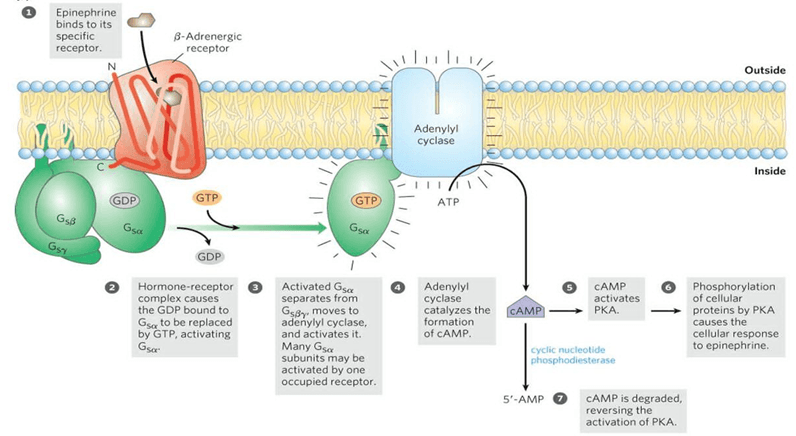
  • LO 2: GPCRs from Lippincott chap 8
  • Do fig 8.7, 8.8 (Also do theory of GPCRs from Pg 103, 104 ,105) & Fig 17.8 (It is in                   chap 17, do only the figure)
  • Also do The side box of vibrio cholera and whooping cough (important)
  • Def of signal transduction and importance/ uses of G protein coupled receptors , pics are shared below :
  • Signal Transduction: process by which physical or chemical signals are transmitted through cell as a series of molecular events, particularly phosphorylation by protein kinases.
  • Intracellular signals
  • Extracellular signals
  • Juxtacrine Signaling: signaling that requires close contact, a ligand on one surface attaches to receptor on the other. By secreting molecules:
    •       Endocrine (in blood)
    •       Paracrine (to nearby cells)
    •       Synaptic (through synapses)
    •       Autocrine (to cells own self)

Lecture: Njoy Biochem

  • Prepare these LOs of DNA from Lippincott chap 30 ( given in the start of chap under DNA structure )or from Satya chap 5
  • Most imp topics from Satya chapter 5 are given below:
  • Chargaff’s Rule and DNA double helix
  • Different forms of DNA (A, B & Z) ( can also be done from lippin chap 30)
  • Names of other types of DNA structures (Bent, triple stranded etc.)
  • Organization of DNA along with diagram
  • Definition of melting temp and renaturation
  • LO 1: From Satya chap 5 or lippin chap 31
  • LO 2: Structure and Function of Different types of RNAs from Satya chap 5 or lippin chap   31 (It is preferable to do RNA from Satya chap 5)
  • LO 3: Functions of various small RNAs present in cell from Satya chap 5 table 5.3
  • Focus on everything under topic of RNA given in Satya chap 5

tRNA has an unusual base , dihydrouracil in its structure

Lectures: TN med zone, Njoy biochem or Awesome Biochemistry

  • These LOs can be done from  Satya chap 5 ( Mostly students cover these LOs  from Satya chap 5)  or from Chatterjea chap 14
  • Do biomedical importance of natural and synthetic analogues from Satya chapter 5 (Purine, Pyrimidine and Nucleotide Analogs topic) as well as look at minor bases found in nucleic acids

LO 1: Do higher organization of DNA from Lippincott chapter 30 page 473, 474 (eukaryotic DNA organization)

  • Also refer to the diagram below

LO 2: Difference:

  • DNA: DNA (deoxyribonucleic acid) is the molecule that carries the genetic instructions for an organism.
  • Chromatin: DNA is packaged with proteins (like histones) to form a complex called chromatin.
  • Chromosome: A chromosome is a structure made up of DNA and proteins, where DNA is tightly coiled and packaged.
  • Chromatid: Before cell division, a chromosome replicates, resulting in two identical copies called sister chromatids. These sister chromatids are joined at a region called the centromere.
  • Cell Division: During cell division (mitosis or meiosis), the sister chromatids separate, and each becomes an individual chromosome in the daughter cells.
  • Analogy: Think of a chromosome as a “house” and the chromatids as the two identical “floors” of that house.

Lectures: Best channel for concept of enzymes is Medicosis Perfectionalis on Youtube especially for enzyme inhibition

Other channels for enzymes include Rajesh Jambhulkar, Njoy biochem and awesome biochem

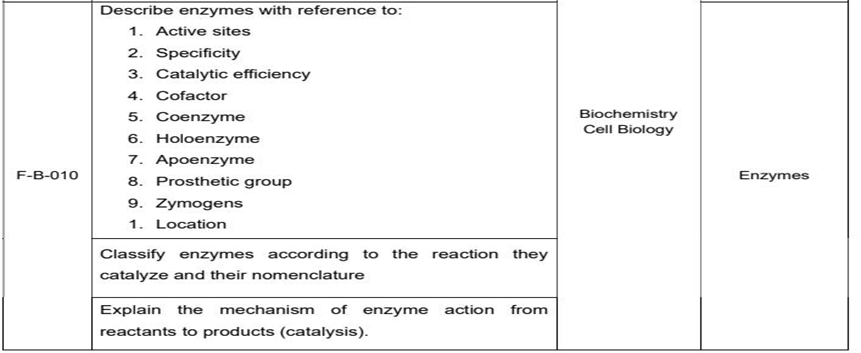
LO 1: Do enzymes with reference to active site, specificity etc. from Lippincott chapter 5 , given under the heading of Properties of Enzymes ( only zymogen isn’t explained, you can do it from any short book)

LO 2: Do nomenclature from Lippincott chapter 5

    Do classification of enzymes from Lippincott fig 5.1 (keep in mind a new 7th class of enzymes Translocases) , subclasses from Mushtaq

LO 3: Do Mechanism of action from lippin chap 5

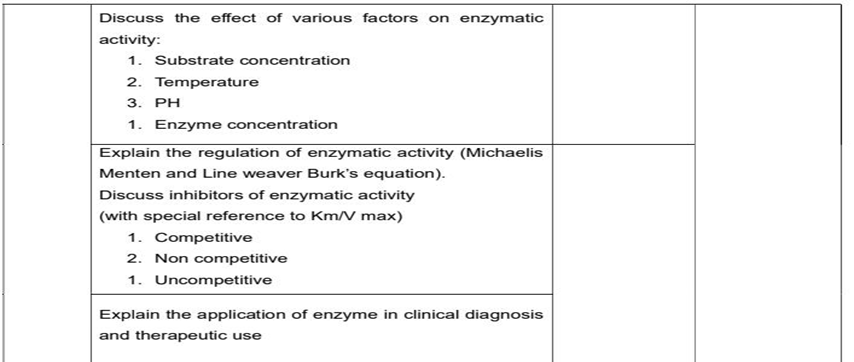
LO 4: Factors affecting enzymatic activity from lippin chap 5

LO 5: Michealis Menten Kinetics, Lineweaver Burk plot and Competitive and Non-competitive inhibition from Lippincott chapter 5

  • Fig 5.12 and 5.14 are vvvv imp
  • Do Uncompetitive Inhibition of enzymes from Mushtaq chapter 6 and Medicosis Perfectionalis
  • Leave the topic of Enzyme Regulation as it is not mentioned in the syllabus

LO 6: Do therapeutic use of enzymes from Satya table 6.8

Some topics aren’t mentioned in Los but they’re very important, so it is better to do them. These are :

  • For enzymes used in clinical diagnostics Do Lippincott table 5.2
  • Also  do isozymes from lippin page 70
  • Do table 6.1 and 6.6 to 6.13 from Satya
  • Regulation of enzymes by covalent modification from lippin chap 5

Lectures: Njoy Biochem, Rajesh Jambhulkar, Awesome biochem or Dirty Medicine

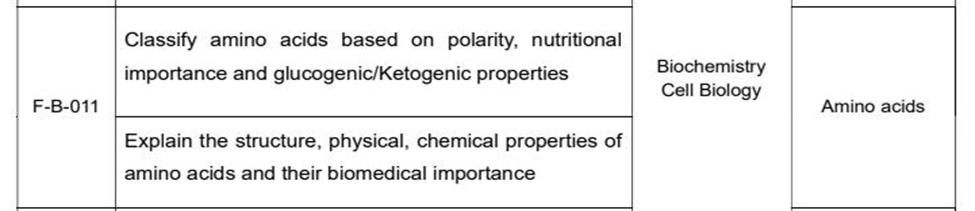
LO 1: Do classification of amino acids based on polarity from Lippincott fig 1.2 and 1.3

  • Do structural  classification from Satya chapter 4 page 46 to 51 (skip polarity based classification from Satya as it is wrong)
  • Do  classification on basis of nutritional importance ( essential and non essential amino acids)and glucogenic and ketogenic properties  from Lippincott fig 20.2
  • Do conditionally important amino acids from Satya chap 4

LO 2: Do structure , physical and chemical properties of amino acids from Satya chapter 4

  • Do biomedical importance of amino acids from Satya chapter 4 page 55
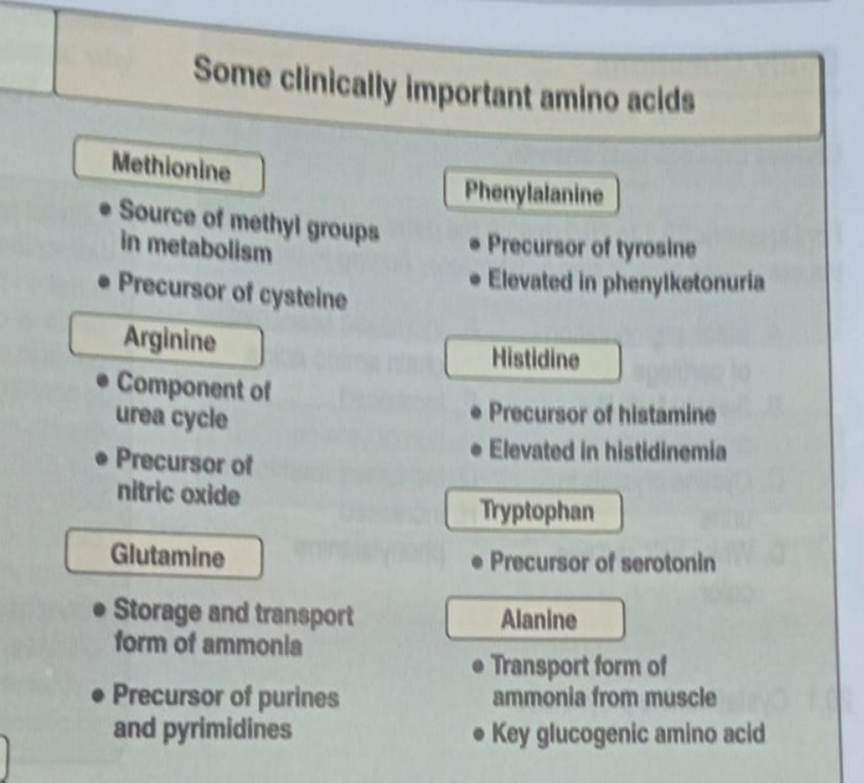
  • Do functions of individual amino acids from the pic shared below (pic reference Lippincott chapter 20 page 305 summary)  

Note: If there’s any conflict between the classifications on Lippincott and Satya, prefer Lippincott
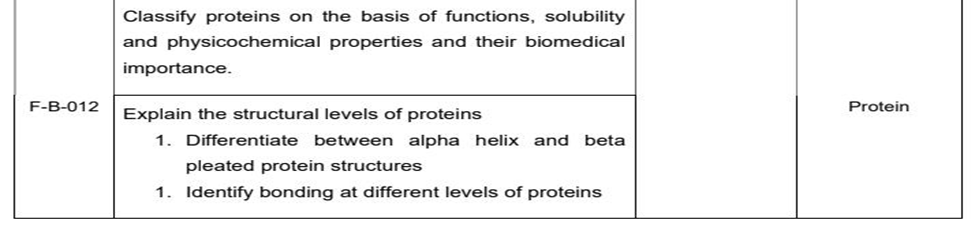
LO 1: Do classification of proteins from Satya chapter 4

  • Do biomedical importance of proteins from Satya chapter 4 (biologically imp peptides)
  • Class A and B proteins from any short book or AI

LO 2 : Do Structural levels of proteins from Lippincott chap 2 ( complete chap )

  • You should be very clear about the difference in alpha helix and beta pleated sheets, the types of stabilizing interactions between proteins at each level, examples of each structural level. 

LO 3 :Do the Role Of Chaperones from chap 2 page  21, Lippincott ( It is under the topic of   tertiary structure of proteins)

LO 4: Do biochemical basis of disorders of proteins misfolding and

      Alzheimer’s and prion’s disease from Lippincott chapter 2

  • You should be very clear about the biochemical basis of diseases , e.g

Biochemical basis of Alzheimer’s: It is a deposition of amyloid beta plaques in brain parenchyma. (The simpler, the better)

Lectures : Rajesh Jambhulkar or Medicose Perfectionalis

  • Do plasma proteins from Satya chapter 9
  • Remember the class of plasma proteins e.g. transferrin is a beta globulin

Lectures: For structure of Antibodies —-Dirty Medicine

                 For Multiple Myeloma ——–Rhesus Medicine or Medicosis

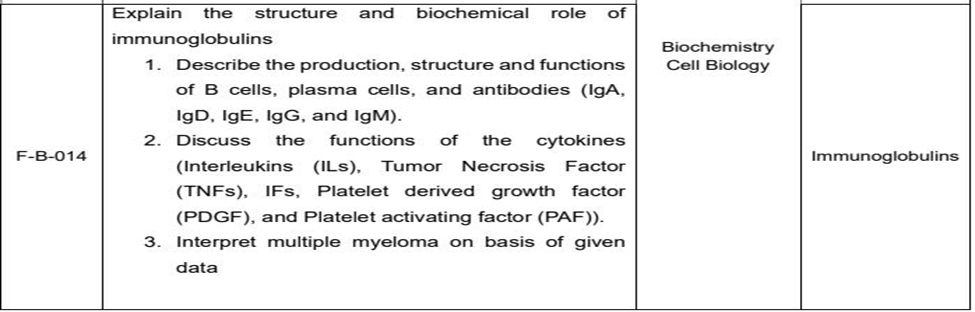
LO 1: Do structure and biomedical importance of immunoglobulins from Satya chapter 9

  • Do functions of immunoglobulins from Satya chapter 9

LO 2: Production, structure and function of plasma cells, b cells is covered in Guyton chp 35. Do it from there or from any short book

LO 3: Do interleukins from Guyton chp 35 pg 467 “ Specific regulatory functions of lymphokines’’ and table 35.1. 

  • Platelet Activating Factor (PAF) from Guyton pg 478 first paragraph.
  • PDGF from Guyton pg 477 first paragraph point no. 6
  • You can also do this LO from any short book

LO 4: Do multiple myeloma from Satya chapter 9

  • Labs for interpretation of multiple myeloma:
  • M spike in electrophoretic pattern of serum proteins (Also keep in mind the normal electrophoretic pattern)
  • Bence Jones proteins in urine
  • Raised plasma immunoglobulin levels

Also do the mcqs given in the exercise of the chapters of Lippincott included in your syllabus, those mcqs were also asked in our proff
Medico Guides 1st Block (Module No 01) Physiology Guidelines

Prepared by:

                      Asma Shafique (G15)

Compiled by:

                     Hafiz Muhammad Umair Noor (G12)

  • Guyton and Hall Textbook of Medical Physiology 14th Edition (Chapter numbers are mentioned according to this edition)
  • NIMS Blood Physiology (Only for Topic of Blood)
  • Jaypee Essentials of Medical Physiology 6th Edition

CELL PHYSIOLOGY

  • Extracellular fluid
  • Definition of homeostasis
  • Definition of disease and compensatory example
  • Control systems of the body
  • Gain of a control system
  • Barometric system=+2
  • Temp control system=-33
  • Negative feedback with examples (vvv.imp)
  • Positive feedback with examples (vv.imp)
  • Feed forward/delayed negative feedback (v.imp)
  • Definition of feed forward mechanism n example.
  • Definition of adaptive control
  • Read rest of the chapter superficially for the MCQ’s.
  • Structure and functions of cell membrane (vv.imp)
  • All organelles (comparison of any of them could be asked)
  • Specially (lysosomes & peroxisomes)
  • Functions of ATP (v.imp)
  • Difference between autophagy and autolysis (imp)
  • Locomotion of cells mainly ameboid (v.imp)
  • Difference between simple diffusion & facilitated diffusion (v.imp)
  • Difference between 1⁰ & 2⁰ active transport(imp)
  • Types of 2⁰ active transport (vv.imp)
  • Gating of the channels: ligand gating, voltage gating (vv.imp)
  • Read rest of the chapter superficially for MCQ’s
  • Pathophysiology of Edema (or from the pic shared in the group)
  • Thermoregulation complete

BLOOD PHYSIOLOGY

  • Composition and functions of blood (Jaypee chapter 7)
  • Plasma proteins (Jaypee chapter 8)
  • Do intro normal values and functions (Jaypee chapter 8)
  • Pathophysiology of edema (flowchart is shared in the group)
  • Shape and size of RBC
  • Concentration of RBCs in blood
  • Quantity of Hb in the cells (imp for viva)
  • Areas of body for RBC production
  • Figure 33.2
  • Figure 33.3 (imp)
  • Stages of differentiation of RBCs (v imp), pics are shared in the group
  • Pg 441 to 445 (do complete along with fig 33.4 and 33.7 Imp for seq and ospe questions)
  • Blood indices (from NIMS physiology, pics are shared in the group)
  • Types of bone marrow (pics are shared in the group)
  • Types of Hb (from NIMS physiology, pics are shared in the group)
  • Read whole chapter for better concepts
  • General characteristics of leukocytes
  • Neutrophils and macrophages defend against infections
  • Reticuloendothelial system
  • Inflammation
  • Eosinophils
  • Basophils
  • Leukopenia
  • Leukemia (Inc in abnormal WBCs)
  • Leukocytosis (Inc in normal WBCs)
  • Read whole chapter for better concepts
  • O-A-B blood types
  • Rh blood types.
  • Landsteiner Law (pic is shared in the group)
  • Read whole chapter for better concepts

Medico Guides 1st Block (Module No 02) Biochemistry Guidelines

Prepared by:

                     Muhammad Bilal Tariq (G15)

Compiled by:

                     Hafiz Muhammad Umair Noor (G12)

  • Lippincott Illustrated Reviews: Biochemistry 8th Edition
  • Harper’s Illustrated Biochemistry 30th Edition
  • Satyanarayana Biochemistry 6th Edition
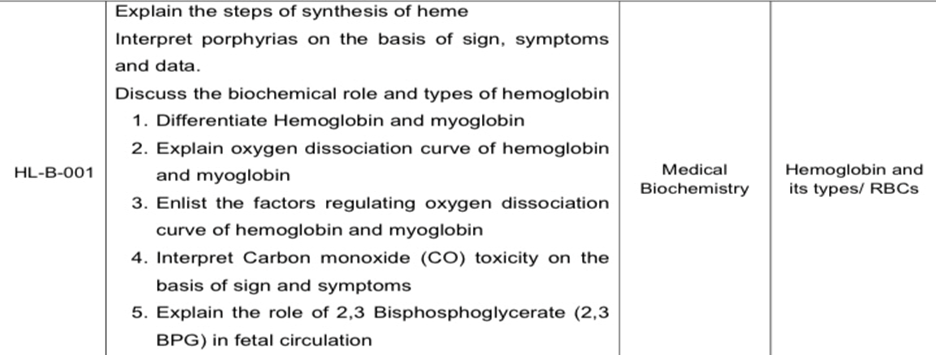
  • Do LO 1 & LO 2 From Lippin Ch#21
  • Fig 21.3, 21.4 21.5 & 21.8 are imp
  • Clinical application (Lead poisoning) Imp
  • Lecture for these LOs Brainless medicose
  • LO 3,4,5,6 & 7 All from lippin Ch#3
  • Do this whole chapter properly as it is imp
  • Fig 3.6 , 3.12 & 3.13 are imp
  • Lecture Medicosis perfectanalis or Rajesh Jambhulkar
  • Chap 3 Lippin
  • Pg # 37- 41 (all diseases are very important)
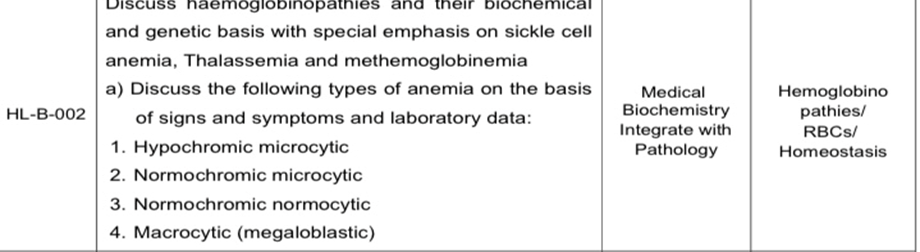
  • Among hemoglobinopathies: thalassemia, sickle cell anemia and methemoglobinemia are especially important. While doing disorders, never forget to do their mode of inheritance
  • Anemias same as physiology
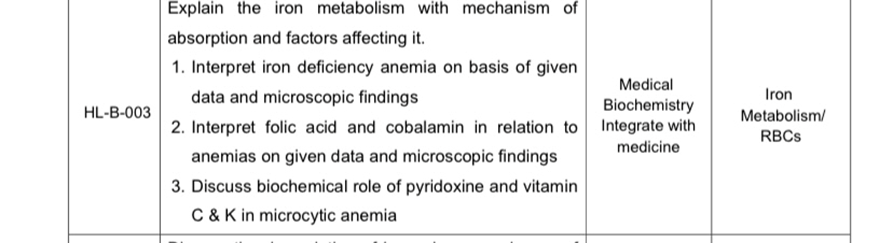
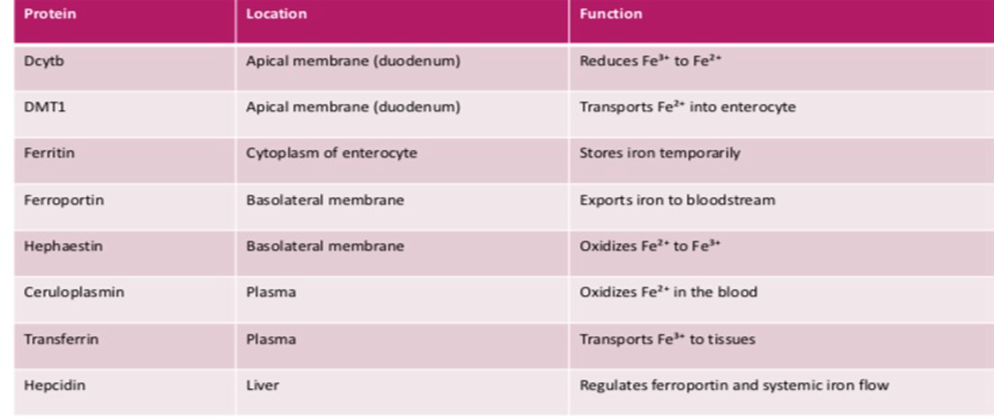
  • LO 1 Iron metabolism from lippin ch# 29 Pg # 450 &451 This table will also help you
  • LO 2 Iron deficiency anemia interpretation same as physiology
  • LO 3 Vit B9(folic acid) & Vit B12(Cobalamin) from lippin Ch#28
  • LO 4 Vit B6 (Pyridoxine) and Vit C&K from lippin Ch 28.
  • You should also know about the tests used for diagnosis of vitamins e.g High FiGlu in urine for folic acid deficiency and schilling test for Vit B12
  • Heme Degradation from lippin Ch#21 Lippin
  • Fig 21.9 & 21.10 are imp along with theory
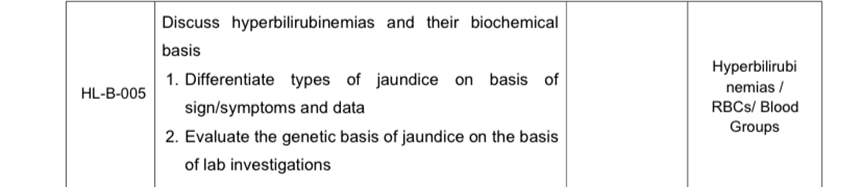
  • Do Hyperbilirubinemia / Jaundice & Types of Jaundice from Lippincott chap 21 pg # 316
  • Lecture for hyperbilirubinemia Dirty medicine
  • Difference between Types of Jaundice based on Lab Investigations
  • Lecture for Lab integration of jaundice Selfless medicos
  • Genetic basis of Jaundice, including:
  • Crigler Najjar Type 1
  • Crigler Najjar Type 2
  • Dubin-Johnson Syndrome
  • Gilbert Syndrome
  • Rotor Syndrome.        
  • Do Pedigree of single gene defects from the pictures given below:

Tip:  Always do mcqs given at the end of the chapter in lippincot…..Even if the full chapter isn’t included in your syllabus only do those mcqs related to your syllabus.

Medico Guides 1st Block (Module No 02) Physiology Guidelines

Prepared by:

                      Warda Mehmood (G15)

Compiled by:

                     Hafiz Muhammad Umair Noor (G12)

  • Guyton and Hall Textbook of Medical Physiology 14th Edition (Chapter numbers are mentioned according to this edition)
  • NIMS Blood Physiology (Only for Topic of Blood)
  • Jaypee Essentials of Medical Physiology 6th Edition

BLOOD PHYSIOLOGY

  • Anemia (v.v.v imp)
  • Etiological classification from Guyton
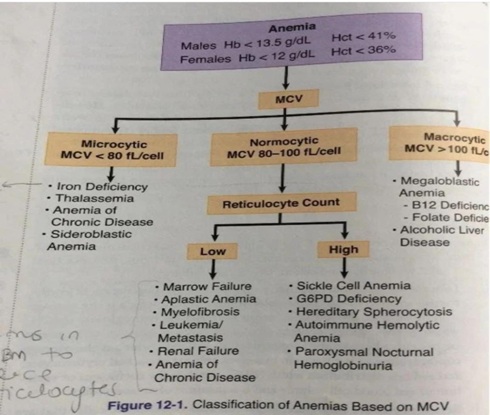
  • Morphological classification from NIMS (Pic is given here)
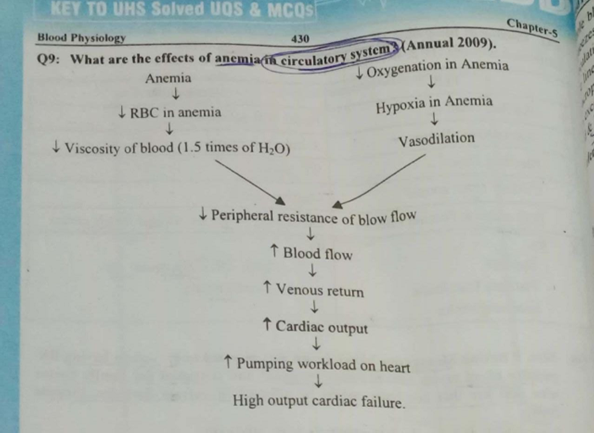
  • Effect of anemia: Make a flow chart of it. (Pic is given below, also in paragraph of guyton under Heading : Effects of anemia on circulatory system pg 446)
  • Polycythemia (Guyton)
  • Secondary Polycythemia (Physiological) (For MCQs)
  • Polycythemia Vera/ Erythremia (Pathological)

(Do their comparison)

  • For effects of Anemia and Polycythemia make flowcharts (imp)
  • Immunity (Definition)
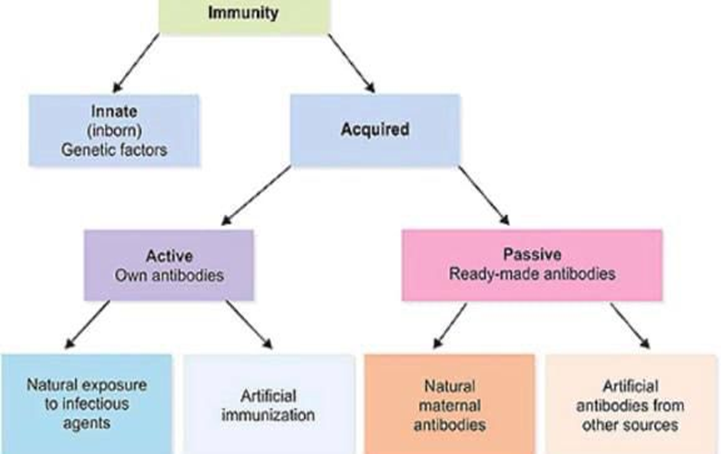
  • Types of immunity (pic is given below)
  • Innate immunity (Definition along with four points)
  • Acquired immunity (Definition)
  • Difference b/w humoral and cell mediated immunity
  • Concept of antigen and epitope
  • Pg 460-462, Figure 35.1 for understanding (read for concept and mcqs)
  • Antibody formation by plasma cells
  • Formation of memory cells enhances antibody response to subsequent antigen exposure (imp)
  • Figure 35.3
  • Nature of antibodies
  • Classes of antibodies
  • Mechanism of action of antibodies (direct and complement system) v imp
  • Fig 35.6 (imp)
  • Antigen presenting cells, major histocompatibility complex proteins (imp)
  • Different types of T cells (complete topic till pg 468 along with fig 35.8) imp
  • Table 35.1 (types of T helper cells viva question) 
  • Tolerance of acquired immunity system to body own tissue (Def imp for viva)
  • Active and passive immunity (diff v imp)
  • Allergy and hypersensitivity (complete) high yield mcqs (v imp)
  • Page 471-473 give a good read for better understanding
  • RH incompatibility (erythroblastosis fetalis) v.imp for viva and mcqs
  • Transfusion reactions from mismatched blood types 
  • Transplantation of tissues and organs (complete topic till page 476)
  • Transfusion reactions due to ⁠ABO incompatibility (jaypee chap 21 page 141-142 read from there)
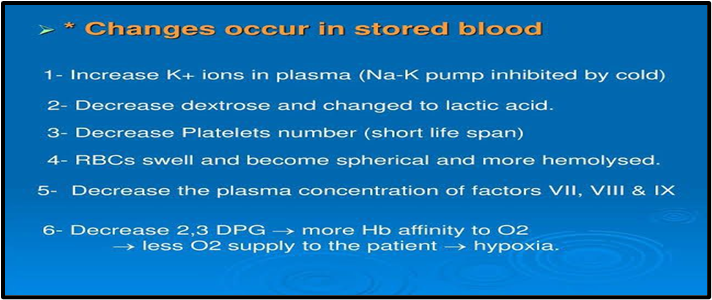
  • Changes in stored blood (pic is shared in the group)
  • Hemostasis (Def)
  • Events in hemostasis (imp seq)
  • characteristics of platelets
  • Vascular Constriction (Complete)
  • Formation of platelet plug(complete)
  • TABLE 37.1(Complete) , pneumonic to learn it : Foolish People Try Climbing Long Slopes After Christmas Some People Have Fallen
  • Mechanism of blood coagulation (Complete)
  • Fig 37.3 (imp)
  • Extrinsic and Intrinsic pathway (v.v.imp)

                difference btw them (along with figures)

  • Anticoagulants for clinical use
  • Intravascular anticoagulants
  • Role of Calcium 
  • Blood coagulation test
  • Conditions that cause excessive bleeding (Hemophilia, Thrombocytopenia, Vitamin K) (vimp)
  • (Must do this chapter from Guyton)
  • Stimulus for Intrinsic pathway:
  • Internal damage
  • Glass contact
  • Blood trauma
  • Test tube coagulation 
  • Stimulus for Extrinsic pathway:
  • Surgery
  • Inflammation
  • Shave cut
  • Knife cut
  • Vitamin K dependent CF -> 2,7,9,10
  • Bleeding Time increase in >>> Thrombocytopenia
  • Clotting time increase in. >>> Hemophilia
  • Purpura (Tendency of spontaneous hemorrhage beneath skin, internal organs.
  • Thrombocytopenic purpura
  • Multiple subcutaneous hemorrhage
  • Poor constriction of blood vessel
  • Dec platelet count
  • Clot retraction deficiency
  • Non-Thrombocytopenia   
  • Functionally defective platelet (Thrombasthenia)
  • Platelet count normal
  • Due to allergy
  • Infection

Medico Guides 1st Block Embryology Guidelines

Prepared by:

Zuha Iftikhar (G14)                    

Khansa Noor (G15)

Compiled by:

                     Hafiz Muhammad Umair Noor (G12)

UHS 1st Block

  (Module No 01)

  • Langman Medical Embryology 14th Edition (Latest)
  • KLM
  • These are Mentioned as per the Latest UHS Curriculum of Session 2025-2026

Lecture videos: For lectures, you can watch medico visuals or ninja nerd videos for better understanding. For simple explanation of langman book or revision, you can go for brainless medicos.

  • Do not need to do this chapter as nothing from this is mentioned in your LO’s.
  • Primordial Germ Cells
  • Clinical correlate  Teratomas (pg.14)
  • Chromosome theory of Inheritance (just give Read )
  • Mitosis/Meiosis (You already know about it, Just Do it as Mentioned in Learning Objectives, Difference form)
    • Result of meiotic divisions (important)

Clinical correlates from pg #17-24 are very important.

  • Numerical Abnormalities (Important)
    • Important terms: i) Euploid ii) Aneuploid iii) Trisomy iv) Monosomy v) Nondisjunction vi) Translocations (Do it for MCQ POV)
    • Trisomy 21 Down Syndrome (You have to do all the clinical Presentations , Make sure to Memories them through visual Image, these are mostly asked in OSPE) Do Definition /concept of Mosaicism given in it. (imp). Figure 2.7 and 2.8 is also asked in OSPE, so also go through it)
    • Trisomy 18, Trisomy 13, Turner Syndrome, Triple X syndrome ( Clinical presentations through visual Image, they are given in OSPE with diagram to identify the syndrome)
    • Klinefelter Syndrome (Annual system Past Paper SEQ)
      • Do All abnormalities for Scenario-Based SEQ & MCQs
  • Structural Abnormalities (Important)
    • Cri-du-chat Syndrome, Angelman Syndrome very Important, Prader-Willi Syndrome Very important, Miller Dieker Syndrome, Fragile X Syndrome
      • Do Remember which Chromosome is involved in a Particular Abnormality for MCQs
    • Important Terms(pg#25) : i) Deletion ii) Microdeletion iii) Fragile Sites iv) Genomic Imprinting (Viva Qs) Do these for MCQ POV just
  • Gene Mutations:
    • Just Remember these terms: i) Single Gene Mutation (only definition) +dominant and recessive mutation
    • ii) Mosaicism (pg. 19)
  • Diagnostic Techniques (not important Just Do the Names only)
  • Oogenesis* Important Do complete till End
    • Prenatal= before Birth, Postnatal= At puberty/After Birth (You can do these Topics from KLM as well if you want, otherwise Langman is Good to Go)
  • Spermatogenesis* Important Do complete till End

For oogenesis and spermatogenesis, lectures on the medico visuals are very good.

  • Clinical Correlate Abnormal Gametes (pg.32)

After Doing the Complete Chapter, Go through Problems to Solve at the End once, Key given at the End of the Book.

  • Ovarian Cycle, Ovulation Complete.
  • Corpus Luteum (Formation, Function, Fate) Corpus Albicans, Oocyte Transport Complete
  • Clinical correlate Mittelschmerz (pg.36)
  • Fertilization pg.38-41 (Define, Phases, Results) Complete very Important :
    • i) Capacitation ii) Acrosome Reaction (MCQs, SEQs, Viva Qs)
  • Clinical correlate Contraceptive Methods*, Infertility* Complete
  • Cleavage, Blastocyst Formation, Epiblast, hypoblast & Axis formation Complete

Clinical correlate Embryonic Stem Cells, Adult Stem Cells, Abnormal Zygotes (Spontaneous Abortion) Complete

  • Uterus at the Time of Implantation (imp)

Also it is important to memorize that which event is happening on which day(mentioned under diagrams).They are often asked in MCQs.

After Doing the Complete Chapter, Go through Problems to Solve at the End once, Key given at the End of the Book.

  • Why is it called rule of 2? Because of Embryonic Disc Layers , Trophoblast Layers , Two cavities, extraembryonic Mesoderm Layers.
  • Do All Days, and after Reading All Days, Shortlist the Points at the Side of Each Day, This way:
  • Important Terms: i) Layers of Trophoblast ii) Amniotic Cavity iii) Lacunar Stage iv) Exocoelomic cavity v) Uteroplacental Circulation vi) Decidua Reaction(pg.53) vii) Primary Villi
  • Clinical correlate (Very Important SEQ):
    • Abnormal Implantation CompleteEctopic Pregnancy/Extra uterine Important  SEQPouch of Douglas, Primary ovarian pregnancyHydatidiform Mole / Molar pregnancy Important SEQrimary ovarian pregnancyHydatidiform Mole / Molar pregnancy Important SEQ
    • Genomic Imprinting Viva Qs

After Doing the Complete Chapter, Go through Problems to Solve at the End once, Key given at the End of the Book.

  • Gastrulation Complete
    • Primitive Streak (Formation & Fate) Fate is given in the Fate Map Topic(pg.65). Write It Here, By shortlisting.
  • Formation of Notochord Important Past Paper SEQ , This topic is Better Explained In KLM Chapter 4.
    •  Do it from KLM & then Read it from Langman as well and then Summaries it here, This Way on Langman:
    • Establishment of Body Axes (not important, You can Skip it)
    • Fate Map Establishment During Gastrulation *
    • Growth of Embryonic Disc
    • Clinical Correlate Complete Very Important
      • Holoprosencephaly
      • Caudal Dysgenesis (Serinomelia) UHS Past paper Modular System 2023 Qs, This Question Came as exact Statement given in Problems to Solve Qs 3 of this Chapter.
      • Sacrococcygeal teratomas
      • Situs solitus, situs inversus, laterality defects, situs ambiguous (heterotaxy)
      • Kartagener Syndrome (Important)
    • Development of Trophoblast (Do villi from here)

    After Doing the Complete Chapter, Go through Problems to Solve at the End once, Key given at the End of the Book.

    • Derivatives of Ectoderm (Important)
      • Do it once from Langman and then Derivatives From a Diagram Given in KLM Chapter 5, All germ layer Derivatives summarized form:
    • Just give read to molecular regulation of neural induction (not important)
    • Neurulation (Very Important SEQ, Past Paper) Do it from KLM & Langman Both & then summaries it in the form of Points on Langman. From KLM Chapter 4.
    • Neural Crest Cells ( Derivatives) Do take concept of it , its role , Table 6.1 (Important)
    • Derivative cells from dorsal and ventral pathway are asked separately or they may ask overall derivatives of neural crest cells.(till pg.79)
    • Molecular Regulations are Not Important , If you want Learn just names of Some Involved ( Not seen in Any Past Paper MCQ, SEQ , VIVA)
    • Clinical correlate (Important):
      • NTDs(neural tube defects) i) Anencephaly ii) Spina bifida & its Types ( Types are Given in chapter 10 second Last Clinical correlate pg. 158) Often Asked.
      • Folic Acid (imp)
    • Derivatives of Mesoderm ( Paraxial , Intermediate, Lateral ) Better to do it from KLM diagram shared above but also give read to langman.
    • Molecular regulation of somite formation and differentiation (skip it)
    • Somite Differentiation (Important)
    • Blood and Blood Vessels Complete (skip the molecular regulation)
    • Clinical correlate (Important):
      • Capillary Hemangiomas*
    • Derivatives of Endoderm Better to do from KLM diagram
    • Folding of Embryo(imp) Better to Do it from KLM Chapter 5 for better understanding   or You can do it from Langman given Under heading of Endodermal Derivatives.
    • Homeobox Gene (not included in syllabus)
    • External Appearance During 2nd Month:
      • Terms to remember : i) Crown-rump length ii) Make points of Changes in appearance ( MCQ POV)
    • Clinical correlate: Birth Defect MCQ POV Just read once

    After Doing the Complete Chapter , Go through Problems to Solve at the End once, Key given at the End of the Book.

    • Chapter 5 Table 5.1 or You can Read Theory of Highlights of Fourth to Eight Weeks (MCQs)
    •  Chapter 5, Estimation of Embryonic Age, Estimation of Gestational & Embryonic Age.
    • Chapter 6, Viability of fetuses, Highlights of Fetal period, Factors influencing Fetal Growth (Just Names)
    • Chapter 6, Procedures: (Important MCQs)
      • Diagnostic Value of Amniocentesis, Alpha fetoprotein Assay, Chorionic Villi Sampling
    • Development of fetus, monthly changes Time of birth (Just Read for MCQs, not imp)
    • Clinical correlate:
      • Low birth weight
      • IUGR & SGA
    • Fetal Membranes & Placenta with diagram (UHS past Paper Qs)
    • Changes in trophoblast , chorion frondosum & decidua Basalis , Structure of Placenta , Full-term Placenta , Circulation of Placenta (complete do it as they are Important).
    • Why human placenta is considered hemochorial type? : it was asked in our proff (pg.116)
    •  Diagrams are very important as they are often asked in OSPE.
    • Functions of Placenta ( Just read Once for MCQs)
    • Amnion & Umbilical Cord ( Just Read Important Viva Qs )
    • Placental Changes at the End of Pregnancy ( UHS Past Paper Modular System 2023 )
    • Amniotic fluid ( Read for MCQs)
    • Fetal Membranes in twins Complete Important
    • Parturition (imp)
    • Fetal membranes in twins ( dizygotic and monozygotic twins)
    • Clinical correlate:
      • Preeclampsia pg.12 (Important)
      • Fetal Hydrops & Erythroblastosis fetalis
      • Placental Barrier (Read once)
      • Umbilical Cord abnormalities, Amniotic bands , Polyhydramnios* , Oligo*
      • Premature Rupture of Membrane
      • Vanishing Twins pg.124 ( Past Paper UHS 2023 )
      • Twin-twin transfusion
      • Conjoined twins (diagrams are important for OSPE)
      • Preterm Birth*

    After Doing the Complete Chapter , Go through Problems to Solve at the End once, Key given at the End of the Book.

    • Principles of teratology (pg.130)
    • Table 9.1 Rubell, Toxoplasmosis, X-rays, Hyperthermia, Thalidomide, Warfarin, ACE inhibitors, Alcohol (Important Viva Qs)
    • Zika Virus, Antidepressant drugs (pg.133)
    • Prenatal Diagnosis (pg.139): Read All Once and Mark MCQs & Viva Qs
      • Maternal Serum Screening(pg.142)
      • Ultrasonography (pg.139)
      • Chorionic villi sampling (pg.142)
      • Stem cell Transplantation & Gene therapy (Just read not Important)

    UHS 1st Block

    (Module No 02)

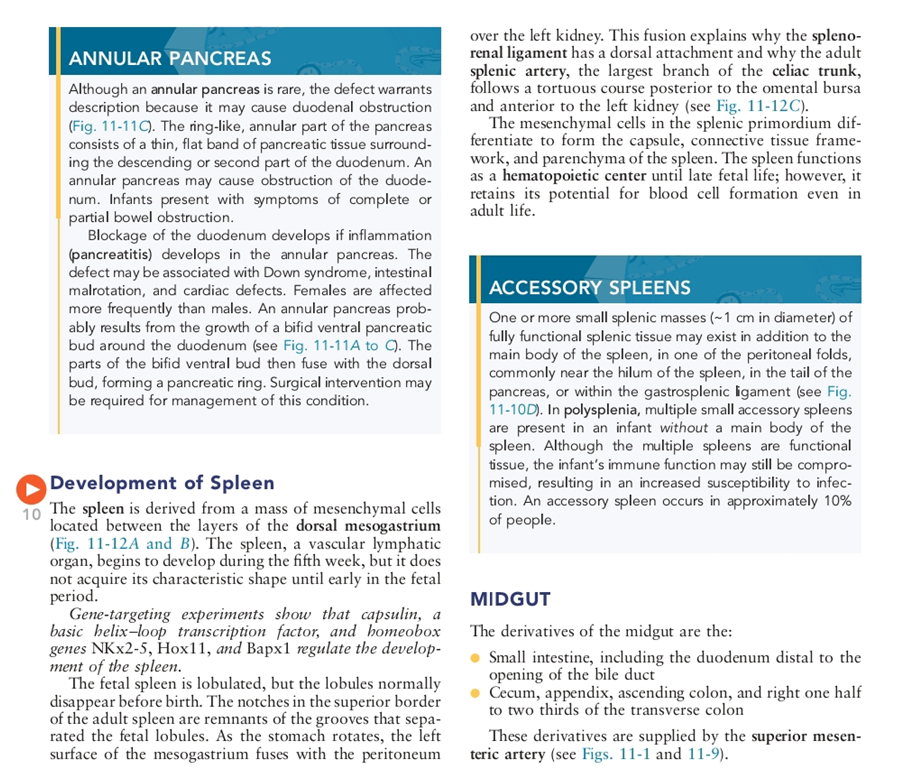
    • Development of spleen (Important for Viva & MCQs)
      • Accessory Spleen (Important)
      • Origin of Spleen

    Medico Guides 1st Block General Anatomy Guidelines

    Prepared by:

                         Hadia Shakeel (G15)

    Compiled by:

                         Hafiz Muhammad Umair Noor (G12)

    UHS 1st Block

      (Module No 01)

    • General Anatomy by Laiq Hussain 7th Edition (Chapter numbers are mentioned according to this edition)
    • Do watch the lectures of mkh doctor zone on YouTube before you start dealing with any Chapter of GA.
    • Give special importance to the classifications mentioned in the book as they are very important from MCQ point of view.
    • Do all the classifications from the notes first and then read the text written in the book
    • Make sure to go through the entire text of a single chp as anything can be asked in context of MCQ
    • There are some of the subtopics mentioned in LOS that are not written in Laiq Husaain. Out of these most are the definitions. Cover these from any short book such as Chapter 1. Mcqs for general anatomy come from General Anatomy by Laiq Hussain however to ensure that none of the topics has been overlooked it is essential to cover these topics from short books.
    • Give a proper read to the branches of Anatomy
    • Mark mcqs from History of Anatomy
    • Anatomical variation is important
    • Planes most imp.
    • ‎Anatomical position imp.
    • ‎Anatomical movements of hand arm head etc for Viva but can also be asked in the mcqs
    • ‎Laterality terms
    • Functions of bone
    • ‎Classification from all aspects along with the examples of each respective class v.v.imp
    • Markings on a bone are imp for Viva but they can also be asked in the MCQS
    • Regional distribution of bones
    • ‎Shafts epiphyses and diaphysis of long bone
    • Types of ossification can be asked in MCQS
    • ‎Types of epiphyses v.imp for mcqs
    • ‎Rule of ossification
    • Blood supply of long bones(Arterial supply and venous drainage) v.v.imp do it from notes
    • Recommended lecture selfless medicose
    • Bone injury and repair
    • ‎Healing of fracture
    • ‎Cartilage difference v imp from notes
    • Almost whole chp imp
    • ‎Classification of joints on all basis v.v.v imp
    • ‎Diarthroses with features from notes then give read to book v v imp
    • ‎Movements imp
    • ‎Classification of synovial joints from all aspects v.v.v.imp
    • ‎Factors of joint stability mcqs
    • ‎Nerve and blood supply read
    • ‎Hilton’s Law favourite question
    • Joints injuries and diseases mcqs
    • Functions of muscle
    • Muscular tissue and its varieties just read
    • ‎Classification on all basis v vv imp
    • ‎Red white intermediate fibres imp
    • Connective tissue  associated with skeletal muscle go through it properly
    • Connective tissue components of skeletal muscle give a very good read to it
    • Give a good read to the topics discussed from pg no 85 to 89
    • Give a read to the naming of muscles and blood supply of muscles
    • Nerve supply and motor unit imp
    • ‎Contraction of muscles and their diff imp
    • ‎Paralysis also has imp mcqs
    • ‎Fascia aponeurosis raphe synovial bursa and sheath new terms for u so do it also
    • General structure of blood vessels
    • Mark MCQS from page no 99 to 101
    • ‎Classification of all vessels on all basis capillaries most imp
    • ‎Metarteriole and thoroughfare channel
    • ‎Anastomosis most imp also has mcqs
    • Circulatory routes just read
    • AV shunts and glomus bodies
    • ‎Portal system imp viva & written qs
    • Vascular supply of blood vessels
    • ‎Lymph vascular system complete
    • Functions of skin
    • ‎Epidermis and dermis
    • ‎Appendages of skin full of mcqs
    • ‎lines of cleavage read+concept
    • ‎Skin Burns (from pic given below)
    • Skin infections and Skin Grafting ( Not given in Laiq Hussain. From Tassaduq Husaain General Anatomy pg 11)
    • Clinical correlates of skin from any short book
    • Give a read to introduction
    • ‎classification morpho and functionally
    • ‎Supporting cells imp
    • ‎Gray white matter lemniscus mcqs
    • CNS and PNS
    • ‎Cranial nerves name v.imp
    • ‎Spinal nerves and ganglia
    • Somatic and visceral nervous system
    • Functional classification of peripheral nerve fibres
    • ‎Plexus names and dermatome
    • ‎Classification of receptors v.imp (proff mcq)
    • Autonomic nervous system
    • Sympathetic nervous system
    • Parasympathetic nervous system
    • ‎4 parasympathetic ganglia ….has imp MCQS in it
    • ‎Enteric nervous system
    • Give a good read to the entire chp and mark MCQS from it
    • Carefully do all diagrams of imp topics from Laiq Hussain GA along with theory. By that your Ospe will be prepared side by side with your written exam.

    UHS 1st Block

      (Module No 02)

    • ‎From Snell’s anatomy latest edition
    • Cover the remaining los related to Spleen either from medicnetic or the Chapter 1.

    Medico Guides 1st Block Histology Guidelines

    Prepared by:

                         Warda Mehmood (G15)

    Compiled by:

                         Hafiz Muhammad Umair Noor (G12)

    UHS 1st Block

      (Module No 01)

    • Block-1 Histology should be Done in detail Once, Study it Once thoroughly and Make Notes or Shortlist it accordingly for Your Ease, whatever Method suits You.
    • Block-1 Histology has a bit lengthy syllabus, Rest 2 Block Histo is very Easy
    • In Recent Proff Papers (Annual & Supplementary), Histology Questions (SEQs) from Block-1 came, so it should not be ignored as this year’s exam would be mcqs based so don’t forget to study it thoroughly.
    • In last year’s college block, mcqs were deep and bit tough from laiq hussain histology’s text but in proff they were relatively easy but you must be prepared for any situation.
    • Diagrams are very important ( practical Ones these are Asked in SEQs mostly), 1st year diagrams are quite easy but as you all know Paper pattern is now mcqs based so you have to prepare diagrams solely for OSPE and to learn text for visual memory. Every diagram is important (frequently asked in exams)
    • Histology’s trick is the same as that of Gross anatomy (Visual memory), Visualize the Pictures and its features! That’s all they ask.
    • It is recommended to go through the book’s text for at least one time and underline on book for mcq pov and for subsequent revisions you can use your own hand written notes.It would be easy to tackle mcqs.
    • In the guidelines, don’t get confused if any topic is mentioned important for SEQ , you will be asked MCQ’s in paper so don’t skip any topic.
    • Medical Histology by Laiq Hussain Revised 8th Edition (Chapter numbers are mentioned according to this edition)
    • DiFiore’s Atlas of Histology
    • Shortlisted notes of histology are also shared in the group (By Zayn ul Hassan from G12) & if you want to Make Your Own Notes or shortlist it accordingly, it is well & Good.
    • MCQs might come from this chapter
    • Single MCQ from Fixation came in UHS Proff 2023 (formalin)
    • Proff 2025-26 mcq Microscope used for study of unstained fresh tissues and living cells:Phase contrast microscope
    • Cell is the same as you have studied in other subjects, but in histology there are some details given below:
    • Important to do from Histo:
      • Cytoplasmic inclusions (Pigments)
      • Cytoskeleton
      • Intermediate filaments Types * Important Viva Qs /SEQ
      • Cell Junctions Complete till Junctional Complex * Very Important UHS Past Paper SEQ 2024 ( mcqs could be asked most probably as it is v imp topic)

    Clinicals Important given at the Last Page:

    • i) Atresia ii) Hypertrophy iii) Atrophy iv) Hyperplasia v) Metaplasia vi) Differentiation vii) Anaplasia viii) Clinical Application
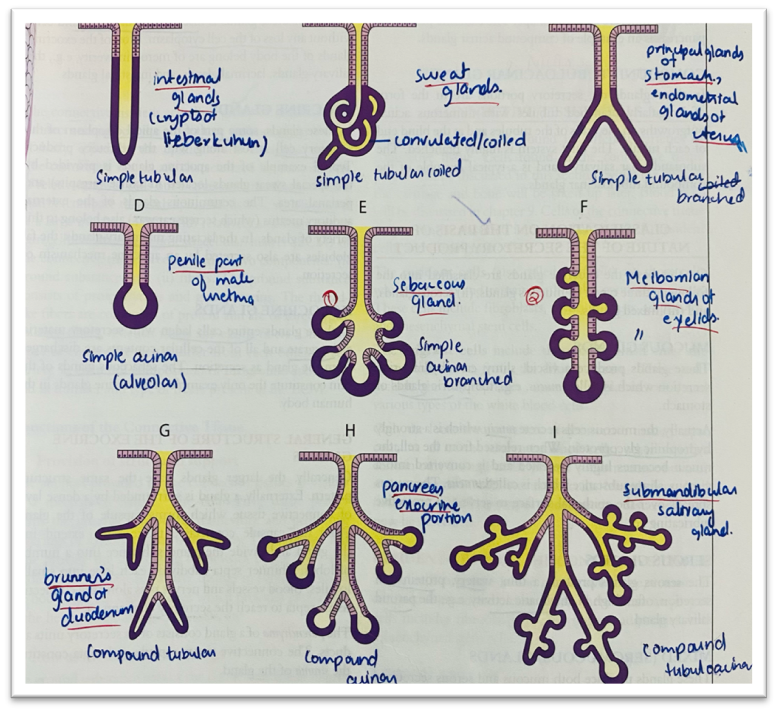
    • You should know Epithelium Definition and Examples* (Make Notes , Mnemonics for Examples)
      • Examples are Important for MCQs
      • Diagrams are Important as well for OSPE & SEQ (might come to draw)
      • Urothelium, transitional Epithelium Complete very important
    • Apical Domain Complete Important UHS Supply Paper 2024
    • Lateral Domain & Basal Domain (Just Read once for Concept)
    • Clinical: Kartagener Syndrome/ Immotile cilia Syndrome Important
    • Basement Membrane*
    • Functions (Just Read Once, you already Know about Functions)
    • Short listing/ hand written notes for this chapter are recommended for quick and easy revision ( For epithelium also notes would be shared in group )
    • MCQ POV ( v imp)
    • You can do this chapter from Medicnetic Pdf shared, just do Definitions, Examples for MCQ & Diagrams for SEQ.
    • For quick learning of classification and examples with diagram understanding you can write on you book as given
    • You can Cover this chapter from Medicnetic Pdf shared/ Practical notebook as well, Or You can read it and make your Own notes / Shortlist accordingly and highlight on book for mcqs.(recommended)
    • Fibroblasts
    • Adipocytes, Macrophages, mast cells, Plasma cells, leukocytes , mark imp points on text book for mcqs , memorize identification points from your histology practical notebook for quick learning.
    • Collagens*
    • Do Collagen Fibers, Reticular fibers, Elastic fibers from your Histology Practical Notebook ( structure,stains and examples imp for mcqs)
    • Short list chapter in flow chart, MCQs POV, Diagrams are Important , Examples are very important often come in mcqs
    • Diff b/w brown and white adipose
    • Types of Dense Connective Tissue for MCQs
    • Dense Connective Tissue / Loose connective Tissue Diagram Important for SEQ / OSPE UHS Past Paper 2024

    UHS 1st Block

      (Module No 02)

    • Topics of Lymph included in your Learning Objectives (MCQ POV, but included in practicals and also asked in vivas, so do it from notes or Medicnetic pdf shared)
    • Blood thymic barrier (Favourite question)
    • Diagram of palatine tonsil also came in recent proff 2025-2026,, so don’t ignore this chapter and it’s diagrams.

    Medicnetic Histology Block-1 Module -1

    Medicnetic Histology Block 1 Module-2