Medico Guides 7th Block (Module No 12) Microbiology Guidelines

Prepared by:

                     Savira (G13)

Compiled by:

                     Hafiz Muhammad Umair Noor (G12)

  • Anwar Microbiology 2nd Edition (Chapter numbers are mentioned according to this edition)

(F2-Pa-003)

  • Gram negative and gram positive difference very imp for seq
  • Choice of antibiotic will be shared in following

Key Points for Selecting Antibiotics for Gram-Positive or Gram-Negative Bacteria

When selecting antibiotics, consider the following points:

1. Cell Wall Structure: Gram-positive bacteria have a thick peptidoglycan layer, making them susceptible to antibiotics that target cell wall synthesis.

2. Antibiotic Options: Penicillin, ampicillin, methicillin, vancomycin, and linezolid are effective against many Gram-positive bacteria.

3. Resistance Patterns: Consider the prevalence of methicillin-resistant Staphylococcus aureus (MRSA) and other resistant strains when selecting antibiotics.

1. Outer Membrane: Gram-negative bacteria have an outer membrane containing lipopolysaccharides, which can contribute to antibiotic resistance.

2. Antibiotic Options: Aminoglycosides (e.g., gentamicin), cephalosporins (e.g., ceftriaxone), fluoroquinolones (e.g., ciprofloxacin), and carbapenems (e.g., meropenem) are effective against many Gram-negative bacteria.

3. Resistance Patterns: Consider the prevalence of extended-spectrum beta-lactamase (ESBL)-producing bacteria and other resistant strains when selecting antibiotics.

Broad-Spectrum Antibiotics:

1. Fluoroquinolones: Effective against both Gram-positive and Gram-negative bacteria.

2. Carbapenems: Effective against many Gram-positive and Gram-negative bacteria, including ESBL-producing bacteria.

Factors to Consider:

1. Spectrum of Activity: Choose antibiotics with a spectrum of activity that covers the suspected or confirmed pathogens.

2. Resistance Patterns: Consider local resistance patterns and the patient’s previous antibiotic exposure.

3. Patient Factors: Consider the patient’s age, renal function, liver function, and other underlying medical conditions when selecting antibiotics.

4. Side Effects and Toxicity: Choose antibiotics with a favorable side effect profile and minimal toxicity.

Importance of Culture and Sensitivity Testing:

Culture and sensitivity testing can help identify the specific pathogens and their antibiotic susceptibility patterns, guiding targeted therapy and optimizing treatment outcomes.

(F2-Pa-004)

  • Conjugation ( very imp for seq) +it’s diagram
  • Transduction and transformation (just do definitions)
  • Classification of bacteria ( from table)
  • Levinson table 5.1
  • Colonization resistance imp
  • Normal Flora(imp for mcqs)
  • Culture media is best described in your practical notebooks and in Anwar chp 8 (imp for mcqs and ospe point of view)
  • Antimicrobial resistance mechanism(vvvv.imp for seq)
  • Do cram this resistance mechanism

Medico Guides 7th Block (Module No 12) Pharmacology Guidelines

Prepared by:

                           Shahr Bano Sayal (G12)

Compiled by:

                     Hafiz Muhammad Umair Noor (G12)

                     Nauman Waheed (G13)

GENERAL PHARMACOLOGY

  • Ali Raza Chaudhary Notes
  • MultiAuthor’s
  • Dr Ajmal Lecture Notes

PHARMACOKINETICS

  • Do all topics from Ali Raza notes
  • Additional Definitions from multiaurthor includes:
  • Pharmacology
  • Drug
  • Branches Of Pharmacology

ALI RAZA PHARMA NOTES

Medico Guides 7th Block (Module No 12) Pathology and Hematology Guidelines

Prepared by:

                       Alisha Athar (G13)

Compiled by:

                     Hafiz Muhammad Umair Noor (G12)

  • Robbins Pathology 11th Edition
  • Anwar General Pathology 2nd Edition

F2-Pa-001

  • Mutation and its types
  • Autosomal recessive disorders
  • Autosomal dominant disorders
  • X linked disorders
  • Learn their characteristics and make a list of examples of these disorders (vvimp)
  • Pcr from google or from lippincot biochemistry

F2-Pa-002

Do the following syndromes from Anwar: (Learn karyotypes from Medium Robbins chap 4)

  • Marfan syndrome
  • Ehlers Danlos syndrome
  • Down syndrome
  • Klinefelter syndrome
  • Turner syndrome

F2-Pa-003

  • Gram negative and gram positive difference very imp  
  • Choice of antibiotic will be shared in following

Key Points for Selecting Antibiotics for Gram-Positive or Gram-Negative Bacteria

When selecting antibiotics, consider the following points:

1. Cell Wall Structure: Gram-positive bacteria have a thick peptidoglycan layer, making them susceptible to antibiotics that target cell wall synthesis.

2. Antibiotic Options: Penicillin, ampicillin, methicillin, vancomycin, and linezolid are effective against many Gram-positive bacteria.

3. Resistance Patterns: Consider the prevalence of methicillin-resistant Staphylococcus aureus (MRSA) and other resistant strains when selecting antibiotics.

1. Outer Membrane: Gram-negative bacteria have an outer membrane containing lipopolysaccharides, which can contribute to antibiotic resistance.

2. Antibiotic Options: Aminoglycosides (e.g., gentamicin), cephalosporins (e.g., ceftriaxone), fluoroquinolones (e.g., ciprofloxacin), and carbapenems (e.g., meropenem) are effective against many Gram-negative bacteria.

3. Resistance Patterns: Consider the prevalence of extended-spectrum beta-lactamase (ESBL)-producing bacteria and other resistant strains when selecting antibiotics.

Broad-Spectrum Antibiotics:

1. Fluoroquinolones: Effective against both Gram-positive and Gram-negative bacteria.

2. Carbapenems: Effective against many Gram-positive and Gram-negative bacteria, including ESBL-producing bacteria.

Factors to Consider:

1. Spectrum of Activity: Choose antibiotics with a spectrum of activity that covers the suspected or confirmed pathogens.

2. Resistance Patterns: Consider local resistance patterns and the patient’s previous antibiotic exposure.

3. Patient Factors: Consider the patient’s age, renal function, liver function, and other underlying medical conditions when selecting antibiotics.

4. Side Effects and Toxicity: Choose antibiotics with a favorable side effect profile and minimal toxicity.

Importance of Culture and Sensitivity Testing:

Culture and sensitivity testing can help identify the specific pathogens and their antibiotic susceptibility patterns, guiding targeted therapy and optimizing treatment outcomes.

HEMATOLOGY 

  • Robbins Pathology 11th Edition
  • Pathoma

HIT-H-001,002,003

Note: learn all morphologies from Ammara morphology pdf

  • Complete chapter except sideroblastic anemia

Things to do from Robbins:

  • Table 10.1
  • Table 10.2
  • Fig 10.4
  • Fig 10.5
  • Table 10.5
  • Elliptocytosis from google
  • Hemoglobinopathies (from google)
  • Complete chapter except thrombosis and embolism
  • Fig 10.30 from robbins
  • Complete chapter

Things to do from robbins:

  • Table 10.7
  • Fig 10.18
  • Table 10.8
  • Table 10.9
  • Fig 12.13
  • Table 12.10
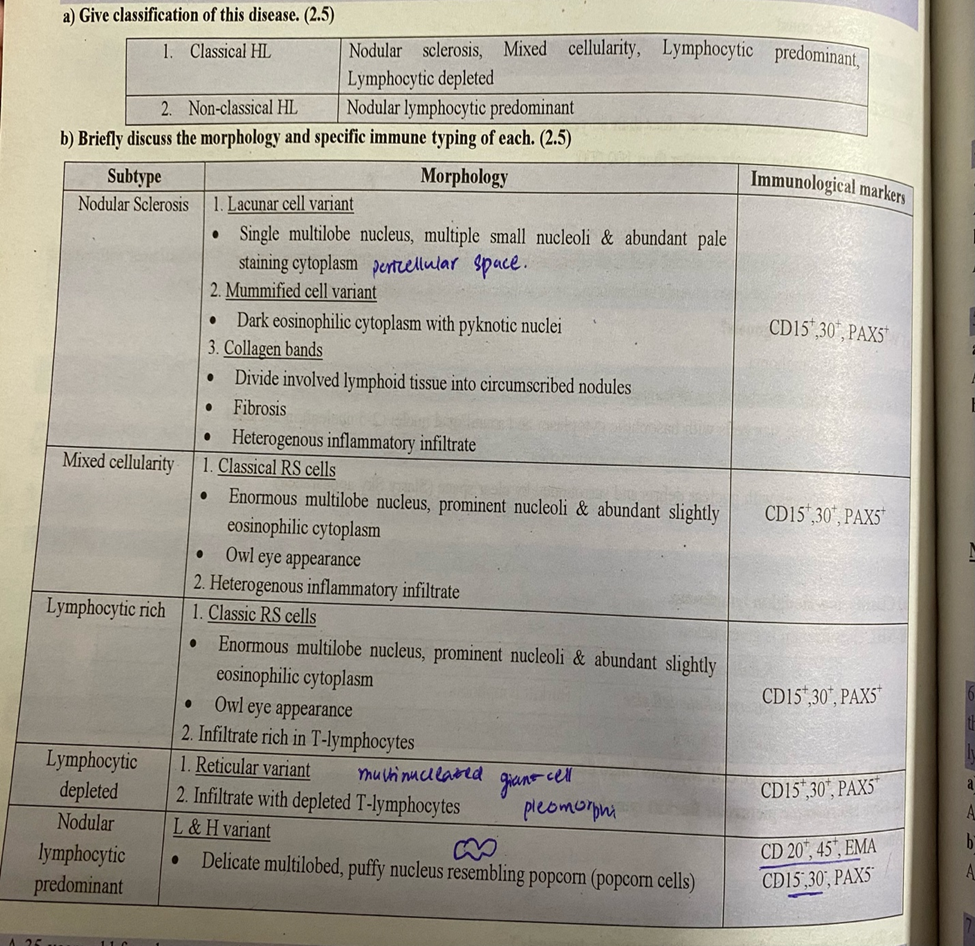
  • HL morphology (vvimp) (pic shared below)
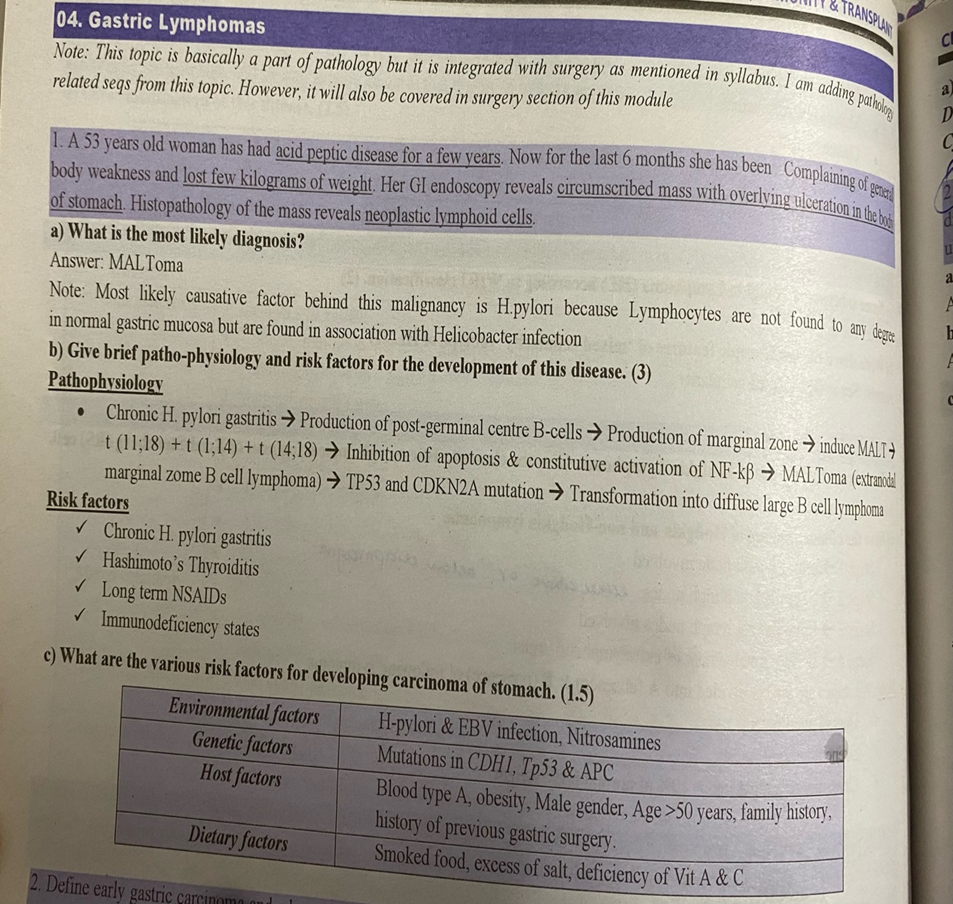
  • Gastric lymphomas (pic shared below)
  • Complications of transfusion (from robbins)
  • Hazards of transfusion + Prevention  (google)
  • Changes in stored blood (google)
Medico Guides 7th Block (Module No 13) Pharmacology Guidelines

Prepared by:

                     Aneesa Asif and Irij Sial G13

Compiled by:

                     Hafiz Muhammad Umair Noor (G12)


GENERAL PHARMACOLOGY

  • Ali Raza Chaudhary Notes
  • MultiAuthor’s Pharmacology
  • Dr Ajmal Lecture Notes
  • Do all topics from Ali Raza notes
  • Mini Katzung chap 1-5
  • Lippincott General Pharma chapters
  • Do all topics from Ali Raza notes
  • To do from Multiauthor:
    • Baised Agonist
    • Idiosyncrasy with example
    • Cumulation with example
    • Drug dependence
    • Active principles of drugs
    • Adverse drug reactions
    • Drug allergy
    • Pharmacogenetic (continuous variation and discontinuous variation with all seven examples)

AUTONOMIC NERVOUS SYSTEM

  • Mini Katzung Pharmacology 16th Edition (Chapter numbers are mentioned according to this edition)

NOTE:

DISCLAIMER:

(GPh-PH-002 to 003)

MINI KATZUNG

  • Give a read to high yield terms
  • Fig 6.1
  • Fig 6.2 (imp seq)
  • Table 6.1
  • Table 6.2
  • Table 6.3
  • Figure 6.5
  • Complete chapter is very Imp + Dr ajmal’ lecture notes
  • All tables are vvvvvv imp
  • First do table 7.3 then go thru whole chapter
  • Summary table is vvvvvvvv imp******
  • Whole chapter is hell Imp****
  • Table 8.1 & 8.2*****
  • Summary table********
  • Whole chapter****
  • Table 9.1***
  • summary table******
  • Whole chapter (most important for SEQ n McQ)****************
  • Last table 10.2 for glaucoma****
  • Summary table*******

BIG KATZUNG

  • Table 9.2, 9.3, 10.1, 10.3

ALI RAZA PHARMA NOTES

Medico Guides 7th Block (Module No 14) Pharmacology Guidelines

Prepared by:                                                                                          

                           Aneesa Asif (G12)                            

Compiled by:

                     Hafiz Muhammad Umair Noor (G12)


BLOOD

  • Mini Katzung
  • Classification from Ali Raza Notes  

HIT-H-003

  • Classification from Ali Raza notes
  •  Whole chapter is vvv imp***
  • Heparin and warfarin difference***
  • HMW and LMW heparin difference*(mentioned in Ali Raza notes)
  • Just give a read to summary table

IMMUNOLOGY

HIT- Pa-002:

  • Do classification from Ali Raza notes
  • Use kaplan for this topic as it is minor topic

VIROLOGY

HIT- Pa-004:

  • Classification from notes
  • Use kaplan for this topic but do whole topic as mentioned in Kaplan
  • From Katzung Chapter 49:
  • Figure 49.1
  • Figure 49.2
  • Table 49.2

ALI RAZA PHARMA NOTES

Medico Guides 7th Block (Module No 15) Forensic Medicine Guidelines

Prepared by:

                       Usman Qaisar (G13)                           

Compiled by:

                     Hafiz Muhammad Umair Noor (G12)

  • Forensic Medicine & Toxicology by Dr. Ali Raza Chaudary
  • Qisas and diyat act (table)
  • Complete Chapter
  • Complete Chapter
  • Till Dactylography

Medico Guides 1st Block Minors Guidelines

Prepared by:

                           Hadia Shakeel (G15)

Compiled by:

                     Hafiz Muhammad Umair Noor (G12)

Dealing with Minors is simple yet it is technical. I am going to share some points regarding minors, do focus on them.

  1. Cover all the minors from short books. You can use either the medicnetic or Chapter 1 but I would personally suggest you to opt for Chapter 1 as minors are covered in a much better way in Chapter 1 as compared to medicnetic.
  2. I have shared the list of YouTube channels. Before dealing with any topic of minor make sure to watch the short lecture of the relevant topic from any of the channels or you can also rely on other YouTube channels. The main point is that kay pehle lecture zaroor lena hay…
  3. Medicosis perfectionalis
  4. Brainless medicose
  5. Professor Dave explains
  6. Osmosis
  7. Speed pharmacology
  8. Dr.matte and Dr.mike
  9. Paramedical Vigyan
  • For community medicine you will find the lectures of Indian teachers so choose any of them. For behavioral sciences use DeepSeek or any other AI source to understand what is written in Chapter 1.
  • Also pay special attention to your class lectures of these minors.
  • Do solve the mcqs of minors given at the End of each topic in Chapter 1

PATHOLOGY

UHS 1st Block

  (Module No 01)

  • You can just Simply Do the Pdfs Given Below:
  1. Chapter 1 (Just do it thoroughly and properly and Solve MCQs given at the End)
  2. Medicnetic ( After Doing it from Chapter 1 , go through it once and Do the Topics Or detail not mentioned in Chapter-1 )

Your Pathology will be prepared upto the Mark after this.

Chapter 1 Pathology Block-1 Module -1

Medicnetic Pathology Block-1 Module-1

UHS 1st Block

  (Module No 02)

  • Just do these LOs from Pdfs Shared Below ,
  • Plus It is recommended to Make Lecture Notes of Pathology So you must Know about Topics In Class and can Learn it in a better way!

Chapter 1 Pathology Block-1 Module-2

Medicnetic Block-1 Pathology Module-2

PHARMACOLOGY

UHS 1st Block

  (Module No 01 & 02)

  • Do it from short books Only.

Chapter-1 Pharmacology Block-1 Module-1 & 2

Medicnetic Pharmacology Block-1 Module-1

Medicnetic Pharmacology Block-1 Module-2

CMED, BS & AGING

  • Do focus on the Lectures Being delivered in Class for these and Note Down the Lecture as well, MCQs are Easy yet tricky. If you have taken Lecture properly and have made Notes as well , it makes things quite easy.
  • Rest cover these from short books as well.

Chapter 1 CMed, BS & Aging Block-1 Module-1

Chapter 1 CMed, BS & Aging Block-1 Module-2

Medicnetic Cmed,BS & Aging Block-1 Mod-1

Medico Guides 1st Block (Module No 01) Biochemistry Guidelines

Prepared by:

                  Harram Sameer (G15)

Compiled by:

                     Hafiz Muhammad Umair Noor (G12)

  • Lippincott Illustrated Reviews: Biochemistry 8th Edition
  • Harper’s Illustrated Biochemistry 30th Edition
  • Satyanarayana Biochemistry 6th Edition
  • Essential of Medical Biochemistry by Mushtaq Ahmed 9th edition
  • These LOs of cell  will be automatically covered if you have prepared chap 2 of physio and histo
  • But if you want to prepare these LOs from biochem as well , then  prepare these LOs from Satya Chap 1 or any short book ( In unravelled, extensive detail of organelles is also given which isn’t required according to the LOs)
  • Do the Biochemical markers and Subcellular organelles’ diseases from medico express , unravelled  or from the pics shared below ( it is preferable to do cell diseases from medico express or unravelled as in the pics given below , the diseases are written very briefly )

Lecture: Selfless Medicose for GPCRS

For Cell junctions Dr Bhanu Prakash or Ninja Nerd

  • LO 1: Ways of cell to cell communication and to environment from medico express or unravelled, Also do fig 8.5 and 8.6 from Lippincott chap 8
  • LO 3: Cell Adhesion from any short book or AI, can also be done from histo chap 2                                                                                                                        
  • LO 2: GPCRs from Lippincott chap 8
  • Do fig 8.7, 8.8 (Also do theory of GPCRs from Pg 103, 104 ,105) & Fig 17.8 (It is in                   chap 17, do only the figure)
  • Also do The side box of vibrio cholera and whooping cough (important)
  • Def of signal transduction and importance/ uses of G protein coupled receptors , pics are shared below :
  • Signal Transduction: process by which physical or chemical signals are transmitted through cell as a series of molecular events, particularly phosphorylation by protein kinases.
  • Intracellular signals
  • Extracellular signals
  • Juxtacrine Signaling: signaling that requires close contact, a ligand on one surface attaches to receptor on the other.
  • By secreting molecules:
  •       Endocrine (in blood)
  •       Paracrine (to nearby cells)
  •       Synaptic (through synapses)
  •       Autocrine (to cells own self)

Lecture: Njoy Biochem

  • Prepare these LOs of DNA from Lippincott chap 30 ( given in the start of chap under DNA structure )or from Satya chap 5
  • Most imp topics from Satya chapter 5 are given below:
  • Chargaff’s Rule and DNA double helix
  • Different forms of DNA (A, B & Z) ( can also be done from lippin chap 30)
  • Names of other types of DNA structures (Bent, triple stranded etc.)
  • Organization of DNA along with diagram
  • Definition of melting temp and renaturation
  • LO 1: From Satya chap 5 or lippin chap 31
  • LO 2: Structure and Function of Different types of RNAs from Satya chap 5 or lippin chap   31 (It is preferable to do RNA from Satya chap 5)
  • LO 3: Functions of various small RNAs present in cell from Satya chap 5 table 5.3
  • Focus on everything under topic of RNA given in Satya chap 5

tRNA has an unusual base , dihydrouracil in its structure

    Lectures: TN med zone, Njoy biochem or Awesome Biochemistry

    • These LOs can be done from  Satya chap 5 ( Mostly students cover these LOs  from Satya chap 5)  or from Chatterjea chap 14
    • Do biomedical importance of natural and synthetic analogues from Satya chapter 5 (Purine, Pyrimidine and Nucleotide Analogs topic) as well as look at minor bases found in nucleic acids

      LO 1: Do higher organization of DNA from Lippincott chapter 30 page 473, 474 (eukaryotic DNA organization)

      • Also refer to the diagram below

      LO 2: Difference:

      • DNA: DNA (deoxyribonucleic acid) is the molecule that carries the genetic instructions for an organism.
      • Chromatin: DNA is packaged with proteins (like histones) to form a complex called chromatin.
      • Chromosome: A chromosome is a structure made up of DNA and proteins, where DNA is tightly coiled and packaged.
      • Chromatid: Before cell division, a chromosome replicates, resulting in two identical copies called sister chromatids. These sister chromatids are joined at a region called the centromere.
      • Cell Division: During cell division (mitosis or meiosis), the sister chromatids separate, and each becomes an individual chromosome in the daughter cells.
      • Analogy: Think of a chromosome as a “house” and the chromatids as the two identical “floors” of that house.

      Lectures: Best channel for concept of enzymes is Medicosis Perfectionalis on Youtube especially for enzyme inhibition

      Other channels for enzymes include Rajesh Jambhulkar, Njoy biochem and awesome biochem

      LO 1: Do enzymes with reference to active site, specificity etc. from Lippincott chapter 5 , given under the heading of Properties of Enzymes ( only zymogen isn’t explained, you can do it from any short book)

      LO 2: Do nomenclature from Lippincott chapter 5

          Do classification of enzymes from Lippincott fig 5.1 (keep in mind a new 7th class of enzymes Translocases) , subclasses from Mushtaq

      LO 3: Do Mechanism of action from lippin chap 5

      LO 4: Factors affecting enzymatic activity from lippin chap 5

      LO 5: Michealis Menten Kinetics, Lineweaver Burk plot and Competitive and Non-competitive inhibition from Lippincott chapter 5

      • Fig 5.12 and 5.14 are vvvv imp
      • Do Uncompetitive Inhibition of enzymes from Mushtaq chapter 6 and Medicosis Perfectionalis
      • Leave the topic of Enzyme Regulation as it is not mentioned in the syllabus

      LO 6: Do therapeutic use of enzymes from Satya table 6.8

      Some topics aren’t mentioned in Los but they’re very important, so it is better to do them. These are :

      • For enzymes used in clinical diagnostics Do Lippincott table 5.2
      • Also  do isozymes from lippin page 70
      • Do table 6.1 and 6.6 to 6.13 from Satya
      • Regulation of enzymes by covalent modification from lippin chap 5

      Lectures: Njoy Biochem, Rajesh Jambhulkar, Awesome biochem or Dirty Medicine

      LO 1: Do classification of amino acids based on polarity from Lippincott fig 1.2 and 1.3

      • Do structural  classification from Satya chapter 4 page 46 to 51 (skip polarity based classification from Satya as it is wrong)
      • Do  classification on basis of nutritional importance ( essential and non essential amino acids)and glucogenic and ketogenic properties  from Lippincott fig 20.2
      • Do conditionally important amino acids from Satya chap 4

      LO 2: Do structure , physical and chemical properties of amino acids from Satya chapter 4

      • Do biomedical importance of amino acids from Satya chapter 4 page 55
      • Do functions of individual amino acids from the pic shared below (pic reference Lippincott chapter 20 page 305 summary)  

        Note: If there’s any conflict between the classifications on Lippincott and Satya, prefer Lippincott

        LO 1: Do classification of proteins from Satya chapter 4

        • Do biomedical importance of proteins from Satya chapter 4 (biologically imp peptides)
        • Class A and B proteins from any short book or AI

        LO 2 : Do Structural levels of proteins from Lippincott chap 2 ( complete chap )

        • You should be very clear about the difference in alpha helix and beta pleated sheets, the types of stabilizing interactions between proteins at each level, examples of each structural level. 

        LO 3 :Do the Role Of Chaperones from chap 2 page  21, Lippincott ( It is under the topic of   tertiary structure of proteins)

        LO 4: Do biochemical basis of disorders of proteins misfolding and

              Alzheimer’s and prion’s disease from Lippincott chapter 2

        • You should be very clear about the biochemical basis of diseases , e.g

          Biochemical basis of Alzheimer’s: It is a deposition of amyloid beta plaques in brain parenchyma. (The simpler, the better)

          Lectures : Rajesh Jambhulkar or Medicose Perfectionalis

          • Do plasma proteins from Satya chapter 9
          • Remember the class of plasma proteins e.g. transferrin is a beta globulin

          Lectures: For structure of Antibodies —-Dirty Medicine

                           For Multiple Myeloma ——–Rhesus Medicine or Medicosis

          LO 1: Do structure and biomedical importance of immunoglobulins from Satya chapter 9

          • Do functions of immunoglobulins from Satya chapter 9

          LO 2: Production, structure and function of plasma cells, b cells is covered in Guyton chp 35. Do it from there or from any short book

          LO 3: Do interleukins from Guyton chp 35 pg 467 “ Specific regulatory functions of lymphokines’’ and table 35.1. 

          • Platelet Activating Factor (PAF) from Guyton pg 478 first paragraph.
          • PDGF from Guyton pg 477 first paragraph point no. 6
          • You can also do this LO from any short book

          LO 4: Do multiple myeloma from Satya chapter 9

          • Labs for interpretation of multiple myeloma:
          • M spike in electrophoretic pattern of serum proteins (Also keep in mind the normal electrophoretic pattern)
          • Bence Jones proteins in urine
          • Raised plasma immunoglobulin levels

          Also do the mcqs given in the exercise of the chapters of Lippincott included in your syllabus, those mcqs were also asked in our proff

          Medico Guides 1st Block (Module No 01) Physiology Guidelines

          Prepared by:

                                Asma Shafique (G15)

          Compiled by:

                               Hafiz Muhammad Umair Noor (G12)

          • Guyton and Hall Textbook of Medical Physiology 14th Edition (Chapter numbers are mentioned according to this edition)
          • NIMS Blood Physiology (Only for Topic of Blood)
          • Jaypee Essentials of Medical Physiology 6th Edition

          CELL PHYSIOLOGY

          • Extracellular fluid
          • Definition of homeostasis
          • Definition of disease and compensatory example
          • Control systems of the body
          • Gain of a control system
          • Barometric system=+2
          • Temp control system=-33
          • Negative feedback with examples (vvv.imp)
          • Positive feedback with examples (vv.imp)
          • Feed forward/delayed negative feedback (v.imp)
          • Definition of feed forward mechanism n example.
          • Definition of adaptive control
          • Read rest of the chapter superficially for the MCQ’s.
          • Structure and functions of cell membrane (vv.imp)
          • All organelles (comparison of any of them could be asked)
          • Specially (lysosomes & peroxisomes)
          • Functions of ATP (v.imp)
          • Difference between autophagy and autolysis (imp)
          • Locomotion of cells mainly ameboid (v.imp)
          • Difference between simple diffusion & facilitated diffusion (v.imp)
          • Difference between 1⁰ & 2⁰ active transport(imp)
          • Types of 2⁰ active transport (vv.imp)
          • Gating of the channels: ligand gating, voltage gating (vv.imp)
          • Read rest of the chapter superficially for MCQ’s
          • Pathophysiology of Edema (or from the pic shared in the group)
          • Thermoregulation complete

          BLOOD PHYSIOLOGY

          • Composition and functions of blood (Jaypee chapter 7)
          • Plasma proteins (Jaypee chapter 8)
          • Do intro normal values and functions (Jaypee chapter 8)
          • Pathophysiology of edema (flowchart is shared in the group)
          • Shape and size of RBC
          • Concentration of RBCs in blood
          • Quantity of Hb in the cells (imp for viva)
          • Areas of body for RBC production
          • Figure 33.2
          • Figure 33.3 (imp)
          • Stages of differentiation of RBCs (v imp), pics are shared in the group
          • Pg 441 to 445 (do complete along with fig 33.4 and 33.7 Imp for seq and ospe questions)
          • Blood indices (from NIMS physiology, pics are shared in the group)
          • Types of bone marrow (pics are shared in the group)
          • Types of Hb (from NIMS physiology, pics are shared in the group)
          • Read whole chapter for better concepts
          • General characteristics of leukocytes
          • Neutrophils and macrophages defend against infections
          • Reticuloendothelial system
          • Inflammation
          • Eosinophils
          • Basophils
          • Leukopenia
          • Leukemia (Inc in abnormal WBCs)
          • Leukocytosis (Inc in normal WBCs)
          • Read whole chapter for better concepts
          • O-A-B blood types
          • Rh blood types.
          • Landsteiner Law (pic is shared in the group)
          • Read whole chapter for better concepts

          Medico Guides 1st Block (Module No 02) Biochemistry Guidelines

          Prepared by:

                               Muhammad Bilal Tariq (G15)

          Compiled by:

                               Hafiz Muhammad Umair Noor (G12)

          • Lippincott Illustrated Reviews: Biochemistry 8th Edition
          • Harper’s Illustrated Biochemistry 30th Edition
          • Satyanarayana Biochemistry 6th Edition
          • Do LO 1 & LO 2 From Lippin Ch#21
          • Fig 21.3, 21.4 21.5 & 21.8 are imp
          • Clinical application (Lead poisoning) Imp
          • Lecture for these LOs Brainless medicose
          • LO 3,4,5,6 & 7 All from lippin Ch#3
          • Do this whole chapter properly as it is imp
          • Fig 3.6 , 3.12 & 3.13 are imp
          • Lecture Medicosis perfectanalis or Rajesh Jambhulkar
          • Chap 3 Lippin
          • Pg # 37- 41 (all diseases are very important)
          • Among hemoglobinopathies: thalassemia, sickle cell anemia and methemoglobinemia are especially important. While doing disorders, never forget to do their mode of inheritance
          • Anemias same as physiology
          • LO 1 Iron metabolism from lippin ch# 29 Pg # 450 &451 This table will also help you
          • LO 2 Iron deficiency anemia interpretation same as physiology
          • LO 3 Vit B9(folic acid) & Vit B12(Cobalamin) from lippin Ch#28
          • LO 4 Vit B6 (Pyridoxine) and Vit C&K from lippin Ch 28.
          • You should also know about the tests used for diagnosis of vitamins e.g High FiGlu in urine for folic acid deficiency and schilling test for Vit B12
          • Heme Degradation from lippin Ch#21 Lippin
          • Fig 21.9 & 21.10 are imp along with theory
          • Do Hyperbilirubinemia / Jaundice & Types of Jaundice from Lippincott chap 21 pg # 316
          • Lecture for hyperbilirubinemia Dirty medicine
          • Difference between Types of Jaundice based on Lab Investigations
          • Lecture for Lab integration of jaundice Selfless medicos
          • Genetic basis of Jaundice, including:
          • Crigler Najjar Type 1
          • Crigler Najjar Type 2
          • Dubin-Johnson Syndrome
          • Gilbert Syndrome
          • Rotor Syndrome.        
          • Do Pedigree of single gene defects from the pictures given below:

          Tip:  Always do mcqs given at the end of the chapter in lippincot…..Even if the full chapter isn’t included in your syllabus only do those mcqs related to your syllabus.